The trial of Luigi Mangione is one of the most eagerly awaited cases in recent American criminal history and last week’s court appearances by the accused killer acted as a sort of trailer for the still unscheduled main event.
As a New York court weighed whether evidence was gathered illegally during Mangione’s arrest on charges of fatally shooting a top healthcare executive on the streets of New York, America got a taste of the trial’s potent mix of politics, social comment, conspiracy theory and Hollywood-style murder drama.
Last week’s lengthy proceedings yielded little new information in the way of rewriting Americans’ collective understanding of Mangione’s alleged role in killing United HealthCare executive Brian Thompson with a purported ghost gun. But they did show why Americans are gripped by the saga.
Mangione stands accused of brazenly killing Thompson as he walked along a Manhattan sidewalk on 4 December 2024. While Thompson’s killing spurred a sprawling manhunt, many ordinary Americans also reacted by voicing outrage at the US’s for-profit healthcare industry.
Details emerging from these proceedings have not moved the needle per se, but they have put into sharper relief just why the public remains so captivated by Mangione’s case. Themes such as the US’s flawed healthcare system, wealth inequality and gun violence stand alongside issues such as due process and mental health.Even the fact that Mangione’s arrest culminated at a prolific US fast food chain underscores still more: this was an all-American crime.
“The reason why this case is followed to the extent that it is is because of the different elements that are attached to it,” said Tre Lovell, a Los Angeles entertainment attorney.
“You have a young, good-looking, upscale guy with his whole future ahead of him, you have a very brazen crime, you have a victim that represents an industry that most people have disdain for, and you have ancillary issues of policing and gun control.”
Testimony from Emily States, a 911 coordinator in Blair county, Pennsylvania, touched on how heightened distrust among neighbors piqued the attention of authorities. States’ presence on the stand led to prosecutors presenting a McDonald’s manager’s 911 call to authorities.
The customer who prompted suspicion, she recounted, was sporting a black jacket and khaki-colored beanie, as well as a medical mask.
Police dispatched to the McDonald’s – albeit so wary of this tip that they joked about sandwiches – claimed that the appearance-obscuring mask was key in identifying him. Joseph Detwiler, an Altoona police officer, used language reminiscent of anti-maskers and Covid-19 skepticism, in his explanation.
“We don’t wear masks,” Detwiler said when queried about mask culture in Altoona. “We have antibodies.”
Detwiler said that since “no one wears masks” there, he knew the man they would later identify as Mangione was the suspicious figure.
Testimony from a prison guard tasked with watching Mangione, meanwhile, alluded to the Jeffrey Epstein controversy that has gripped the nation and dogged Donald Trump’s second term in office.
Epstein, a mysterious financier who once counted high-profile figures such as Trump among his associates, died in jail awaiting sex-trafficking charges six years ago, birthing a plethora of conspiracy theories around his death.
Prison officials “did not want an Epstein-style situation”, Tomas Rivers, a British army veteran turned prison guard, said in explaining why Mangione was kept under close watch.
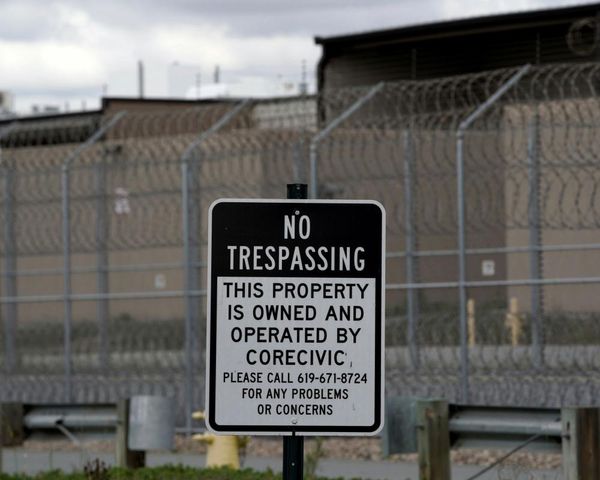
Mangione was held at a state prison, rather than a local jail as pretrial inmates normally are detained, “to ensure his security”, Rivers recalled.
This week’s proceedings also made clear, in real time, how actions against the press has proliferated in the Trump era.
On Tuesday, a veteran reporter was thrown out of court after she stood with a request to be heard on sealing. Standing to request being heard on access matters is common practice in court; journalists have a right to do this under the law.
Journalists covering state and federal court routinely stand to ask for an opportunity to be heard when a judge is poised to rule about whether to seal evidence or close a courtroom. For example, one New York court decision stipulates: “The court must adhere strictly to the procedures set forth in the controlling case law including affording a full opportunity by any interested members of the press to be heard, and making specific findings to support its determination without revealing the subject or issue, before closing the courtroom or sealing exhibits.”
The female reporter was swarmed by several taller, heavier male court officers in a shocking display of unnecessary force. She did not have an opportunity to be heard on the unsealing.
Judge Gregory Carro sided with Mangione’s team in sealing materials until the trial; he did not address the incident. Carro on Thursday consented to the release of certain evidence after pushback from journalists, but he still did not address the disturbing ejection in announcing this decision.
Law enforcement officials said that Mangione’s alleged actions sowed fear in business leaders and executives who, following Thompson’s killing, were allegedly met with a slough of online threats.
“Let me say plainly: there is no heroism in what Mangione did,” Jessica Tisch, the New York police department commissioner, stated at some point after Mangione’s arrest. “We don’t celebrate murders.”
A notable contingent of the American public, however, does see Mangione as a folk hero who stuck up to an industry that they claim puts profit over patients, leading to unnecessary suffering and in some cases, death. Mangione has pleaded not guilty to state and federal charges against him.
The nature of this week’s legal proceedings might also explain American captivation by the Mangione case as his defense team seek to gain as much advantage they can under US laws.
“This is the American adversarial system,” said Chris Slobogin, Milton R Underwood chair in law and director of the criminal justice program at Vanderbilt University.
“There’s huge incentives for defense attorneys to raise issues about police conduct during arrest and interrogation” in the US, he added.
Mangione’s defense is arguing that police should have had a warrant before searching his backpack and that he should have been apprised of his rights before questioning.
“Prosecution needs to show factual guilt and only using evidence that was obtained legally … Those are the kinds of issues that are raised, typically only in the American system, as opposed to the systems in most other countries,” Slobogin said.