A report from Iran's semi-official Tasnim News Agency that the United States has offered a temporary waiver on oil sanctions against Tehran briefly cooled global crude markets Monday, even as President Donald Trump warned Iran that time was running out to reach a broader peace deal.
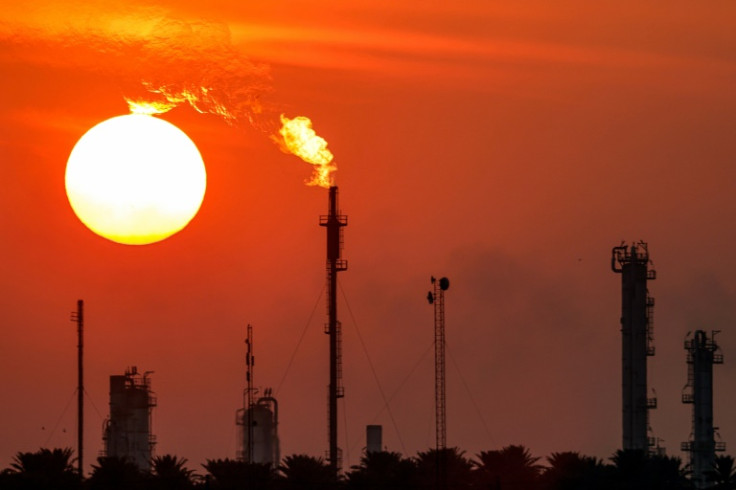
The report, carried by Iranian media and cited in market coverage, said Washington had proposed an interim waiver on sanctions affecting Iranian crude exports, a key demand from Tehran as it seeks to end the war and reopen a path for oil sales. Reuters reported that oil prices dropped from two-week highs after the Iranian report, with Brent crude falling 1.4% to $107.78 a barrel after earlier touching $112, its highest level since May 5. U.S. West Texas Intermediate crude fell 1.8% to $103.52 after reaching $108.70.
The White House and U.S. Treasury had not publicly confirmed the reported waiver as of Monday morning. That leaves the claim in a delicate category: significant enough to move markets, but still dependent on official confirmation from Washington.
The possible sanctions relief comes as diplomacy moves through Pakistan, which has been serving as a mediator between Washington and Tehran. Reuters reported Monday that Pakistan had delivered a revised Iranian proposal to the United States aimed at ending the conflict, while Iran's Foreign Ministry said Tehran had sent its response to the latest U.S. proposal through Islamabad.
Iranian Foreign Ministry spokesperson Esmaeil Baghaei said the talks would continue through Pakistan, but he made clear that Tehran would not bargain away what it describes as its right to uranium enrichment. Al Jazeera reported that Iran's response also demanded sanctions relief, the release of frozen assets and control over the Strait of Hormuz, the waterway whose closure has intensified the global oil crisis.


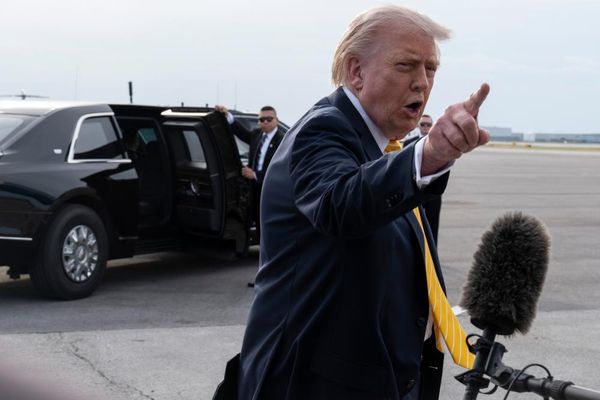
Trump, meanwhile, has mixed diplomatic pressure with open threats. The president warned Iran that "the clock is ticking" and said Tehran would be hit harder if talks did not move forward.
“For Iran, the Clock is Ticking, and they better get moving, FAST, or there won’t be anything left of them. TIME IS OF THE ESSENCE!” - President Donald J. Trump pic.twitter.com/33gyF0c0O5
— The White House (@WhiteHouse) May 17, 2026
The tension has placed oil markets in a narrow corridor between hope and panic. Any sign of a sanctions waiver suggests Washington may be willing to use energy relief as a bargaining chip. But the broader conflict has already strained global supply, especially with the Strait of Hormuz still closed.
International Energy Agency chief Fatih Birol warned Monday that commercial oil inventories are being depleted rapidly and that only a few weeks of supply remain. Reuters reported that emergency reserve releases have been adding about 2.5 million barrels per day to the market, but Birol cautioned those reserves "are not endless."
The IEA has estimated that the conflict has removed a massive volume of oil from global supply, while the closure of the Strait of Hormuz has raised fears of fuel shortages, inflation and further economic disruption. Reuters reported that oil had already risen about 7% last week before Monday's reversal, driven by concerns over stalled talks and regional attacks.
Monday's market reaction showed how quickly traders are responding to even partial signals from the negotiations. A temporary waiver could give Iran an incentive to keep talks alive and offer relief to energy markets. But without confirmation from U.S. officials, the report also reflects the uncertainty now driving both diplomacy and oil prices.
© 2025 Latin Times. All rights reserved. Do not reproduce without permission.