It started when Amed matched with a man online on a popular dating app. He thought they had friends in common and so, with his guard down, he agreed to meet.
The 36-year-old lives in Nigeria. It has some of the strictest laws against homosexuality in Africa. In the northern state of Kaduna, where he was living, same sex relationships are punishable by death under Islamic law.
And so it was not until he arrived at the meeting point that Amed realised he had made a potentially fatal mistake.
The man he was meeting had brought a gang of vigilantes, wielding sticks and makeshift weapons.
“He made me believe he meant me no harm. I trusted him,” explains Amed, terror etched across his face.
“When I got there, I realised he had actually plotted against me, just to extort money from me and ‘deal with me’. That was what he said.”
Stripped naked, Amed says his attackers filmed the torture they subject him to: “They were shouting, ‘Stone him to death, stone him to death’.
“It was brutal. They were beating me as if they wanted to kill me. I was so frightened I could not even speak. I thought I was going to die,” he recalls, his voice cracking.
“I gave them all the money I had in my bank account and yet they still posted the video online and sent it to my family.”
Amed, who is living with HIV and spoke to us anonymously from hiding, now realises he was the victim of a “kito” attack.
The term is Nigerian slang for entrapment and is used to describe a surge in violent, sometimes deadly, kidnap and blackmail attacks against members of the LGBTQ+ community.
Gangs catfish and target people online using dating apps and social media accounts. Victims are entrapped, tortured and filmed in order to extort ransoms. The videos are often shared with family members and then posted online, exposing victims’ sexuality and, in some cases, their HIV status, destroying their lives.
“They were shouting, ‘Kill him, kill him. He’s an abomination, an abomination’,” says Moussa, who was also assaulted by a gang of vigilantes and living at the same shelter.
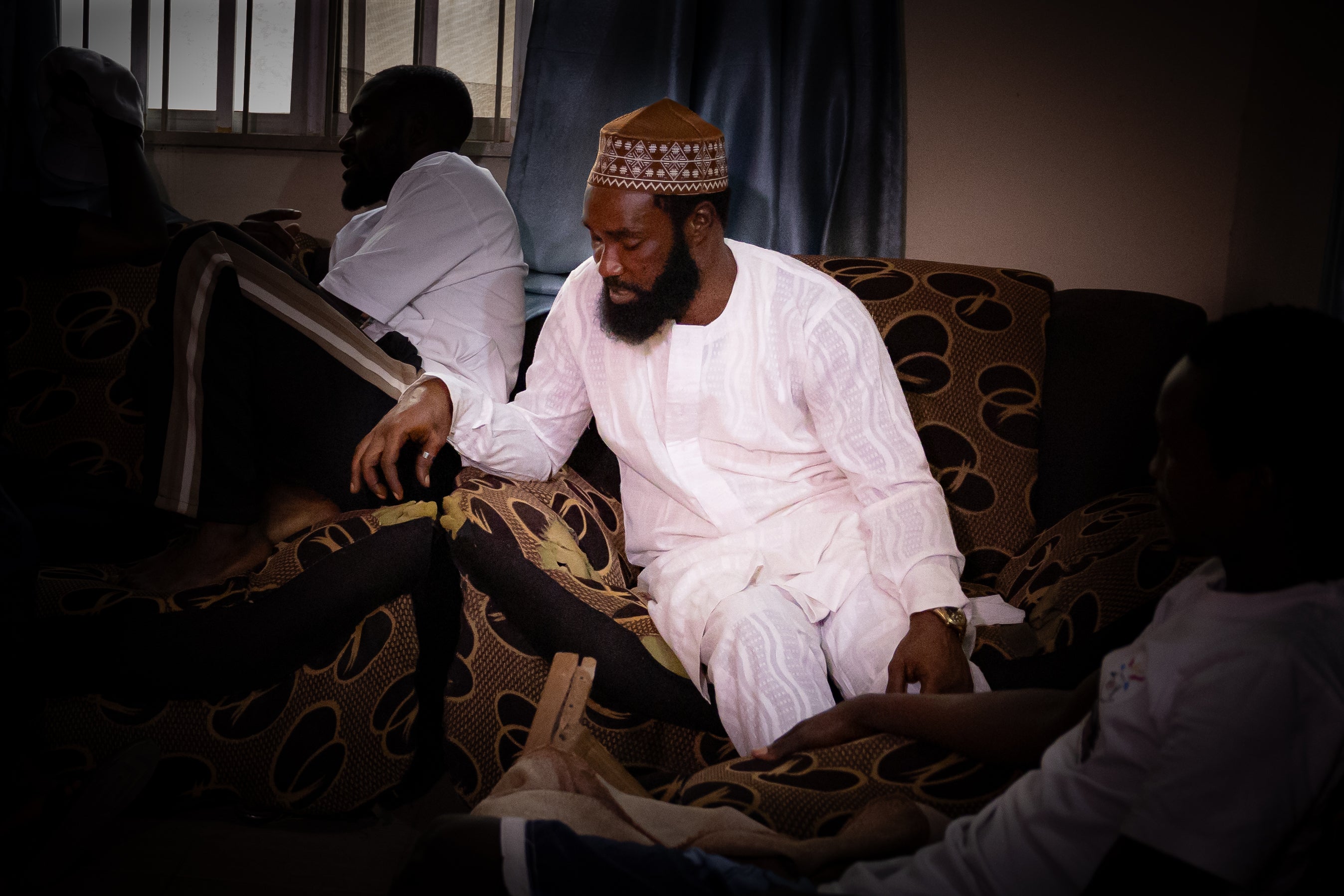
He shared footage of the attack, and in the video, he is seen stripped to his underwear, beaten with sticks and mocked as they hit him.
“I don’t know how I escaped being lynched that day,” he adds.
The Independent, which today is releasing its documentary Hunted about the attacks, contacted the Nigerian police about the scale of these assaults and efforts to combat them, but had not received a reply at the time of publication.
Under legislation introduced in Nigeria in 2014, same sex relationships are punishable by up to 10 years in prison. In some northern states governed by Islamic law, the death penalty can be imposed.
This means many victims are too afraid to report attacks to the police, fearing they will be arrested for breaking these laws.
When Amed managed to escape the mob and flee home, instead of helping him, he says his father and brothers locked him up and assaulted him as punishment. He lost his job. He was eventually rescued and taken to a safe house.
“It’s not something I can explain,” he says, breaking down in tears. “I had nowhere to go.”
The stigma from these attacks can be huge, says Bethel Onyedikachi, head of the charity that runs the safe house where Amed and Moussa live.
The day before we arrived at the shelter, a member of the community, a gay pastor living with HIV whose sexuality and health status were exposed in a different kito attack, took his own life. Three years earlier, he had succumbed to societal pressure to marry and have children.
Some of these attacks have also resulted in murder.
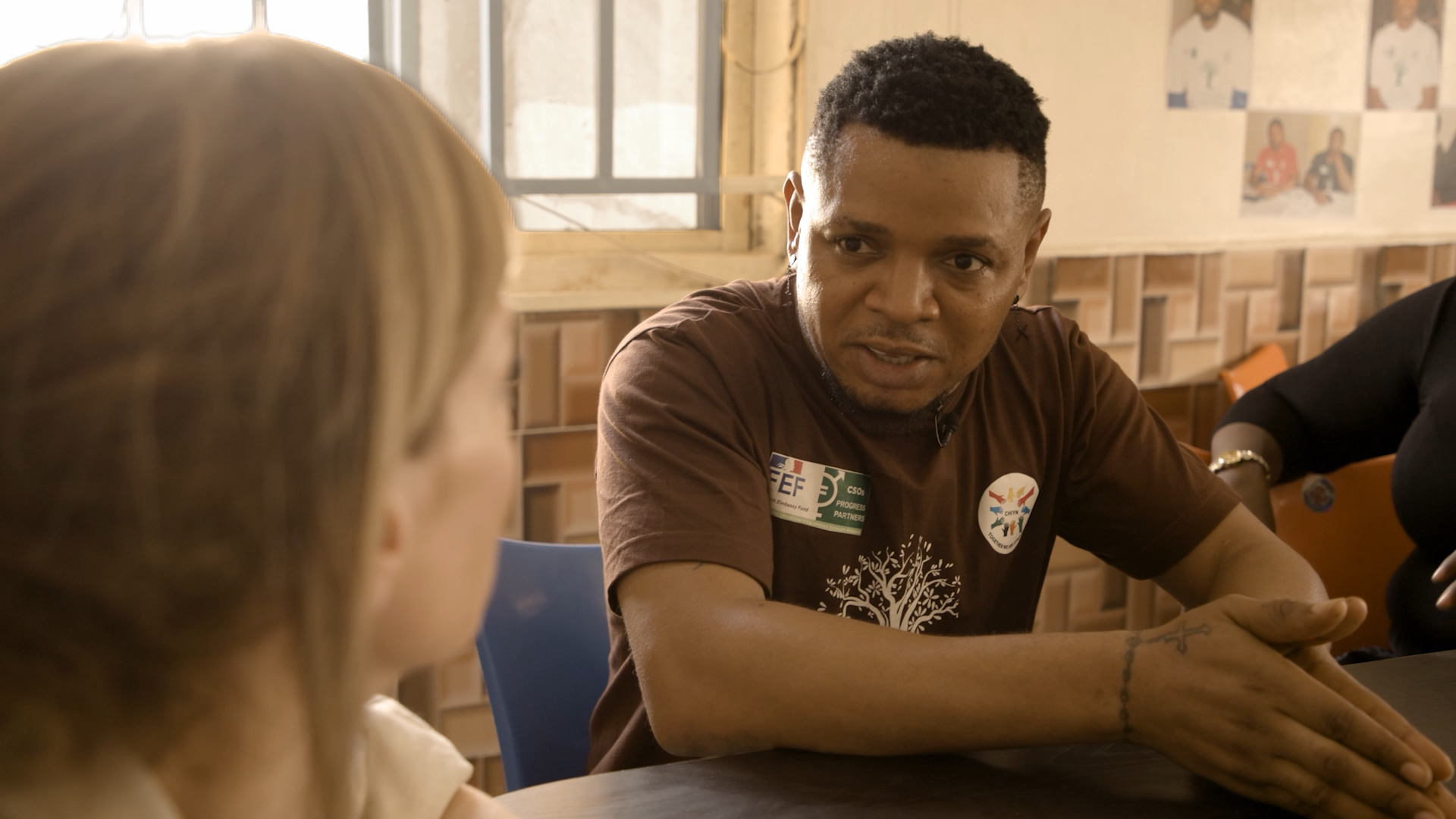
In Lagos, in the south of the country, Yemi Ogunwa, who runs a similar shelter and support services to Bethel, says in one recent case, a 23-year-old man was tortured and thrown off the second floor of a hotel to his death.
“What made it even more painful was that during his funeral, there were community youths singing homophobic slurs around his family members while they were mourning,” Yemi continues, showing us a video of young men dancing and celebrating at the wake.
“The man is dead already. Let him rest in peace. It was really, really painful.”
But now, Yemi and Bethel both say, the safe houses they run are under threat.
The only spaces offering shelter and support are community organisations like theirs, which were reliant on foreign aid funding until unprecedented cuts by the US, the UK and other countries over the past year.
Bethel says his organisation was not only shut down abruptly by a stop work order from the US government, but officials also took all the test kits, medication and HIV preventative therapy – known as PrEP – that his organisation handed out to the community.
“We were cut off with no preparation, without information, without even knowing what to do,” he adds in despair.
The world had been on track to end the Aids pandemic by 2030. But last year saw the steepest cuts to foreign aid on record, with global funding falling by nearly a quarter, devastating HIV programmes.
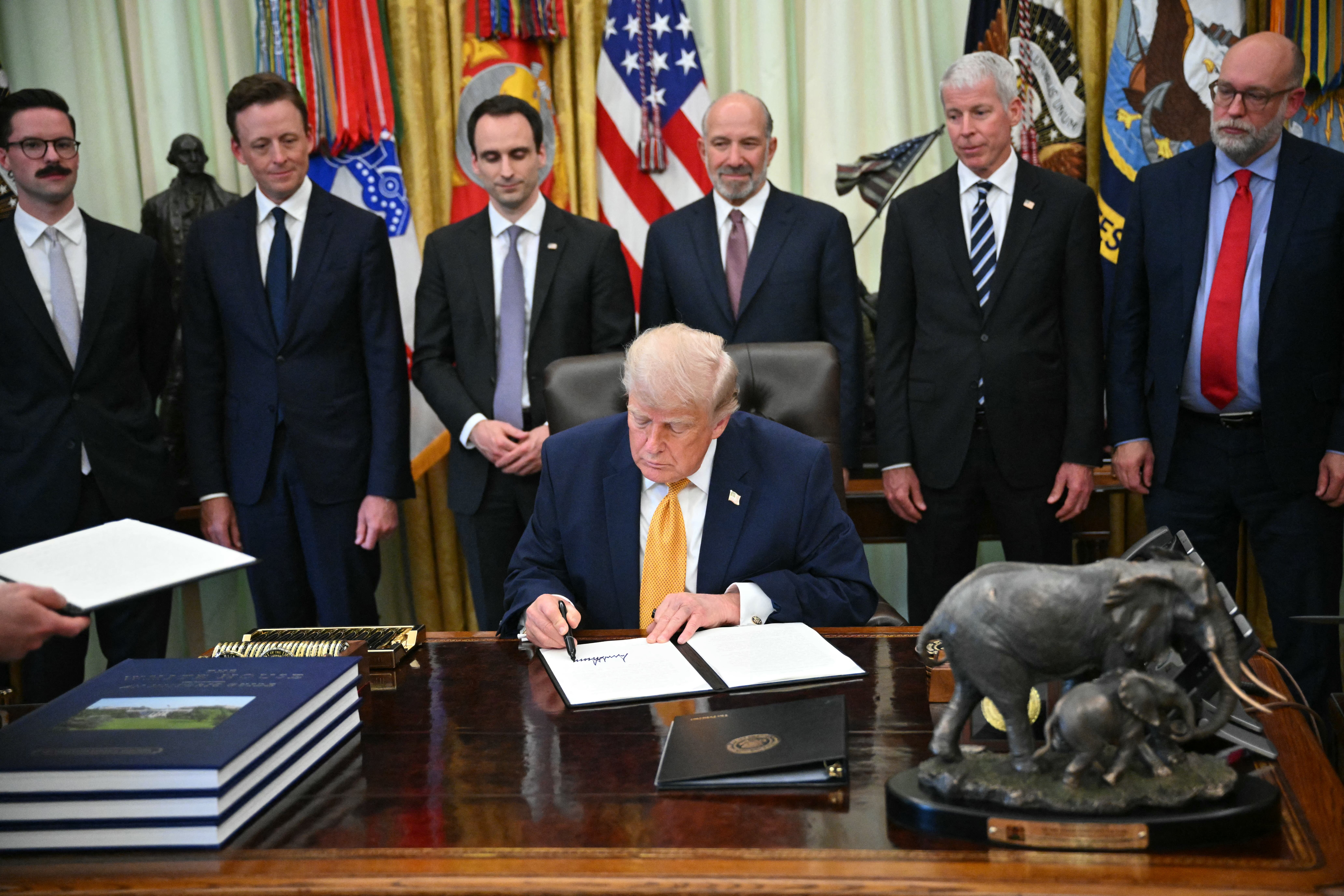
One of the toughest cuts came from the US. Within hours of becoming president, Donald Trump froze the majority of US foreign aid and later cancelled 80 per cent of the country’s aid projects worldwide.
This wiped out funding for PEPFAR, the US global HIV response programme and one of the most successful health initiatives in history.
The UK and Europe followed suit, with Sir Keir Starmer announcing this year that Britain would redirect foreign aid spending towards defence.
Although some US aid was reinstated, the Trump administration took aim at the LGBTQ+ community, instituting anti-transgender policies and issuing executive orders defining sex as strictly male or female at birth.
Bethel says this means organisations like his will never see that funding again.
The impact has already been severe. Initial data released this month by UNAIDS, the UN agency leading the global HIV response, shows alarming numbers of new infections.
The death toll is mounting. In 2025, the UN counted at least 570,000 Aids-related deaths, more than double the original target for 2025 in the effort to end the pandemic.
This was caused by “a disruption to HIV response like has never happened before”, says Winnie Byanyima, head of UNAIDS, ahead of a high-level meeting on HIV at the UN General Assembly this week.
“Progress of the HIV response is in peril. We are beginning to see signs of reversing our gains,” she adds, warning that the cuts have disproportionately affected marginalised and criminalised populations.
This, Yemi says, means the LGBT+ community living with HIV in places such as Nigeria and elsewhere in the world face a “double threat”.
A surge in infections means stigma and violence are rising, all while the very places they would go to get their medication are being defunded, forcing them to go to government-run facilities to get their medication.
“They had the choice of either going back to those facilities or going without,” Yemi explains. “Many chose not to go because they were afraid of being identified and stigmatised.”
Yemi is particularly worried about trans women. Under Nigerian law, the government-issued identification card needed to access treatment in public hospitals lists their sex at birth, immediately identifying them as transgender. This is true in other parts of the world.
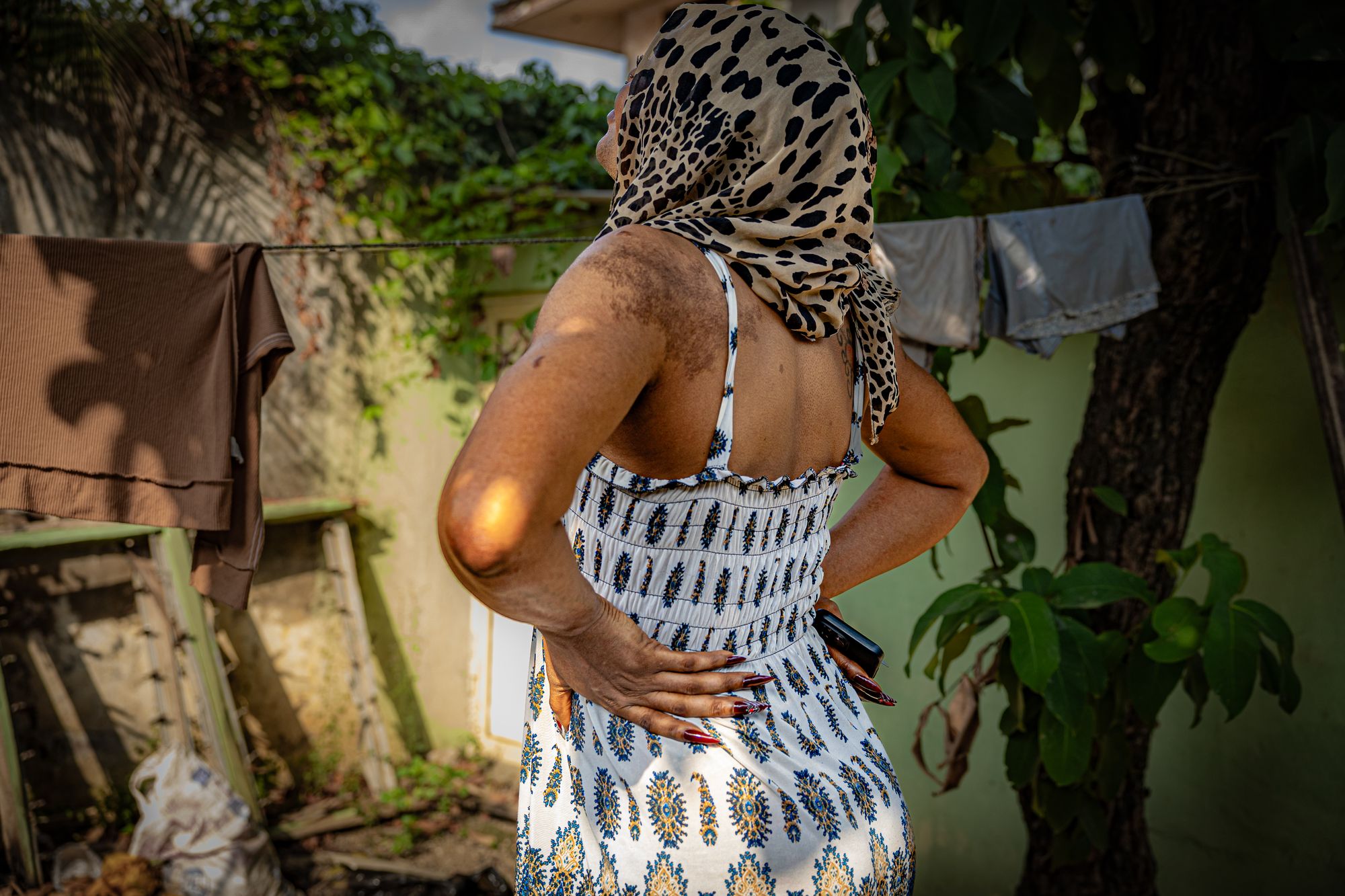
Riri, a sex worker and trans activist living in a safe house in Lagos, contracted HIV after being raped when her father threw her out of their family home.
“It’s crazy. That’s why I’ve stopped going to healthcare centres altogether for more than a year now,” she explains, adding that she is now borrowing medication to survive.
She says she knows members of the community who have died after coming off their anti-retrovirals, and Riri worries she is next.
“We beg Western governments to help us. We are dying,” she implores.
Globally, experts fear that if entire communities are driven underground and frozen out of their medication, infections will rise worldwide.
Medication has made huge advances in recent years, particularly with the advent of lenacapavir, a twice-yearly injection described by the head of the UN Aids agency as “the closest thing we have to a vaccine”, which provides near-complete protection against infection.
“HIV is an infectious disease for which there is no vaccine and no cure,” says Anne Aslett, chief executive of the Elton John AIDS Foundation, which runs multiple programmes in places such as Nigeria.
“This impacts everyone: 15 per cent of HIV diagnoses come from British people travelling abroad.
“It makes good sense to use the best kind of medicine, the latest technology, to prevent people from ever getting this disease in the first place, and also to support people who are living with it.”
Charles Ssonko, chronic and infectious diseases team lead at Médecins Sans Frontières, who has spent decades on the ground fighting the virus, warns that if current trends continue, the world risks returning to “two decades ago when people were actually dying without hope”.
“This is completely devastating and doesn’t make sense,” he adds.
Back at the safe house in northern Nigeria, Amed, who has missed doses of his antiretrovirals because he is too scared to go to a public facility, worries “millions of Nigerians will be at risk”.
“It is a matter of life or death."
Moussa says he is also scared to go to a public facility.
“The stigma outweighs the infection. Going to a public hospital is like outing yourself; it is like a death warrant,” he says.
In an impassioned plea, he says this is “a big problem for the world”.
“I wish the UN, the European nations, the UK, all the parliament can come in and help us.
“We plead with them, we are begging them. They should look at our plight. We are in need of them right now.”
**With additional research from Saint Ekpali
This article has been produced as part of The Independent’s Rethinking Global Aid project