
Electric vehicles didn't exactly materialize in the U.S. like many legacy automakers expected. Or, more realistically, haven't materialized yet.
The American market certainly isn't on track go 45% electric by 2030, as Ford says it planned for. So now, despite investing billions of dollars in manufacturing and R&D, it has begun a pullback from an all-electric future and is now setting its sights on hybrids, extended-range electric vehicles and cheaper gas cars as well. But pivoting from existing plans is an expensive process.
Get Critical Materials in your inbox.
The must-read auto and tech briefing, every weekday.
Welcome back to Critical Materials, your daily roundup for all things electric and tech in the automotive space. Also on deck: China cracks down on its new-car price war, and Hyundai taps a BMW and Porsche veteran to boost its tech game. Let's jump in.
25%: Ford's EV Pullback Will Cost $19.5 Billion

Today, about 17% of Ford's global volume comes from electrified vehicles. That means mild hybrids, plug-in hybrids and EVs. It aims for that number to reach 50% by 2030, but that's reliant on drastically scaling up its efforts from wholly supporting a BEV-focused future to one that prioritizes hybrids instead.
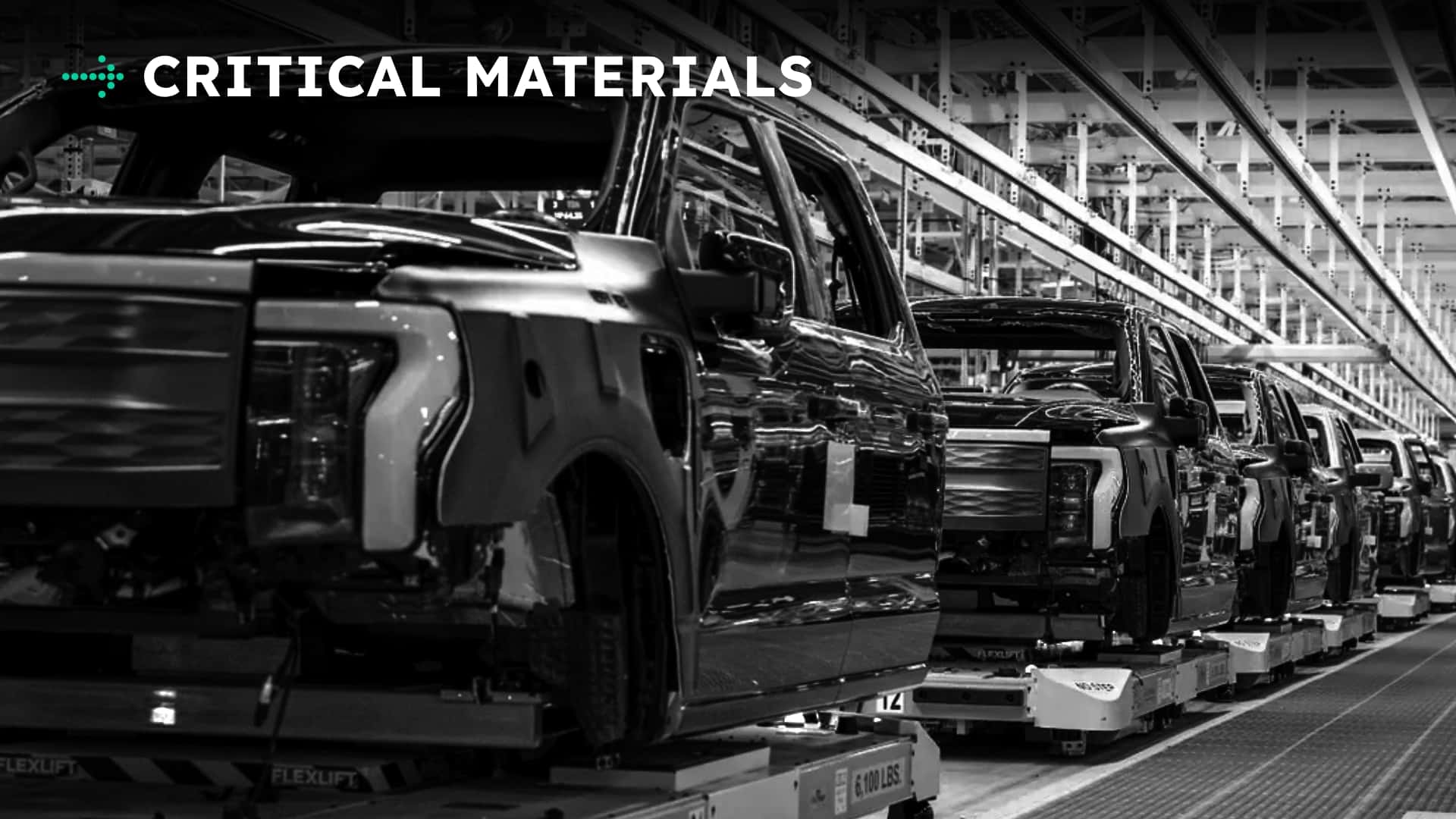
That’s what Ford announced yesterday. The F-150 Lightning EV is dead, the next one will be an extended-range EV with a gas engine, a next-generation all-electric F-150 and a new electric van have been canceled, a battery plant will be used to make energy storage systems for AI data centers instead, and the immediate focus is on gas cars and hybrids.
It’s a big retrench after Ford’s two electric models—the Lightning and Mustang Mach-E—continue to be decent sellers, but are massively unprofitable.
But in the auto industry, changing course is hard—and expensive. This pivot will cost Ford nearly $20 billion in "special items" due to the need to shake up its business efforts over the next half-decade, according to the latest financial guidance released by Ford on Monday.
CNBC outlines the specifics:
The Detroit automaker said most of those charges will occur during the fourth quarter. That will be followed by $5.5 billion in cash to be charged through 2027, and the the majority of that chunk will be paid next year, Ford said.
[....] The charges announced Monday, including $8.5 billion in write-downs of EV assets, are connected to major changes to Ford’s business plans.
Ford says that it's following its customers' buying preferences. “We evaluated the market, and we made the call,” said Ford CEO Jim Farley in an interview with CNBC. “We’re following customers to where the market is, not where people thought it was going to be, but where it is today.”
Yet that’s quite the reversal from the Biden years, when Farley and other auto CEOs cheered on EV tax incentives and plans to make batteries here in America. Two weeks ago, Farley stood behind President Donald Trump and applauded the weakening of fuel economy regulations. As Automotive News put it today, “What a difference an administration makes.”
It's important to point out that Ford's move isn't about declaring EVs are dead. The automaker is still hanging its future hopes on a new EV platform that starts with a $30,000 electric truck due out in 2027.
Instead, Ford is recognizing that EVs are expensive to build and that the costs, which are passed onto the consumer, aren't something that customers are willing to spend money on. That's true now more than ever, without the $7,500 EV tax credit propping up sales and regulatory certainty becoming wobbly at best.
Perhaps a better way to look at it is an admission that the first draft of modern electrification was a bit overly optimistic and consumers just aren't ready to jump in head-first. The next rewrite will be more cautious with hybrids of all kinds bridging the gap between combustion and battery-electric—well, assuming the recent changes to CAFE standards don't cause a ripple in that as well.
At least, that’s the current hope. Who knows where the auto industry, and Ford, will be in five years.
50%: China Cracks Down On Vehicle Pricing
China's new car market has turned into a flaming crater of discounts that has driven the cost of new cars into the ground. That might seem like a great thing to consumers, but for automakers—especially the hundred-some EV upstarts in the country—it's a test of resilience. Those that can afford to take a loss do, and those that can't perish.
Needless to say, Beijing is now getting involved. The government knows that this type of behavior isn't good for anybody and has proposed a set of rules that would prevent manufacturers and dealers from selling new cars at a loss. Automotive News explains:
The State Administration for Market Regulation announced a set of proposed guidelines late Dec. 12, including measures that would prevent manufacturers from pricing cars below the cost of production, and to stop dealers from offering discounts or rebates that would effectively bring down vehicle prices below cost.
Shares of BYD Co. and other Chinese makers of electric vehicles, who’ve been relying on discounts to prop up slowing demand, fell on Monday as the move signaled further scrutiny on the industry. Despite China publicly shaming automakers more than six months ago for their “rat-race competition” and warning about the financial health of the industry, prices have continued to drop.
However much you think China's cheapest new cars cost, you're almost certainly underestimating. In June, giant BYD's average transaction price was just $16,480. That same figure fell nearly 7% in October to just $15,340. For comparison, the average transaction price in the U.S. was $49,766 in October, according to Cox Automotive.
The real problem isn't just the cost—it's the sheer overcapacity of China's new car market. Its automakers build far more cars than it can sell domestically, leading to schemes like the "zero-mile used EVs" and vast number of exports. And as regulators have begun to crack down on those problems, brands have brought out the blunt instruments of survival: discounts.
The end goal is to stop the bleed. But if consumers are already accustomed to waiting for the next discount to fall on their laps, the overcapacity problem could get worse before it gets better.
75%: Hyundai Taps Porsche, BMW Veteran To Lead Tech
Hyundai has been killing it lately. From software to EVs and even its new Magma line of Genesis performance cars, the Koreans have figured out how to turn a brand image from bargain basement special to market leader within a few decades.
A shuffle to its executive leadership is underway. Manfred Harrer, a veteran engineer at Genesis and across a handful of German brands including Audi, BMW, and Porsche, is being moved into a high-ranking position within Hyundai's leadership team to become the brand's newest weapon on software-centric vehicles.
Now, Harrer has been with Hyundai for over two years under its Genesis brand. He led the brand's Development Tech Unit under Hyundai's R&D division during his tenure and has his fingerprints all over the Magma sub-brand, which is refocusing as a way for the luxury marque to square up against German rivals like BMW's M-division. Harrer's new role won't be all about clobbering corners, though—it'll be focused on another way to knock out the competition.
Hyundai has decided to install Harrer as the Chief of Research & Development who will oversee the brand's tech-focused development as the brand shifts its efforts towards prioritizing software-defined vehicles.
Given his tenure at Apple working on the now-dead Apple Car and across the Volkswagen Group brands, Harrer has culture from both companies feeding into his leadership style. With any luck, he can help the Korean automaker stay ahead on key technologies like connected software and autonomous driving.
100%: Where Did Legacy Automakers Go Wrong With EVs?
Legacy automakers have been having a tough time with EVs. From slow sales to outright reversals on spending, big combustion-first brands are now feeling the hurt from throwing cash at the transition from ICE to EVs. Meanwhile, newer EV-first startups like Tesla, Rivian and Lucid are pushing forward despite the potential consumer pullback.
Where did legacy automakers go wrong, and what's the right path forward? Is it backpeddling to hybrids? EREVs? Or should Ford have just powered through and made better and cheaper EVs? Let us know in the comments.