- In an interview with InsideEVs, Ford CEO Jim Farley said the automaker's crucial "skunkworks" electric vehicle platform project is progressing well. He likened it to the Apollo missions of the 1960s and '70s.
- Supply chain, parts, plant conversions and other critical steps are done, Farley said, and prototype vehicles are operating with Ford software.
- But Farley remains cagey about what "top hats," or bodies, the platform could use—including a new Mustang Mach-E.
In 2026, the Detroit Auto Show isn't quite the international newsmaking event that it once was. But Ford seized the opportunity to tout its newest performance and racing efforts, including a new powertrain partnership with Red Bull Racing in Formula 1.
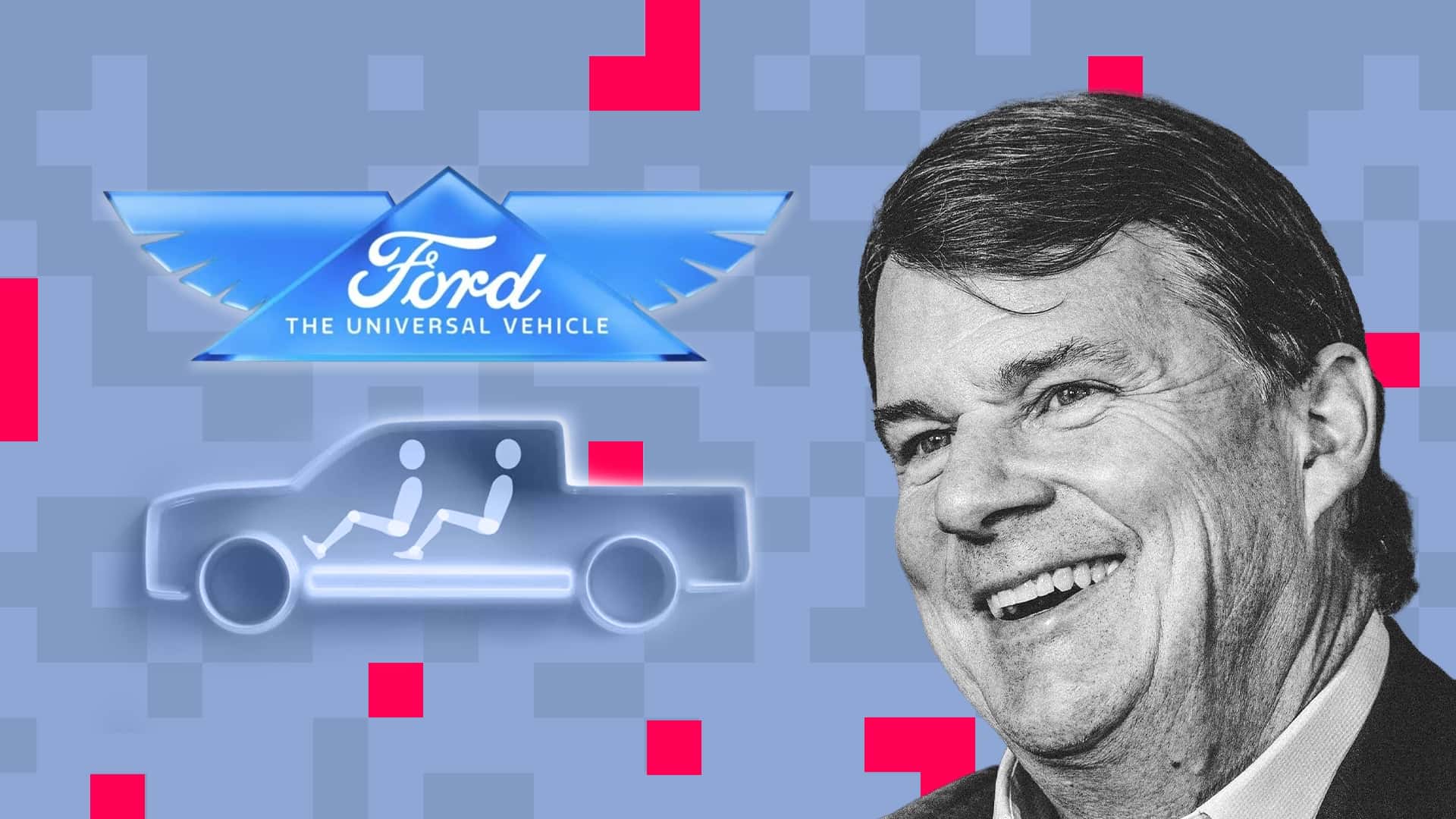
Making a winning power unit in F1 is no easy task. But Ford CEO Jim Farley told InsideEVs that it's up there with the automaker's new Universal EV Platform, the secretive "skunkworks" effort to deliver a next-generation electric architecture that can compete with Chinese companies on tech and costs.

"This is literally like the Apollo or Gemini mission within Ford," Farley said, referring to the United States' space programs in the 1960s and 1970s. "A uniquely American, high-risk project... just like the power units for Formula 1, it's one of the most challenging projects I've ever been involved in."
Announced last year, the Universal EV (UEV) Platform is slated to debut in 2027 with a Kentucky-built electric pickup truck that Ford has said will start around $30,000. Potentially seven more variants, or "top hats," will reportedly arrive on that platform, including a midsize crossover. Farley on Thursday offered an update on the program and said "commercialization" is going well.
"All the parts are quoted and designed, and now we're deeply into retrofitting the manufacturing facility," Farley said. "We stopped Escape production. We have the megacasting machines now up and running. We're building prototypes now with our own zonal electric architecture software controlling the vehicles. I was very excited to see, you know, the vehicle turning and stopping with Ford software, and the silicon that we designed and specced."
Another EV platform hardly feels like the moon landing in 2026. But for Ford, the UEV architecture could be a groundbreaking reset for how it makes electric cars, and a kind of antidote to everything that's gone wrong with them so far.
The $5 billion project originated in California, away from the rest of the Ford management ecosystem, to ensure independence and security. It's led by veterans of companies like Tesla, Apple and Rivian and will be built on a reimagined assembly line.
The EV itself will run on new lithium iron phosphate (LFP) batteries co-developed with Chinese giant CATL, all while using 20% fewer parts compared to “a typical vehicle" to cut costs. Ford has said the inaugural truck will have the interior space of a mid-size crossover while fitting inside the footprint of the Maverick, support full over-the-air updates on a ground-up zonal electric architecture, and offer "eyes-off" automated driving assistance about a year after it's on sale. Perhaps most importantly, the project is said to meet the production costs Chinese giant BYD can achieve in Mexico—a key component in making EVs that are actually profitable instead of loss-leaders.
That kind of ambition has now become critical to Ford's future. Last year, amid mounting losses, the automaker canceled the F-150 Lightning electric truck, as well as its planned successor. Ford is now hinging its EV hopes on the skunkworks project, while also focusing more on hybrids for its large vehicles after years of burning capital and experiencing slower-than-expected EV sales.
Even so, Farley said the UEV project is so new and so groundbreaking, with so many new technologies at work, that there's no guarantee it will be a success. Many automakers have struggled with quality issues on their newest EV platforms, especially where software is concerned.
"We have taken on so many experimental approaches to new suppliers," he said. "You know, it's a totally different way of building the vehicle. New workstation designs. All new IT solutions to support the parts release. There are so many experimental things for Ford that right now, we're just focused on landing the plane."
But Farley has said that the UEV project is critical for Ford's ability to compete with China's automakers, both abroad and potentially in the United States.
Earlier this week, after touring a Ford truck factory in Michigan, President Donald Trump reiterated that he's open to Chinese vehicles being sold in the U.S., so long as they are built domestically. “If they want to come in and build a plant and hire you and hire your friends and your neighbors, that’s great, I love that,” Trump said at the Detroit Economic Club. “Let China come in, let Japan come in.”
That probably wasn't music to the ears of U.S. auto executives; Farley himself has repeatedly stressed that China's automakers have American ones beat on technology, costs and profitability. And at CES last week, Chinese auto conglomerate Geely made its strongest hints yet about when it may announce a U.S. entry.
"They're the most important competitors, I would say, these days, along with South Koreans," Farley said of China's automakers. While he said he "can't speak for" Trump, he added that "it's a very healthy development that the President of the United States is thinking about this topic. I'm very encouraged about that, and I think we're going to have a great debate as a country. There's a lot to say about what these policies should be."
Meanwhile, Farley demurred when asked more about what forms the UEV platform could take—including if it could potentially underpin something like a next-generation Mustang Mach-E. "I have lots of thoughts on that idea, but I'm not ready to talk about it," he said.
Contact the author: patrick.george@insideevs.com