Russia’s claim that Ukraine launched a 91-drone strike on Vladimir Putin’s personal residence has threatened to derail months of talks over a peace deal to end Moscow’s invasion.
Ukrainian leader Volodymyr Zelensky has called the claims a “complete fabrication” intended to lay the groundwork for future strikes on Kyiv and other areas of Ukraine.
“I am sure they are simply preparing the ground for strikes, probably on the capital, probably on government buildings,” he said.
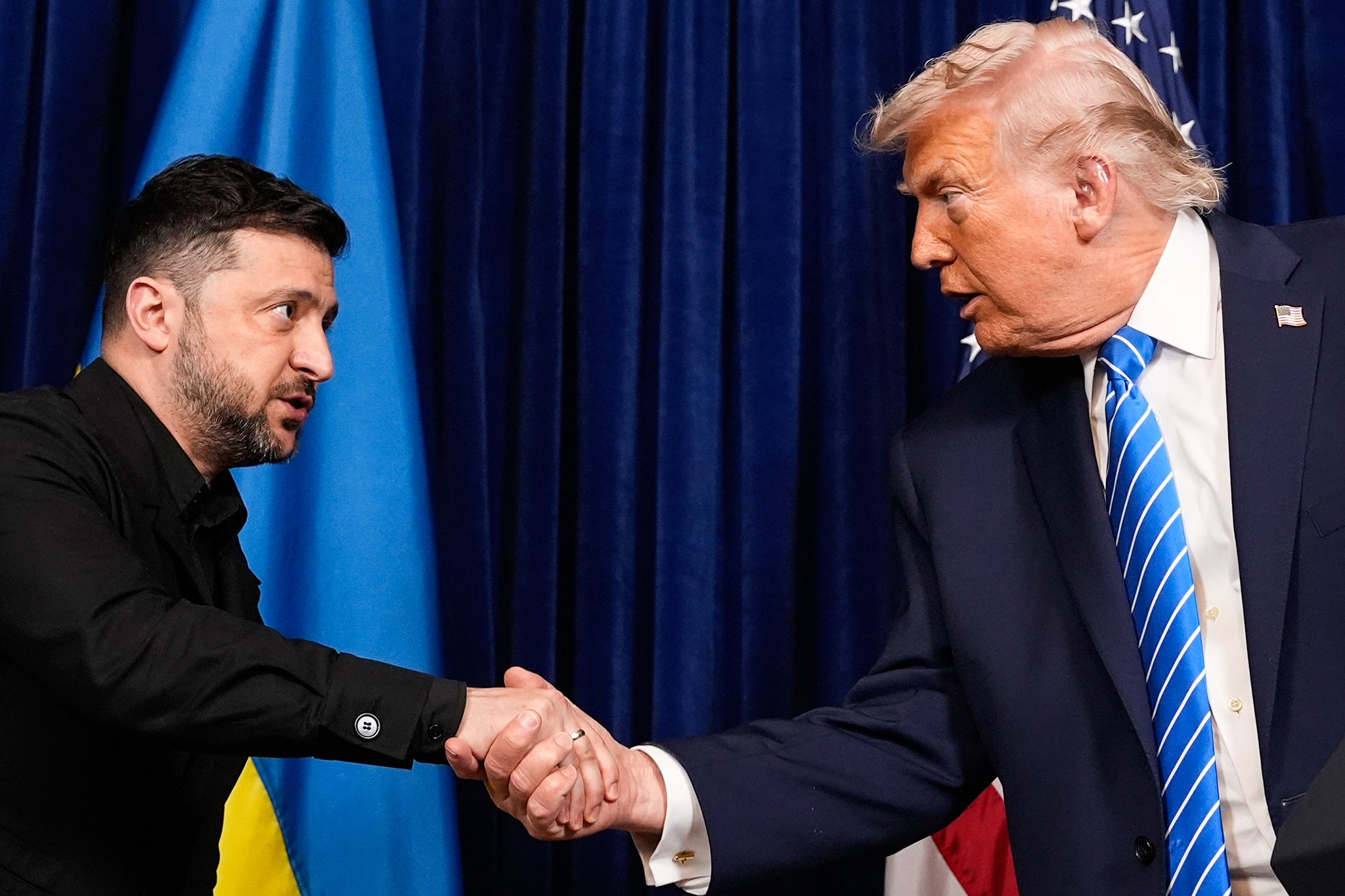
Donald Trump appeared swayed by Russian claim and said he was “very angry” at the news of the strikes. That reaction is likely one of the aims of Moscow’s accusations – with Trump’s support having wavered between Kyiv and Moscow in recent months.
Europe has sought to back Kyiv with EU foreign policy chief Kaja Kallas calling the claims “unfounded” and a “deliberate distraction” in remarks on Wednesday.
“Moscow aims to derail real progress towards peace by Ukraine and its Western partners,” Ms Kallas wrote on X/Twitter on Wednesday.
“No one should accept unfounded claims from the aggressor who has indiscriminately targeted Ukraine’s infrastructure and civilians since the start of the war.”
Where did the attacks happen?
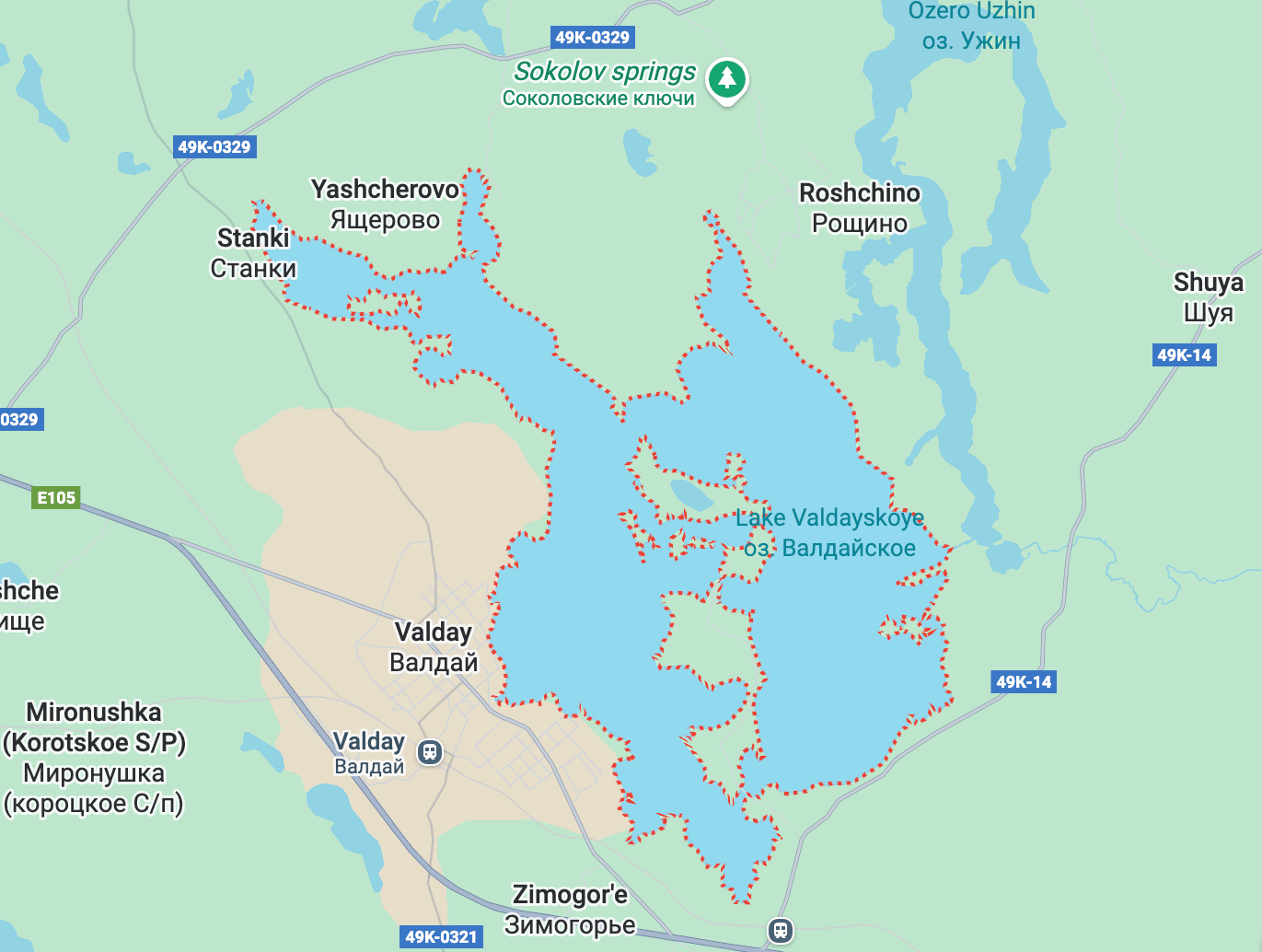
Putin’s Valdai residence, also known as “Uzhin” or “Dolgiye Borody”, is a heavily guarded complex on the shores of Lake Valdai situated 360km (225 miles) north of Moscow. His whereabouts at the time of the incident remain unconfirmed, though he is believed to have been away from home.
The Russian defence ministry said 91 drones had been downed on their way to Valdai, with 49 shot down over the Bryansk region – which is 450km from Valdai – one over Smolensk and 41 over the heavily forested Novgorod region.
Ukraine’s military capabilities
From a technical standpoint, Ukraine does have the weapons to launch an attack on Putin’s presidential residence using strike drones and missile systems, according to Oleksandr Kovalenko, a Ukrainian military and security analyst for the Information Resistance group.
With the residence located 400 miles (650km) from the Ukrainian border launch sites could allow for strikes of up to 430 miles (700km) into Russia.
“Ukraine possesses long-range strike drones with a flight range exceeding 1,000km, as well as missile systems capable of covering such distances – namely the R-360 Neptune missile, and, of course, the FP-5 Flamingo missile, which is likewise capable of reaching that range,” Kovalenko tells The Independent. “So technically, such a strike would have been possible.”
The evidence on the ground
However, several commentators have pointed to the fact little evidence has been provided for the attacks.
The Institute for the Study of War (ISW), which is usually able to verify strikes, says no open-source evidence such as geolocated videos, visible air defence activity, explosions or smoke, to support the claims. Unlike previous drone attacks, Russian civilians did not appear to post videos of explosions, smoke or other footage to social media.
Valdai residents told The Moscow Times that they heard no evidence of a military attack on the night.
“No air raid sirens were reported in that area,” says Kovalenko. “No drone flights were detected heading toward Valdai. Yes, an attack did occur that night—but not in the direction of Valdai, and involving a significantly smaller number of drones, moving along an entirely different axis.”
He added: “Air defense systems in that area were not active that night. Local residents did not report air defence activity. No monitoring channels or OSINT analysts recorded strikes or drone flights of that scale in that direction.”
There have also been inconsistencies in the number of drones reported by Russian authorities, according to the ISW. Lavrov claimed 89 drones had been shot down over Novgorod while the defence ministry said the number was 47.
While some Russian telegram channels appear to show plumes of smoke in some regions, they have not been independently verified.
But despite the Kremlin initially saying it would not provide evidence to substantiate its very serious accusations, the Ministry of Defence released footage on Wednesday, which it hoped would challenge Kyiv.
It showed a serviceman standing next to fragments of a device it claimed was a downed undetonated Ukrainian Chaklun-V drone carrying a 6kg explosive device. The ministry did not explain how it knew what the device's intended location and target was.
Furthermore, several people including Matthew Whitaker, US ambassador to Nato, foreign policy chief Kallas, and a source close to Macron have all expressed doubt about the veracity of the incident.
“It is unclear whether it actually happened,” Whitaker told Fox Business, saying he wants to see US intelligence on the incident.
Ukraine’s past strategies
Some believe that Ukraine would be shrewd to target high-value symbolic sites as it cannot match Russia’s military capabilities.
Ukraine has previously used camouflaged drones launched from trucks to strike deep inside Russia and it does have a history of assassinations of Russian military figures.
The attacks also came days after Zelensky appeared to wish death to Putin in a Christmas message.
In 2023, Russia accused Ukraine of attacking the Kremlin with drones in an attempt to assassinate Putin. The claims were widely disputed at the time, and Ukraine denied any involvement accusing Russia of manufacturing an escalation of the war.
But a New York Times investigation later revealed that US intelligence agencies believed Ukraine’s security services were behind the attack but that it was unclear whether Zelensky or other officials were aware of the scheme.