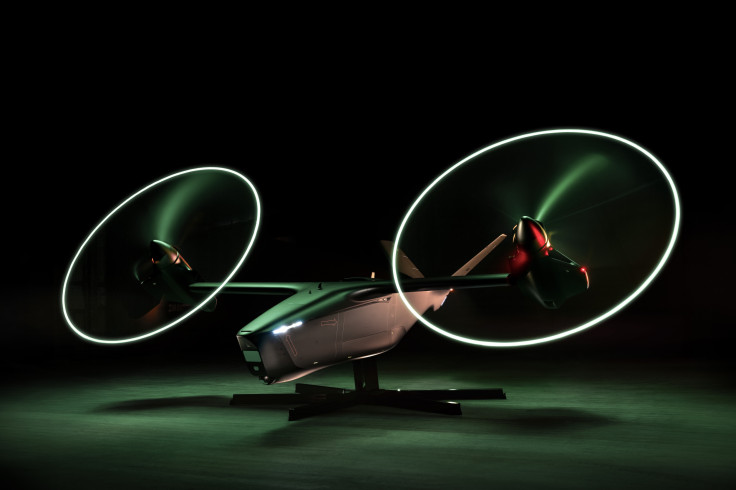
Archer Aviation shares surged more than 20% on Monday after the electric air taxi developer unveiled a new autonomous military aircraft developed with defense technology company Anduril.
The announcement came during the Farnborough International Airshow in the United Kingdom, where Archer CEO Adam Goldstein said the company remains committed to launching its long-awaited electric air taxi service in time for the 2028 Summer Olympics in Los Angeles even as it pursues new opportunities in the defense sector.
"We've always been laser-focused on getting certified and flying by the Olympics," Goldstein told CNBC in an interview at the airshow. "It's always been an ambitious goal. It's still an ambitious goal, but we're certainly going to try our hardest to get there."
Investors welcomed the dual-track strategy as Archer's stock jumped more than 20% after the company introduced Thunder, an autonomous vertical takeoff and landing, or VTOL, aircraft designed for military missions.
The aircraft was developed in partnership with Anduril Industries, the defense technology startup founded by Oculus VR founder Palmer Luckey. The two companies first announced their collaboration in 2024. Thunder is designed to operate alongside crewed aircraft and helicopters, providing autonomous support in military operations.
Archer has become one of the most recognizable companies in the emerging electric vertical takeoff and landing, or eVTOL, industry. Its electric aircraft are designed to transport passengers over short urban distances, reducing traffic congestion and lowering emissions compared with traditional helicopters.
However, the industry has faced years of delays due to complex certification requirements, regulatory reviews and the need to build entirely new infrastructure, including charging stations and vertiports. Goldstein said recent support from the Trump administration has helped accelerate progress.
Earlier this year, President Donald Trump launched a national eVTOL pilot program intended to speed the testing and deployment of next-generation aircraft. The initiative includes demonstration programs across 26 states, allowing companies like Archer to gather operational data while working with federal regulators.
Goldstein said those real-world demonstrations are essential to earning public confidence and satisfying regulators before commercial passenger flights can begin. "This is really critical to gaining the trust of the public and the trust of the regulators that will ultimately lead to our certification," Goldstein told CNBC. "That step is going to be hugely critical in order to allow us to meet those timelines."
The certification process for commercial passenger aircraft remains one of the biggest challenges facing Archer and competitors such as Joby Aviation and other eVTOL developers. Companies must meet stringent Federal Aviation Administration safety requirements before they can begin carrying paying passengers at scale.
However, Goldstein noted that military aircraft are not subject to the same commercial certification process, allowing Archer to move faster in developing products for defense customers while continuing work on its passenger aircraft.
He described defense as a "huge market" for the company, particularly as global conflicts drive demand for autonomous systems capable of supporting military operations. "The applications we can bring in the defense world are quite impressive and very much needed for the warfighter," Goldstein said.