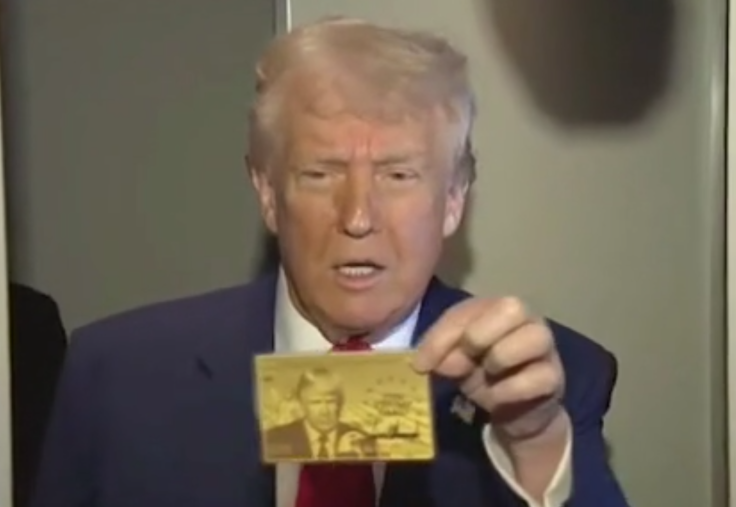
The launch of the Trump Gold Card website in December 2025 has sparked immediate debate across the United States and internationally. The programme offers wealthy foreigners a route to US residency, and potentially citizenship, in exchange for a financial contribution. Critics have denounced it as 'citizenship for sale,' while supporters argue it will attract investment and high-skilled talent. Social media users and news outlets reported swift reactions, with many questioning whether the scheme undermines fairness in the US immigration system.
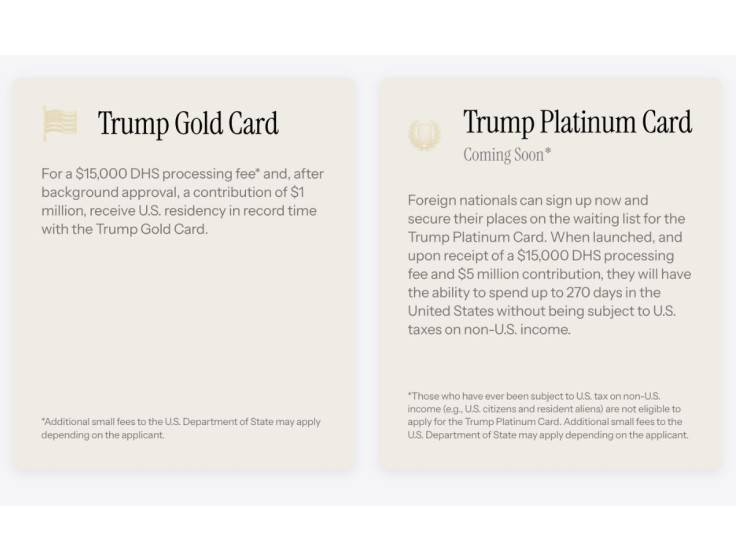
Under the terms of the programme, individuals can secure the Gold Card by providing a US$1 million (approximately £810,000) contribution and paying a US$15,000 (£12,000) processing fee. Corporations may sponsor employees for US$2 million (£1.6 million). Unlike the previous EB-5 investor visa, the Gold Card does not require applicants to create jobs in the US, although all applicants undergo background checks. The administration has said the scheme will inject billions into the US Treasury and help American companies compete for global talent.
The rollout has prompted immediate criticism for prioritising wealth over merit. Observers argue the programme disadvantages applicants who have waited years under traditional visa routes and creates a two-tier immigration system. Comparisons have been drawn with 'golden visa' schemes in Europe and the Middle East, some of which have previously been embroiled in corruption scandals.
Supporters' Perspective
Defenders of the Gold Card maintain it is a pragmatic approach to attracting investment and skilled professionals. Commerce Secretary Howard Lutnick said that the scheme would benefit the economy and assist American companies in recruiting global talent, according to Politico. Analysts have noted that while over 70,000 registrations were reported on the first day, the number of actual applications may be lower, reflecting initial enthusiasm rather than guaranteed uptake, Newsweek reported. Proponents argue that the programme is similar to existing investor visa pathways but streamlined for efficiency.
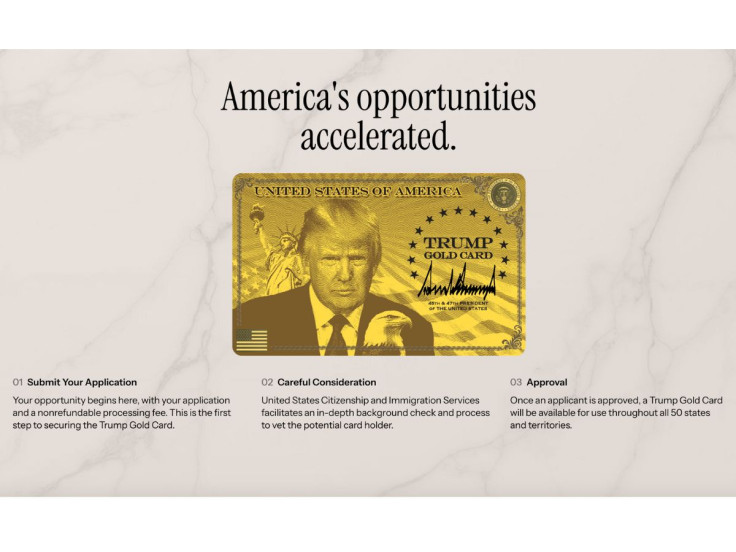
The Department of Homeland Security is working closely with @CommerceGov to facilitate the rollout of President Trump’s Gold Card program.
— Secretary Kristi Noem (@Sec_Noem) December 10, 2025
Under this historic initiative, qualified individuals and corporations, who contribute $1 million and $2 million respectively, will receive… pic.twitter.com/10htrjYyxx
THE TRUMP GOLD CARD.
— The White House (@WhiteHouse) December 10, 2025
Unlock life in America. https://t.co/ui2ZkkdxEH pic.twitter.com/7pxuVvnC6z
Hey everybody!
— Mark Mitchell, Rasmussen Reports (@honestpollster) December 10, 2025
Apple is going to be very happy. https://t.co/aowP4YHoRo
'Citizenship for Sale' and Inequality Accusations
For many, the Gold Card represents a significant departure from merit- or need-based immigration. Critics have described it as a system allowing wealthy individuals to 'buy their way into America.' Immigration-law experts warn that it risks devaluing the efforts of applicants who have relied on traditional routes based on merit, family ties, or humanitarian need. Questions have also been raised about consistency in US immigration policy, given the administration's history of strict enforcement against undocumented entrants.
Human-rights groups have expressed concern that the scheme could attract individuals with questionable intentions or exacerbate social inequality. Comparisons to European and Middle Eastern golden visa programmes highlight past abuses, where wealthy investors circumvented stricter vetting processes to gain residency, IMI Daily reported.
Trump’s Corporate Gold Card literally sells out native-American born workers for foreign labor.
— phillip (@philliplede) December 10, 2025
At a price of $2 million, a company can sponsor an indefinite number of cheap, foreign workers for fast-tracked citizenship to replace American talent.
Great work! Now we can pay… pic.twitter.com/HB0wjwxVv0
Step right up and buy your way into America with your new Trump Gold Card, brought to you by the con men selling out America to the highest bidder and wrecking the economy. pic.twitter.com/q1Gwnnn6x4
— Ron Filipkowski (@RonFilipkowski) December 11, 2025
Drug lords, war criminals, crypto fraudsters… with the #Trump Gold Card, it’s open season for anyone willing to pay for access. pic.twitter.com/jZrcrY4R4P
— No Worries (@noworries0911) December 11, 2025
The Roman Empire also sold foreigners citizenship right before it collapsed https://t.co/2WM6vRw8sj
— BowTiedRanger (@BowTiedRanger) December 11, 2025
Trump is now selling deportation immunity pic.twitter.com/g4kIfUYqCC
— PatriotTakes 🇺🇸 (@patriottakes) December 10, 2025
Legal, Social and Political Implications
The programme also raises legal questions regarding presidential authority, as it effectively alters visa requirements established by Congress. Scholars suggest that Gold Card holders could worsen existing visa backlogs, delaying applications for professionals, families, and refugees who lack financial means. Politically, the initiative has sparked debate across party lines, with critics arguing that it conveys a message that US residency is available to those with sufficient wealth rather than skill or need.
The Trump Gold Card rollout demonstrates the tensions inherent in linking immigration to financial contribution. While proponents emphasise economic benefits, opponents argue it risks creating inequality and undermining public confidence in the fairness of US immigration systems. As applications progress and further details emerge, the programme is likely to remain a flashpoint in both political and public discourse, highlighting the challenge of balancing investment incentives with equitable immigration principles.