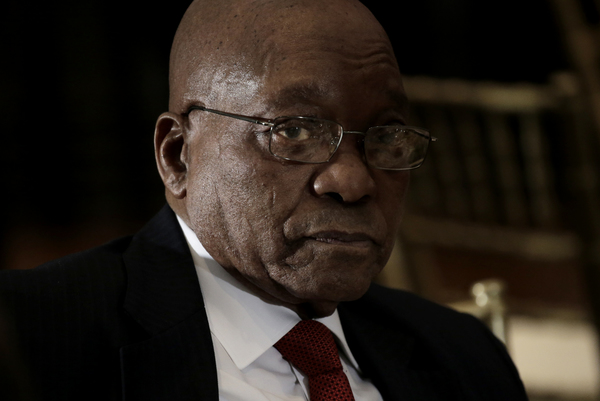
CAPE TOWN, South Africa _ South Africa's parliament will vote by secret ballot Tuesday on a motion of no confidence in President Jacob Zuma, National Assembly Speaker Baleka Mbete said.
"I have considered the environment and heard voices expressing doubt in the integrity and values of our 20-year-old constitution," she told reporters in Cape Town. "We therefore have to use this opportunity to show responsiveness to our people."
The no-confidence motion requires the backing of a majority of the 400 lawmakers to pass. A secret vote increases the chances of Zuma's ouster because members of the ruling party can vote him out without risking losing their jobs. Zuma, 75, who's due to step down as leader of the African National Congress in December and as president in 2019, has defeated several previous attempts to oust him.
The main opposition Democratic Alliance filed the no-confidence motion in April after Zuma's decision to fire Pravin Gordhan as finance minister prompted two ratings companies to downgrade the nation's debt to junk. The opposition argued that since parliament elects the president by secret ballot, it should be able to use the same process to remove him. The nation's top court ruled that the speaker should determine the voting procedure.
The Economic Freedom Fighters, the third-largest party, had said there was no rational reason for denying a secret ballot and threatened to file a new lawsuit to force Mbete's hand if necessary _ a move that could have potentially delayed the debate.
While there is mounting disgruntlement with the ANC over Zuma's leadership and his immersion in a succession of scandals, the party says it will resolve its leadership issues internally and won't allow its lawmakers to side with the opposition to bring down Zuma's administration.
"You would create a crisis of unimaginable proportions," Jackson Mthembu, the ANC's chief whip in parliament, told reporters in Cape Town on Aug. 4. "This motion will be defeated irrespective of whether it is by open or secret ballot. We have confidence in our members."
The ANC has ruled Africa's most-industrialized economy since apartheid ended in 1994 and has a 62 percent majority in the National Assembly. Fifty ANC lawmakers and all opposition legislators would have to back the no-confidence motion for it to pass _ a move that would force Zuma and his entire cabinet to resign.