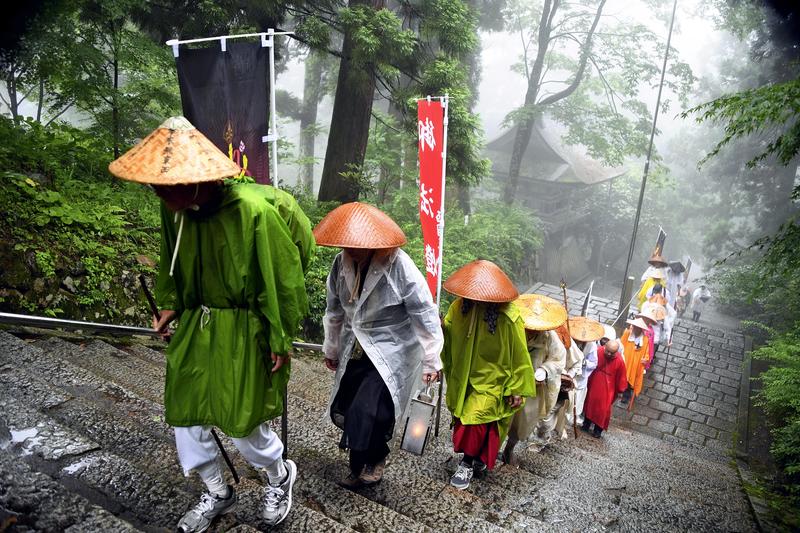
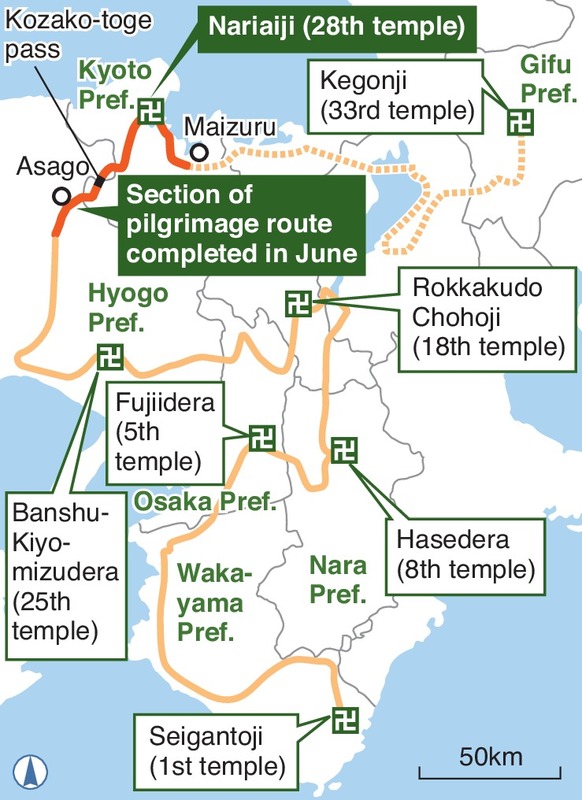
One day in early June, about 30 men and women wearing kasa traditional woven hats and raincoats of various colors trudged up slick stone steps toward the fog-shrouded Nariaiji temple in Miyazu, Kyoto Prefecture. Located near Amanohashidate sandbar -- widely regarded as one of the three most beautiful spots in Japan -- the temple is the 28th of 33 along the Saikoku pilgrimage route.
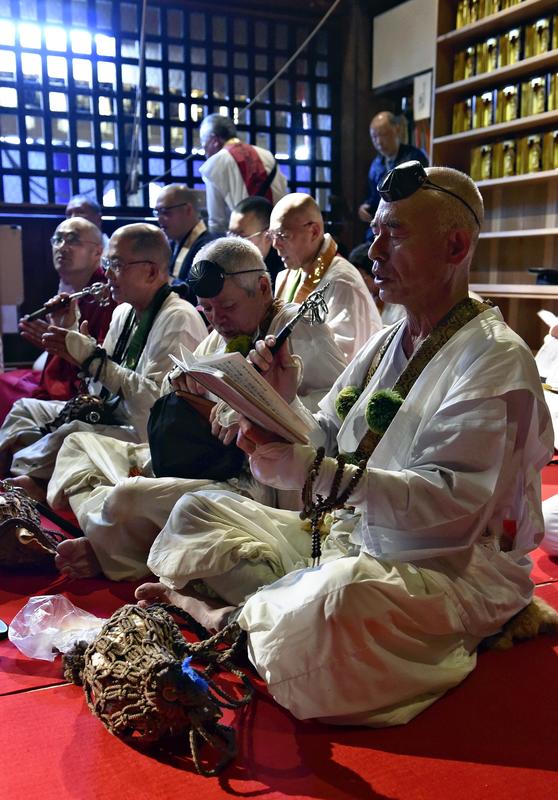
They were visiting the 33 temples on foot as part of an event to commemorate the 1,300th anniversary of the opening of the pilgrimage circuit, called Saikoku Sanjusansho (33 temples of western Japan). After climbing the steep passage to Nariaiji temple, participants read Buddhist sutras in the temple's main hall under the light of a hoto, or sacred Buddhist light.
The oldest member of the group was Shigehisa Tsuchiya, 83, a former university professor from Tokyo.
"The steep ascent won't last forever. Life is the same way. It's a good experience," he said.
Legend has it the pilgrimage route was inaugurated in 718 by Tokudo Shonin, a Buddhist monk of Hasedera temple in what is now Sakurai, Nara Prefecture. All 33 temples worship Kannon Bosatsu as their main deity. The route is believed to have started around 100 years earlier than the famous 88 temple pilgrimage route in the Shikoku region founded by the Buddhist monk Kukai.
The route winds about 1,000 kilometers from the first temple, Seigantoji in Nachikatsuura, Wakayama Prefecture, to the last temple, Kegonji in Ibigawa, Gifu Prefecture.
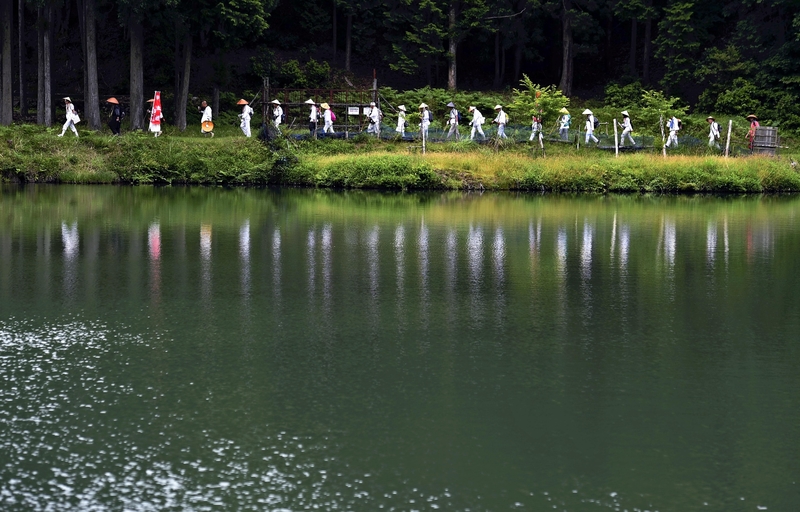
Participants are splitting the hike into more than 10 segments and completing one at a time. They started in May 2016 and plan to visit the final temple in 2020. For this segment, they hiked the about 100-kilometer stretch from Asago, Hyogo Prefecture, to Maizuru, Kyoto Prefecture, in three nights and four days.
These days, quite a few people visit the temples by car. However, Kairyu Mori, the head monk of the route's fifth temple, Fujiidera temple in Fujiidera, Osaka Prefecture, planned this walking event as a way to return to the pilgrimage's roots.
"You can feel the breath of our forefathers as you walk, and that's also meaningful," said Mori, 76.
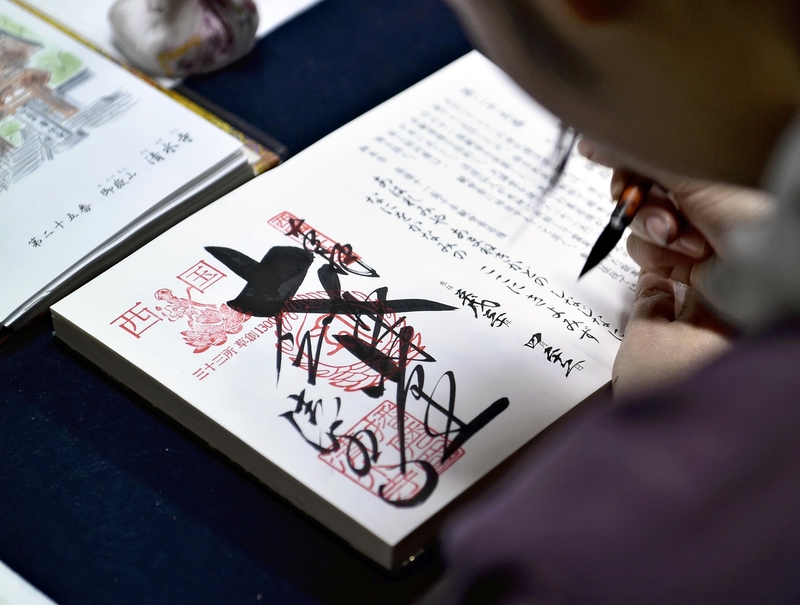
Ryogi Tanaka, the administrator of Rokkakudo Chohoji temple in Kyoto, said, "However much transportation and virtual reality develop, you cannot appreciate the actual wind, smell, sounds and air unless you actually visit each temple."
"I think the pilgrimage route will still be around 100 years from now," said Tanaka, who also heads the public relations committee of Saikoku Sanjusansho Fudashokai, an association comprising the 33 temples.
The pilgrimage route will continue to bring together a wide variety of people in the future.
Read more from The Japan News at https://japannews.yomiuri.co.jp/