WAKAYAMA -- With smartphones in hand, female high school students enthusiastically looked at a standing statue of Amida Nyorai that was made in the 14th century, saying things such as, "The shape of the foot looks pretty," and "This form is so complex."
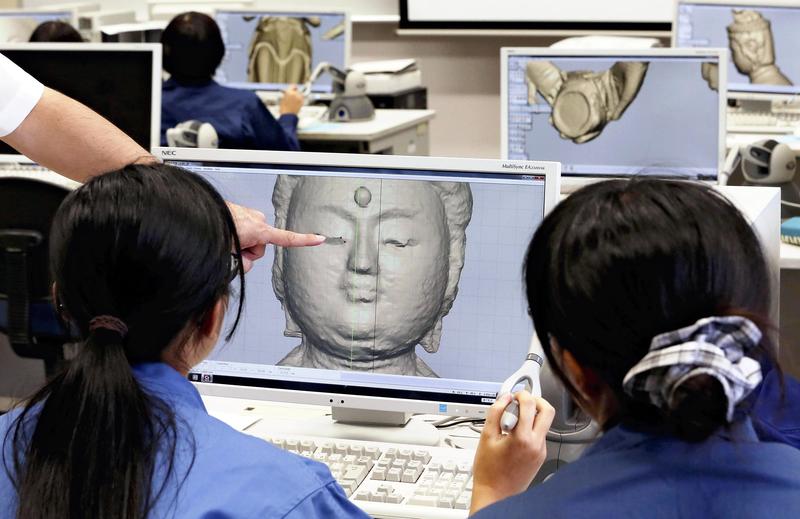
Since the autumn of 2012, students of the industrial design course at prefecture-run Wakayama Technical High School have created replicas of Buddhist statues using a 3-D printer as part of practical work training. In this academic year, seven third-year students have been working to create four replicas in a class held once a week and then plan to dedicate them to relevant temples.
There was a rash of thefts of Buddhist statues in the prefecture in 2010 and 2011, with about 160 statues stolen, according to statistics compiled by the Wakayama prefectural board of education. In recent years, several such thefts have also been reported each year. Due to the aging of local residents and more temples without chief priests of their own, it has become difficult for some temples to properly maintain and manage their property. Buddhist statues and other things have been stolen from such vulnerable temples.
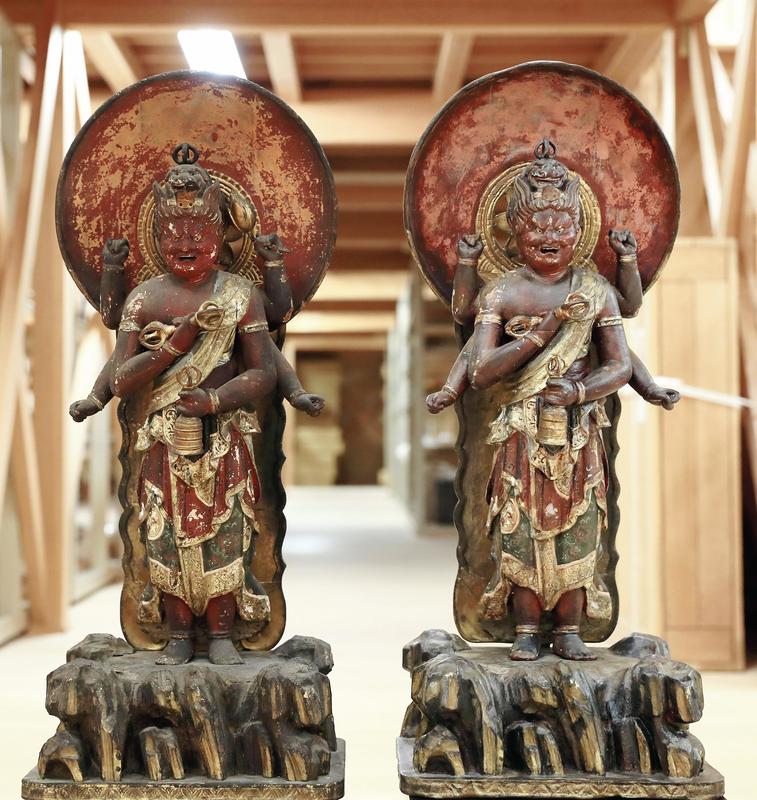
To address the situation, the Wakayama Prefectural Museum now keeps Buddhist statues that temples have difficulty maintaining and have been entrusted to the museum by local communities. They have asked the high school to create replicas of the statues to be placed at those temples, instead. Wakayama is the only prefecture where a museum and high school students are jointly engaged in the production of replicas of cultural assets, according to the museum. If the production were commercially outsourced, it would cost several million yen. However, for replicas produced in a class, only the material costs are needed.
"Fine and delicate techniques are required, but this is such a valuable education for students, who can hear directly from local residents how much their work is appreciated," said Yukimune Kodama, 51, who is in charge of the course.
To produce a replica, a Buddhist statue is first measured with a 3-D scanner and then 3-D data is created based on the measurement results. For parts that cannot be measured, such as the spaces between fingers and wrinkles on clothes, students input data into personal computers based on their own observations. Since the process is difficult, students proceed carefully while observing a statue many times.
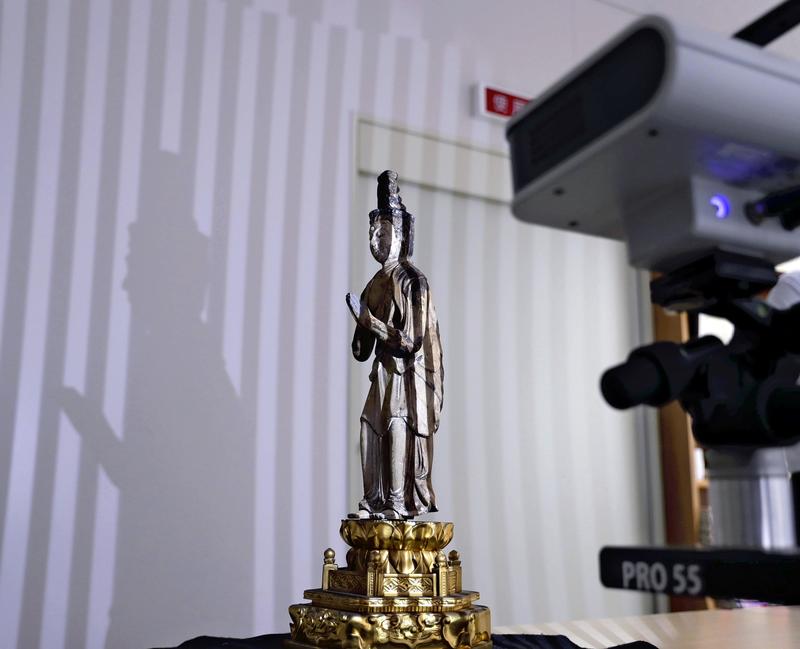
The completed data is rendered in statue form with a 3-D printer, which creates 3-D prints by layering liquid resins. Students of Wakayama University's Faculty of Education, who study art, then paint the prints. So far, they have produced 25 Buddhist statue replicas.
"I can closely look at and touch Buddhist statues that were made hundreds of years ago, which is a mysterious and precious experience," said Ai Shimohigashi, an 18-year-old student.
Read more from The Japan News at https://japannews.yomiuri.co.jp/