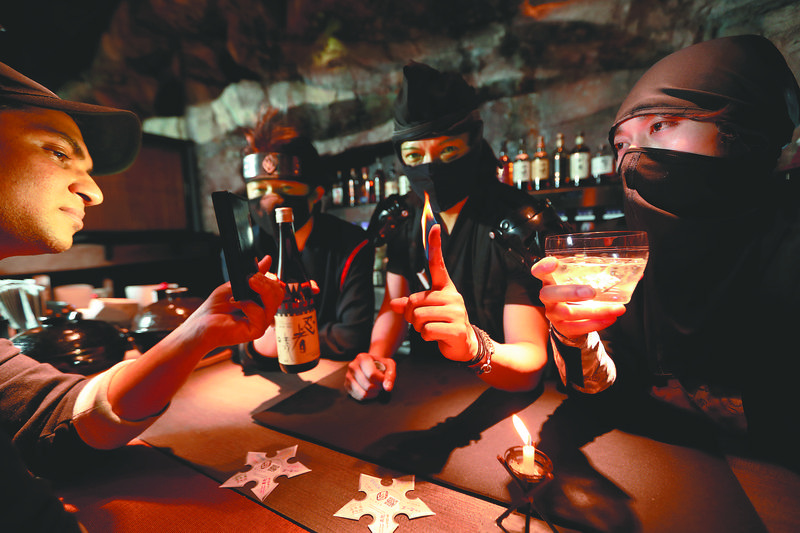
"Move it or you'll be slashed!"
A stern voice bellowed at men and women in black ninja costumes deftly moving around a training hall at Hokkaido's Noboribetsu Date Jidaimura theme park, which stages ninja performances.
The voice belonged to instructor Keiji Yamada, 61, who is head of the park's entertainment department.
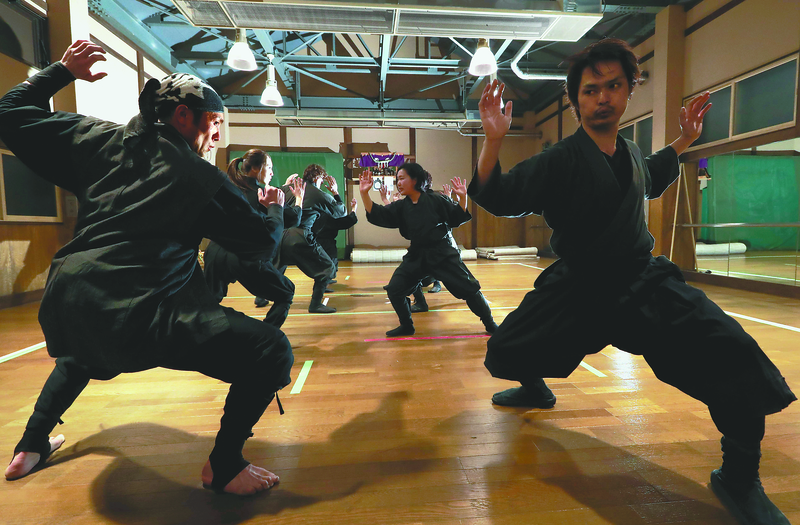
"We want to present realistic performances that live up to the expectations of audiences," he said.
There was a record 28.69 million foreign visitors to Japan in 2017, up 19 percent from the previous year. Following this trend, an aspect of Japanese culture familiar among foreigners is also enjoying a spike in popularity -- ninja. The theme park saw admissions rise from about 75,000 in fiscal 2005 to 325,000 in fiscal 2017, with more than 60 percent of visitors being foreigners.
On the evening of Feb. 18 during the Lunar New Year holiday, foreign tourists turned their smartphone cameras toward ninja performers hopping around a boat that was cruising along the Dotonborigawa river in Osaka's Minami district, an entertainment area bustling with foreign visitors. The ninja cruise is known for being a great source of photos for photo-sharing apps such as Instagram.
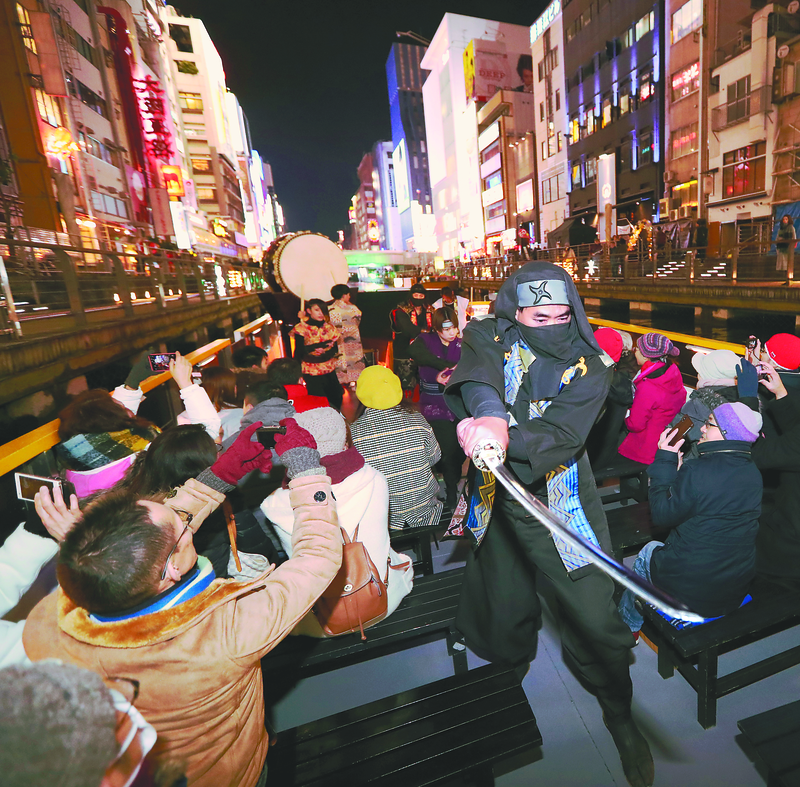
"I want to spend more time experiencing Japanese culture than shopping," said Wu Chilun, a tourist from Taiwan who took many photos during the cruise. "The combination of ninja and wadaiko drums was great."
Lawmakers are eager to take advantage of the popularity of ninja to attract more foreign visitors. An inaugural meeting of the Ninja Giin Renmei, or ninja lawmakers federation, was held in the Diet building among Liberal Democratic Party members, led by Keiji Furuya.
The meeting, attended by about 30 people, was held on Feb. 22 -- Ninja Day. Written as numerals, 2.22, or "two, two, two," could be read as "nin, nin, nin," in Japanese.

Local municipalities and groups in Mie, Kanagawa and other prefectures that have histories featuring ninja spies are part of the Tokyo-based Japan Ninja Council, which promotes ideas for regional revitalization.
"Many foreign visitors come to Japan believing ninja spies still exist, and a growing number of municipalities are trying to use ninja to boost local tourism," said Kunihiro Tateishi, an executive officer in the council.
Read more from The Japan News at https://japannews.yomiuri.co.jp/