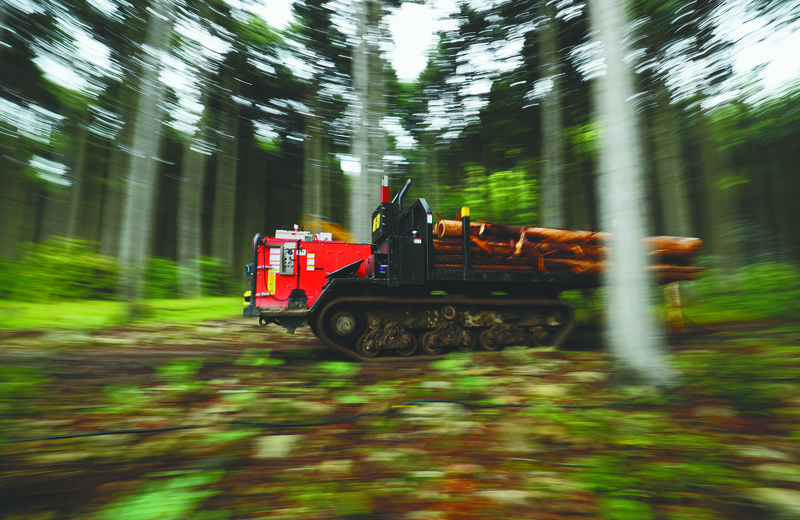
Carrying a pile of timber about 4 meters long, a transport vehicle proceeded slowly but smoothly down a roughly 3-meter-wide path in the woods of Tanba, Hyogo Prefecture. There was no one at the wheel.
The unmanned cart -- specially designed to transport lumber from thinned forests -- carries wood from a forest-clearing site to a collection point a kilometer away, where it automatically unloads its cargo. It is currently being developed by the Forestry and Forest Products Research Institute and other entities.
"Some are saying they want to start using the vehicle as soon as possible," said Masahiro Mozuna, 52, who leads the research team spearheading the development.
According to the Forestry Agency, employment in the forestry industry totaled about 45,000 in 2015, less than a third of the roughly 146,000 people employed in 1980. Thanks to a technical training initiative subsidized by the agency, about 3,000 people have landed forestry-related jobs annually in recent years, although many are also leaving the industry.
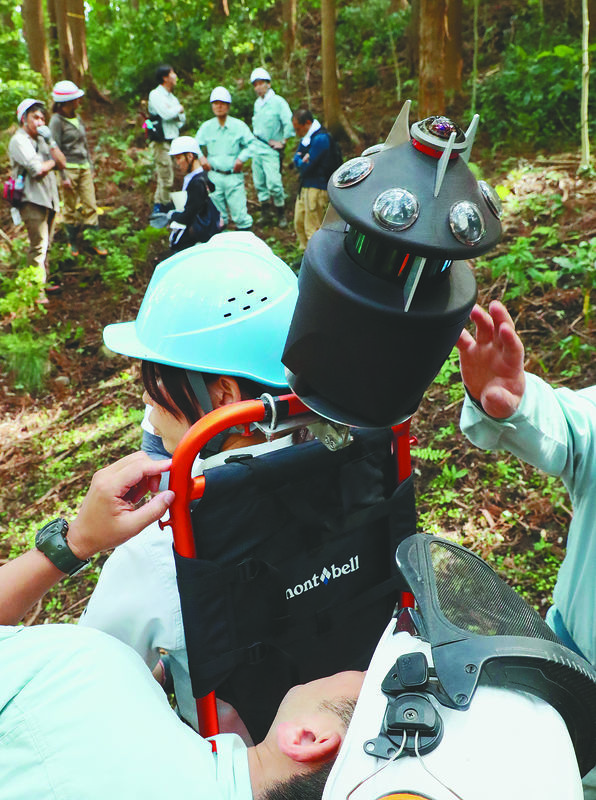
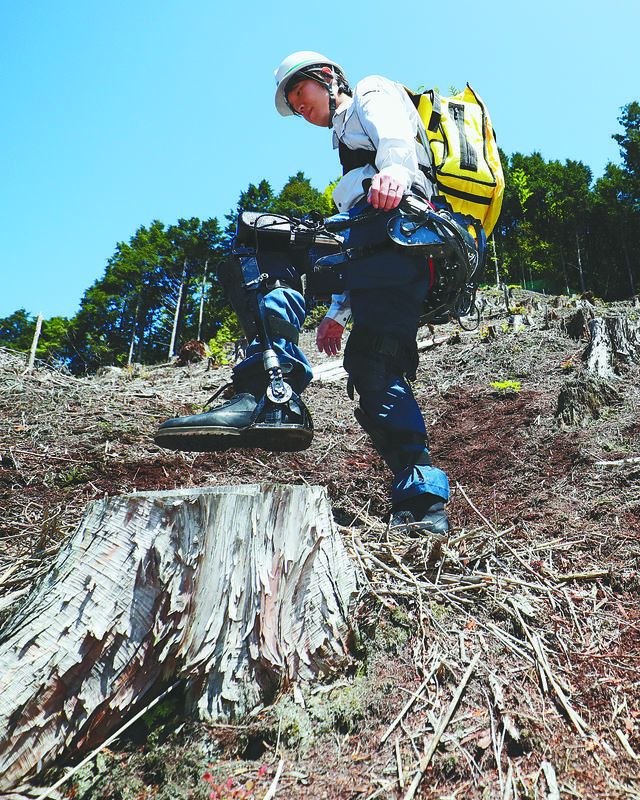
Due to the aging of the industry workforce, efforts are under way to develop various advanced technologies to improve efficiency and reduce the need for labor. Laser scanners are one example of such technology.
"All you need to do is to carry it on your back and walk around. Then you can get a feel for the woods," Hiroyuki Nakamura, the 65-year-old president of Woodinfo, a system developer based in Nerima Ward, Tokyo, said loudly in the woods of Manazuru, Kanagawa Prefecture.
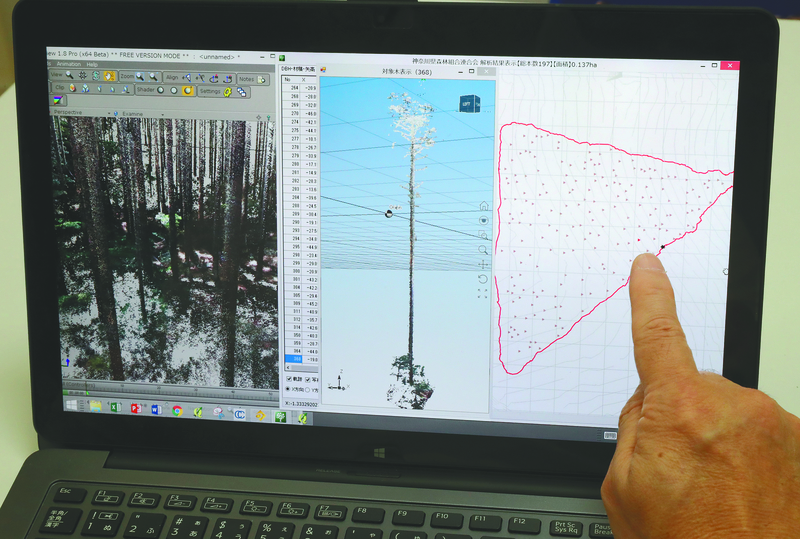
Around him, members of the Kanagawa prefectural federation of forest owners' cooperative associations looked into black cylindrical laser scanners.
The device precisely records the location, height, trunk width, curves and other details of nearby trees when carried around a forest. The data help loggers identify which trees to cut down, among other things.
"This device is handy because the number of veteran loggers who are very familiar with forests is falling, due to aging. We want to sustain forests and pass them down to future generations by making good use of new technology," said Toshiaki Hattori, 67, representative managing director of the federation.
Read more from The Japan News at https://japannews.yomiuri.co.jp/