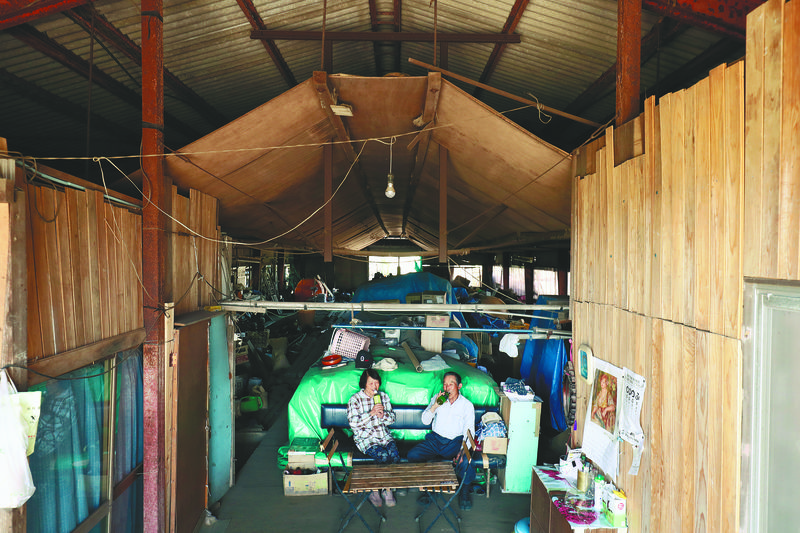
KUMAMOTO -- In a shed in Mashiki, Kumamoto Prefecture, Izumi Imayoshi recalled how his life was suddenly changed by two powerful earthquakes -- measuring the maximum of 7 on the Japanese seismic intensity scale -- that hit the town in succession in April 2016.
"I never imagined we'd live like this for as long as two years," the 79-year-old said. "This year's cold weather was really hard on us."
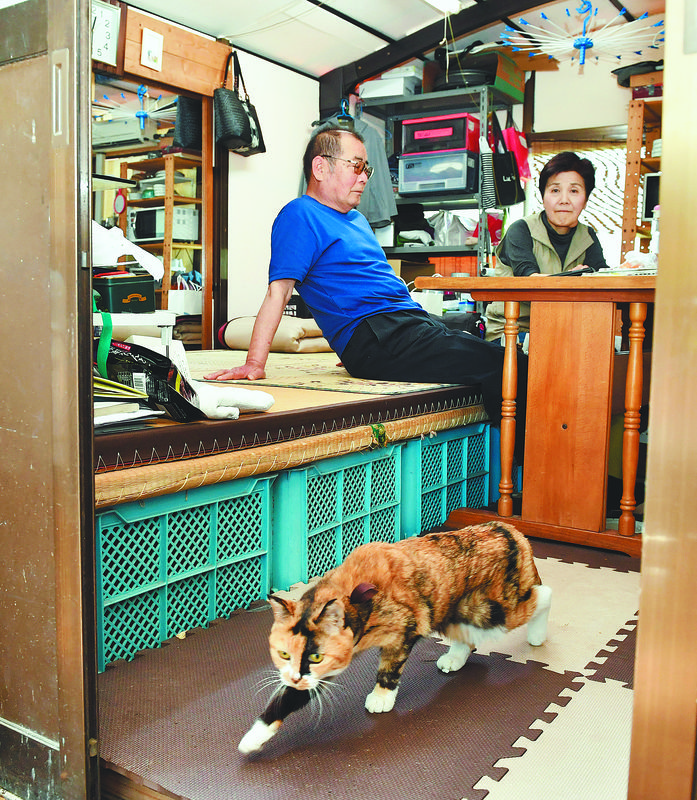
The earthquakes caused Izumi's home in the town's central district of Terasako to completely collapse. He and his wife Kashiko, 80, lived in a car for the first two weeks before eventually evacuating to a cowshed, located about one kilometer from their house, that was used by the couple when they were in dairy farming up until 16 years ago.
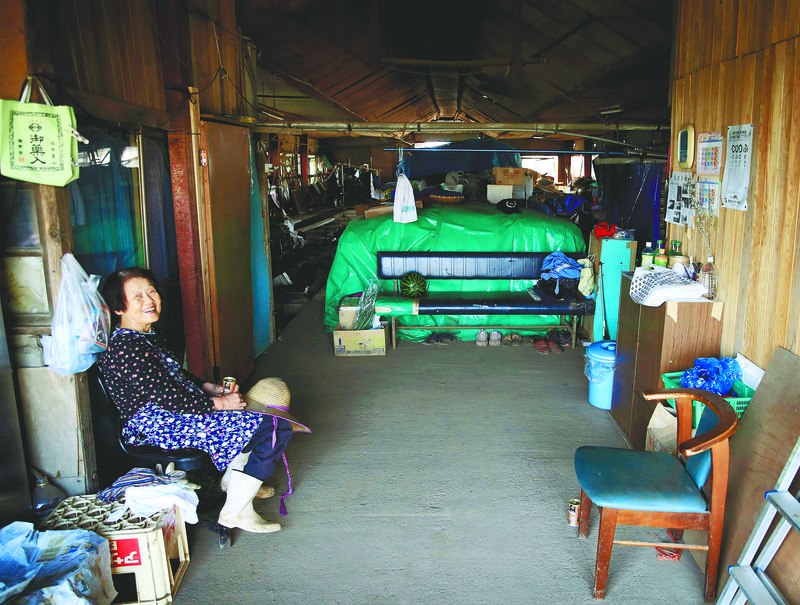
After much deliberation, the couple finally decided to rebuild their house near the shed, partly because the plot of land where their home used to stand is now part of the areas subject to land readjustment under a local reconstruction project. However, they're not sure when they will be able to rebuild their house, Izumi said.
"We want to start a new life as early as possible," he said. "But it's hard to leave our original place, because we have so many good friends there."
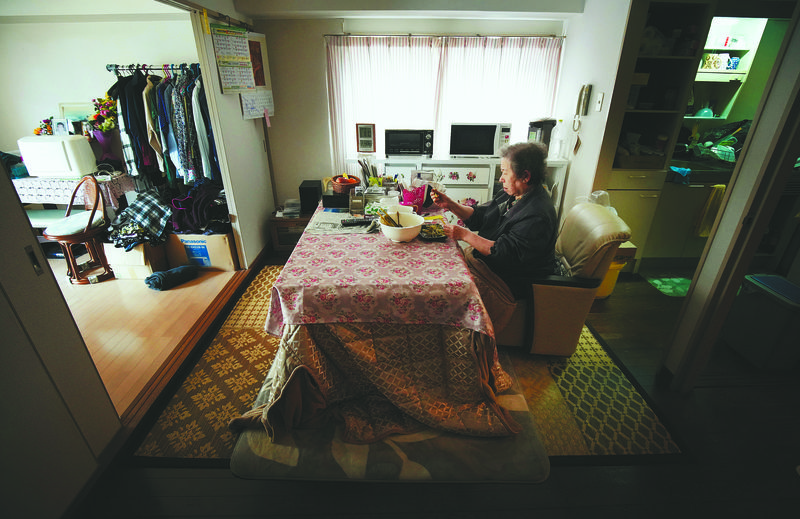
Sumie Teruyama lives alone in private housing rented by the local government in Higashi Ward, Kumamoto. Her house in the Yasunaga district of Mashiki was destroyed in the disaster.
"Before the earthquakes, I used to always see my neighbors," the 81-year-old said as she recalled the days before she moved to her current residence. "But here I had no acquaintances. I was worried."
Among people affected by the Kumamoto quakes, 38,112 people were still living in facilities such as temporary housing complexes and private housing rented out by local governments as of the end of March, according to the Kumamoto prefectural government. Many elderly people are living by themselves, and so far 19 have died unattended.
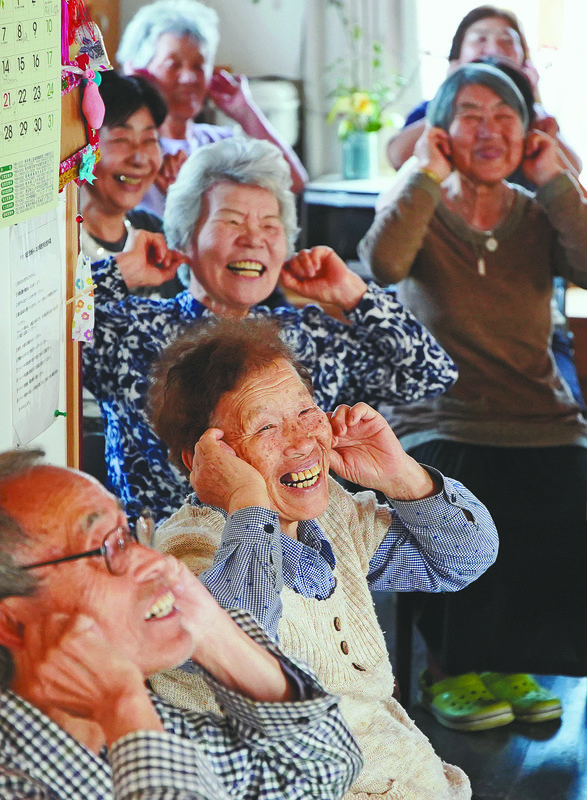
The Mashiki town government is trying to support people who are likely to become isolated, taking such steps as organizing exercise sessions and working with general incorporated associations and private firms to dispatch counselors to keep watch over such residents.
Two years have passed since the Kumamoto Earthquake, but people who lost their homes and were forced into an inconvenient life are still struggling in temporary living arrangements.
Read more from The Japan News at https://japannews.yomiuri.co.jp/