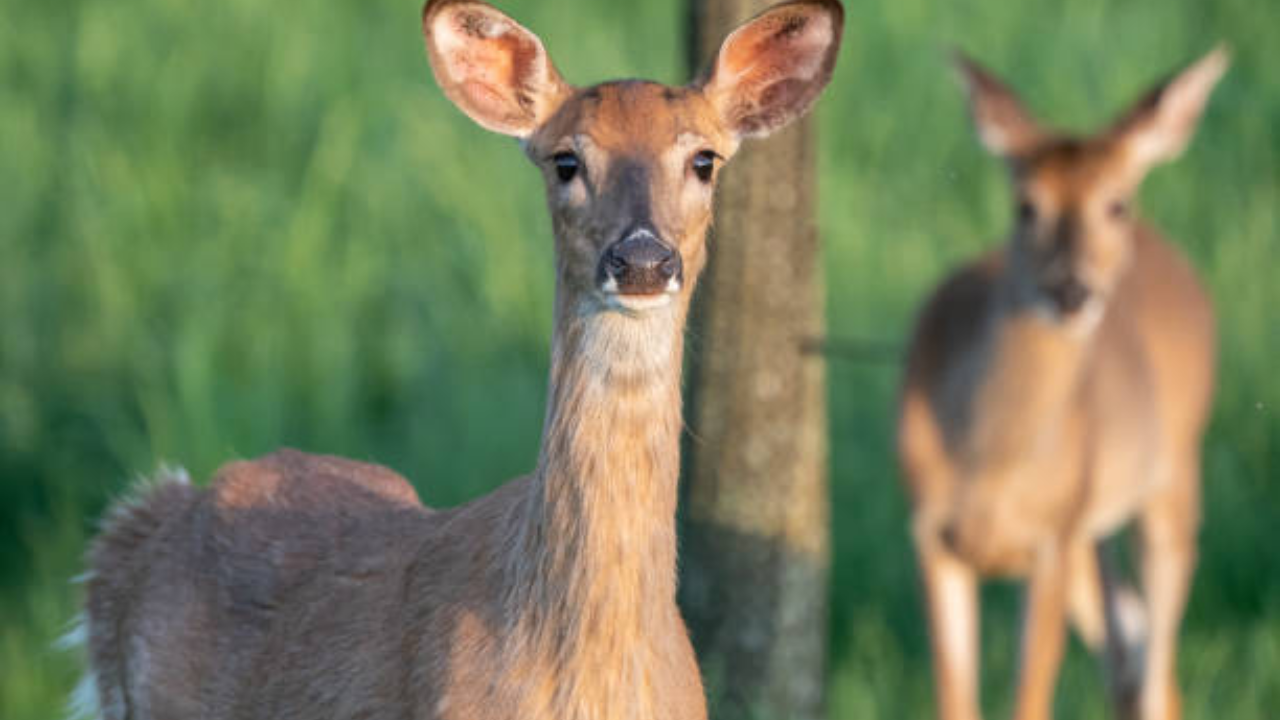
24 'Zombie' deer have been detected in Ohio. The 24 deer were detected by hunters in Allen, Hardin, Marion, Morrow, and Wyandot Counties.
Dozens of white-tailed deer taken during the 2024-25 hunting season tested positive for Chronic Wasting Disease, WHIO TV reported quoting the Ohio Department of National Resources. "The tests were conducted on a total of 5,783 deer. Of the confirmed cases, 23 deer were harvested in Allen, Hardin, Marion, and Wyandot counties. For the first time, a deer harvested in Morrow County also tested positive for the disease," another report stated.
What disease makes deer 'zombie'?
Chronic Wasting Disease or CWD which affects members of the deer family including white-tailed deer, mule deer, elk, moose, and caribou, is nicknamed as zombie disease. As of now, CWD has been confirmed in 34 US states, 5 Canadian provinces, Finland, Norway, Sweden and South Korea.
Once an animal is infected there is no recovery or cure for CWD.
Prions, naturally occurring proteins, cause the zombie disease become misfolded, create holes in brain tissue and eventually leading to death. These prions are released into the environment through bodily fluids or diseased carcasses and are extremely resistant to degradation, which means they can remain infectious for years.
Affected animals show symptoms like weight loss, abnormal behavior, and lack of coordination and are hence known as 'Zombie'.
Can Chronic Wasting Disease affect humans?
As of now, there have been no reported cases of CWD transmission to humans. However, due to its similarity to other prion diseases, such as Creutzfeldt-Jakob Disease (CJD), health authorities advise caution. The Centers for Disease Control and Prevention (CDC) recommends that hunters avoid consuming meat from CWD-infected animals.
As per a study published in 2024, "following direct exposure of human central nervous system tissues to CWD prions there is a substantial resistance or barrier to the propagation of infection."
"They are optimistic that the inference of these current data is that humans are extremely unlikely to contract a prion disease because of inadvertently eating CWD-infected cervid meat," the researchers have said. The findings of the study is published in Emerging Infectious Diseases journal.