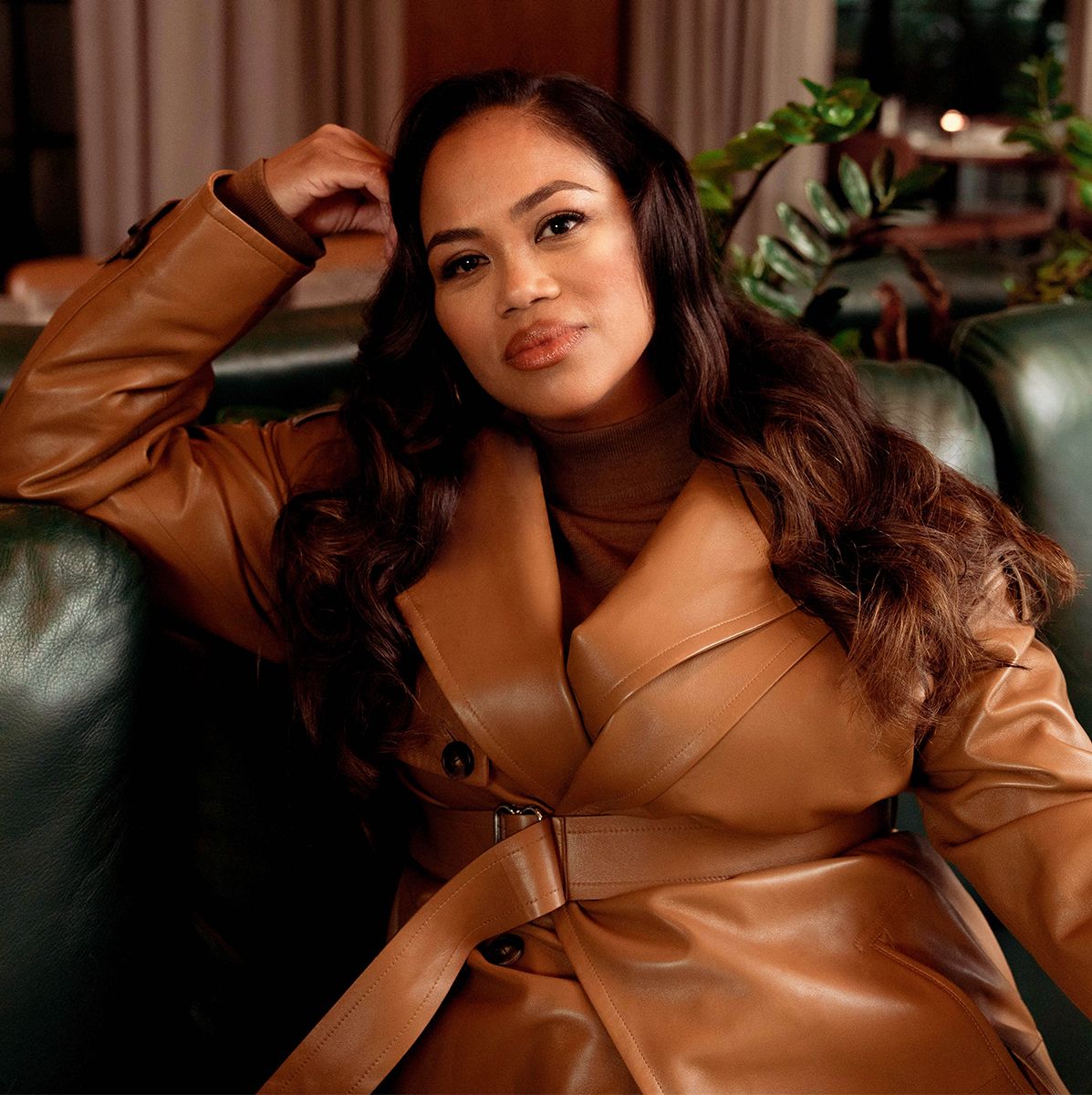
Zinzi Coogler needs a bit of me time. It’s a Sunday morning in West Hollywood, and the producer, clad in a cozy cardigan and oversized gold frames, is getting a much-needed IV treatment after a night out. The day before, she had flown to L.A. from her home in the Bay Area to attend the LACMA Art+Film Gala where Angela Bassett honored her husband, famed director Ryan Coogler, for his visionary career.
While Ryan gave a ruminative speech about his early film-school days at the Gala, Coogler was perhaps the only person in the room whose memories of the would-be auteur went all the way back to when they were teens. As usual, Coogler was a step out of the spotlight, his most-trusted advisor long before they were invited to red carpet events, watching with pride from the audience. But she’s hardly been just a casual observer.
This year, Coogler, 40, could potentially see her name on a golden statuette, with Sinners entering awards season as a frontrunner in nearly every category for which it qualifies. (The film has eight mentions on 2026’s Oscars shortlists.) The Mississippi-set historical vampire musical marks Coogler’s first time serving as a lead producer on a project; the “(p.g.a.)” after her name in the credits means that she made the big creative decisions, alongside Ryan and their business partner, Sev Ohanian.
“I was in the trenches for real; and responsible for it, like legally,” she says, with the laugh of someone remembering past overwhelm. “I had to sign papers.”
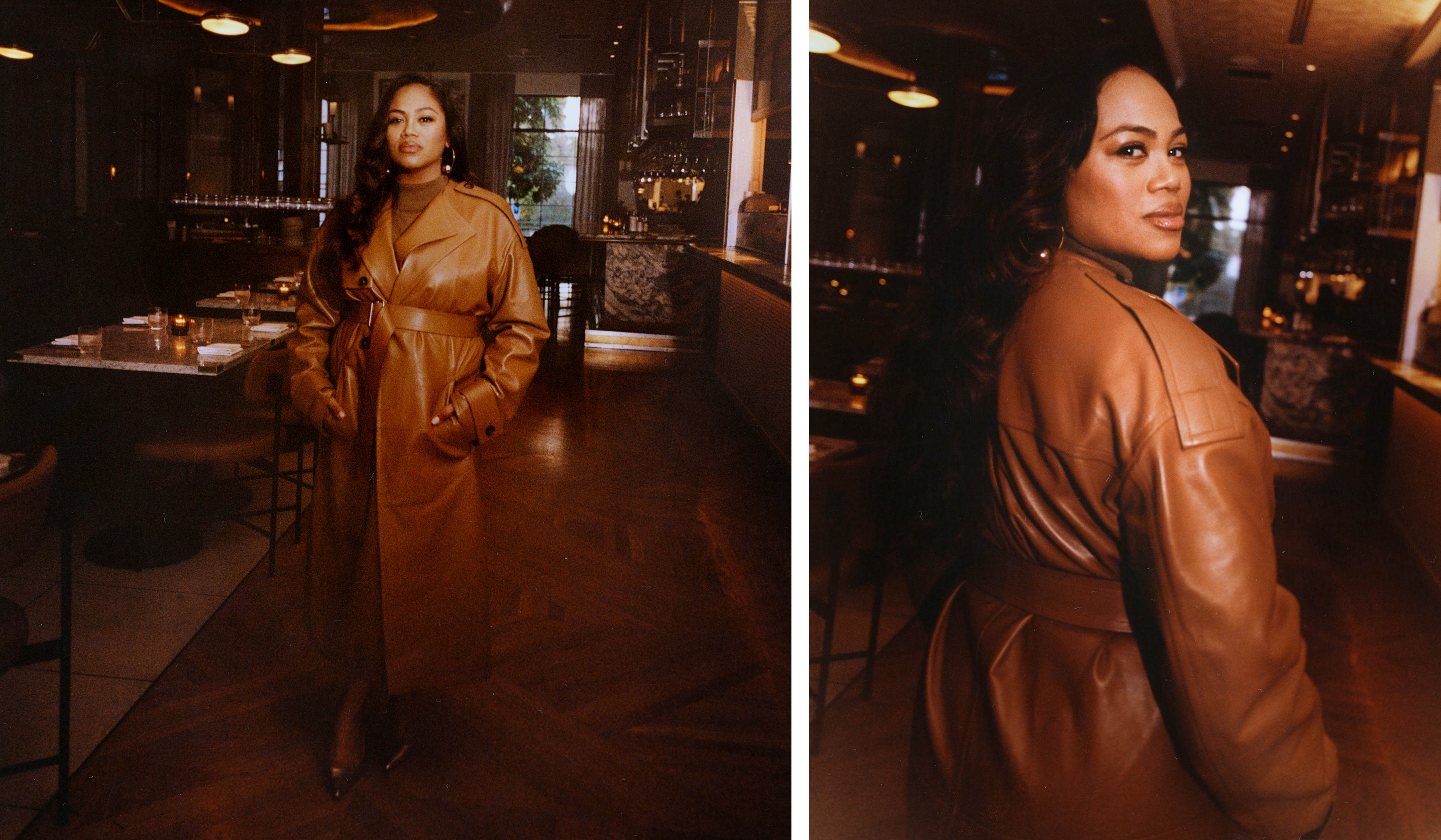
If you didn’t know that Coogler was a major force behind the film (and so many others), that’s intentional. In many ways, she’s quietly declined to participate in the performative aspects of fame, eschewing the industry siren song to build personal brands, parasocial fandoms, and a social media aesthetic, in favor of staying behind the scenes. Instead, she chooses to let Ryan be the one who goes out to the press to speak on his influences and give the viral soundbites and glimpses into their private life. The couple’s production company Proximity Media (which they founded with Ohanian) has a podcast In Proximity to discuss the work that goes into making a film. There have been talks of a "Zinzi episode," although she’s yet to appear.
Our early November interview, in a chic hotel lobby off Santa Monica Boulevard, is one of the rare, solo press moments Coogler has ever agreed to. Sitting on the opposite side of an L-shaped leather sofa, her hands stay in her lap, slightly fidgeting unless they’re holding a cup of coffee, as she tells me how far this—this being talking to a journalist; this being centering herself—is out of her comfort zone.
She’s “definitely not a natural” at the public-facing portions of her job, she says, adding that “it's a hard question to think about how I view my own self.” She doesn’t seem down with putting her individual contributions to Sinners on the record. Rather, she spends a great chunk of our time expressing gratitude and pride in her team; acknowledging each of her collaborators and making sure to include their full names and titles.
Coogler could be described as shy. But that’s not really it. While there’s a certain truth that she doesn’t find comfort in the spotlight, she isn’t shrinking—she’s flying in the face of expectations that have been put on her. Black women learn early on that we have to speak up to be recognized. The world will pass us over many times before we’re given the flowers we deserve. For Coogler, that's only amplified under the microscope of celebrity, where the public makes assumptions about her being just “the wife,” even as she’s the very heartbeat behind the most-successful original film in over a decade and part of a powerhouse producing trio. It takes a deep well of confidence to let your accomplishments speak for themselves. But for Coogler, her work has always been her pulpit.
We don't have filmmakers in our family, so we have each other to turn to and to lean on, and we've become each other's sounding board and safety net.
Before she was an artist, she was an athlete. Growing up in Oakland, California, one of seven kids, Coogler discovered a love of running at a young age. In high school, she was an award-winning scholar athlete who served as track-and-field captain for three years. One day, she caught the eye of a football player from another school. Ryan would recall two decades later that she was “kicking everybody’s ass on the track,” and he had to work up the courage to ask for her number. The pair's first date was at the Regal cinema to see Bring It On.
Going to the movies wasn’t a regular hobby for Coogler before she met Ryan, but it quickly became their favorite pastime. “Zinzi had the most incredible taste,” Ryan shares via email, over the holidays in late December, recalling their near-daily trips to the theater the summer before they went off to college. “She would always break down why certain stories worked for her, and she could always articulate what was holding her back when something didn’t. I was in awe of her capacity for understanding the story and communicating ways it could improve since then.”
Coogler’s athletic career took her to Fresno State, where she studied communicative sciences and deaf studies while remaining a standout in both track and cross-country. Speaking to her now, Coogler recognizes that her student-athlete years, where she perfected endurance and excellence, were foundational to her current work.
“There's something about that diligence that filmmaking requires. Once I knew that Sinners was the project in front of us, it was just heads down,” she says. “[Ryan, Sev, and I] just locked arms and made a plan for how we were going to accomplish it and do whatever was necessary to make that happen. We spent countless hours just trying to make it right.”
She would always break down why certain stories worked for her...I was in awe of her capacity for understanding the story and communicating ways it could improve since then.
Ryan Coogler
College is also when Ryan and Zinzi’s most well-known anecdote takes place: When he was a broke college football player, trying to format his first scripts using Microsoft Word, she bought him a copy of the industry-standard screenwriting software Final Draft. That $300 investment is now a day-one, ride-or-die story that has cemented them as Black creative couple goals. Of course, the then-student had no idea that she was helping to change both of their lives. Even recalling it now, she counts the intention behind the gift—helping the person she loved pursue his dream—as much more important than what it eventually beget.
“Gifting was one of my love languages because I loved to give something that would give joy to someone,” Coogler says. “I knew nothing about screenwriting, but it was something that he had a real interest in. It was very expensive for us at the time, but if that would give him that joy, then it was my pleasure to be able to do that.”
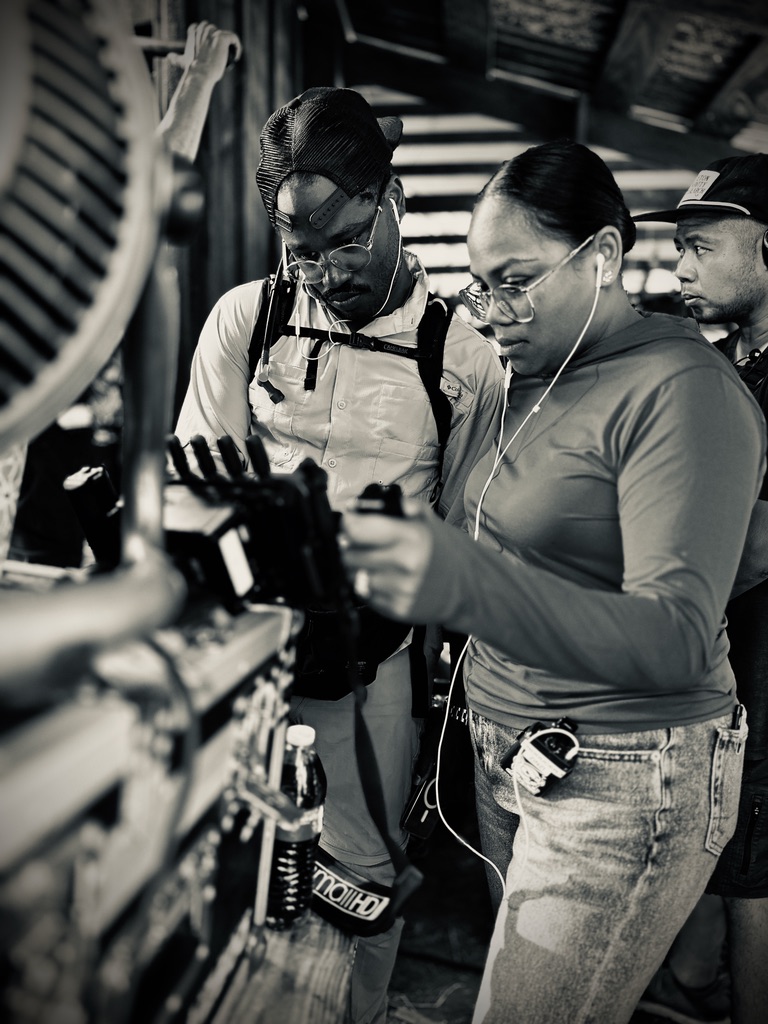
When Ryan moved to L.A. in 2008 to attend USC’s film school, Coogler remained in the Bay Area, working for the nonprofit Deaf Counseling, Advocacy & Referral Agency as an ASL interpreter. The couple stayed together long-distance, and as they grew in their respective careers, they began a lifelong practice of “pulling each other into each other's work.” When she was in L.A., she’d sit in on his film classes. She also served as assistant director and script supervisor on his 2009 student short Locks, her first time working on an award-winning production.
I think it's a privilege to be a filmmaker. It's not lost on me, and the time we're in, that we get to tell stories that we hope resonate with the audiences.
As Ryan’s career took off—from the underdog success of Creed to the billion-dollar machine of Black Panther—so did their relationship. They married in 2016, a year after Coogler left her job at DCARA and a few months after news broke that Ryan would direct Black Panther. They've welcomed three children together since 2019.
Coogler doesn’t share a specific moment where a flip switched and she went from bystander to professional. She was “not really thinking about it for myself” when it came to filmmaking. But she enjoyed being an “observer and supporter” from the first screenplay draft to the final post-production edit “with all the context that goes into seeing his projects from concept to completion.” As she puts it, “I got film school the other way.”
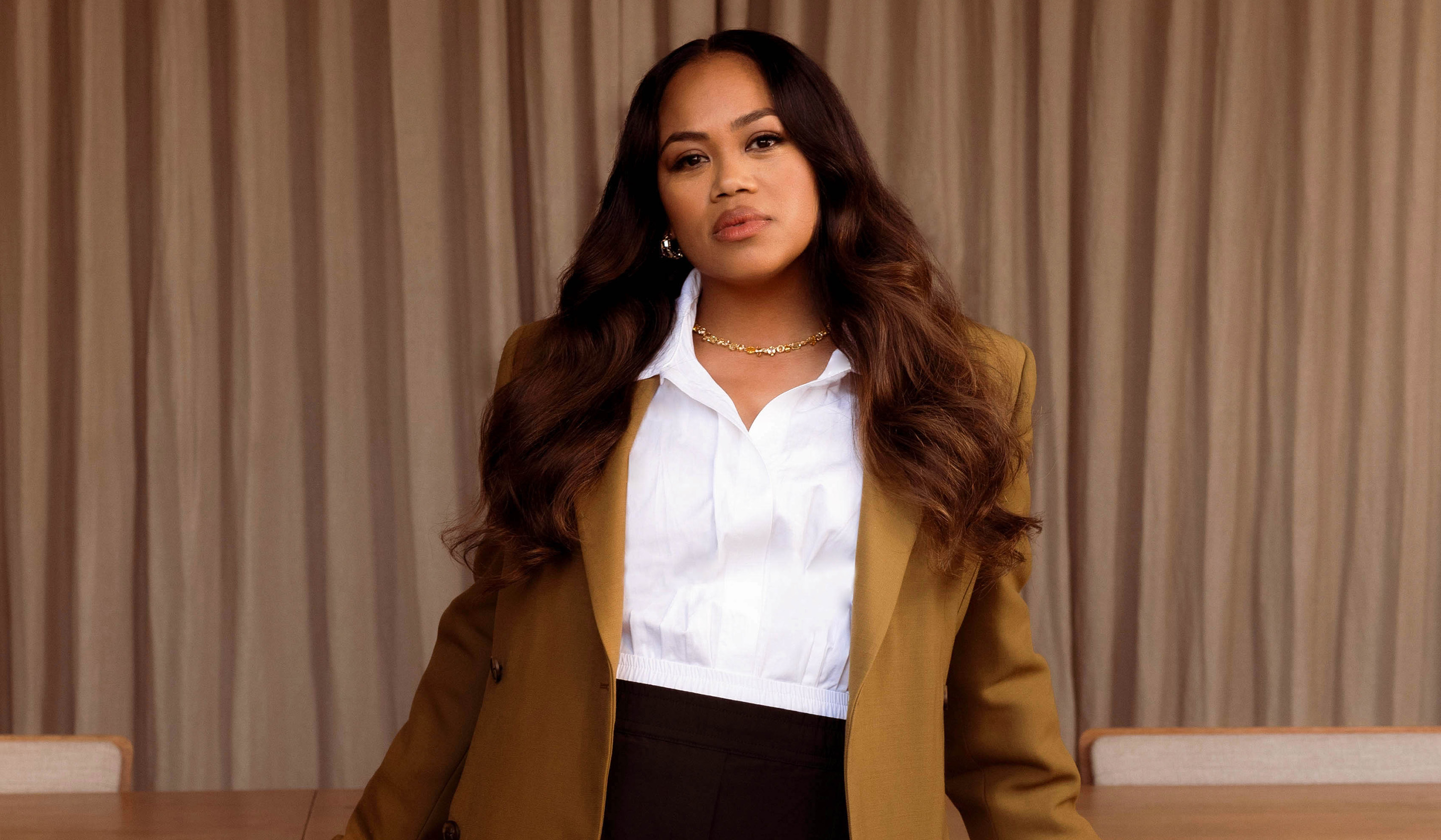
Her fingerprints are all over her husband’s films if you know where to look. Speaking to Filmmaker Magazine last April, Ryan revealed a note Coogler gave him on the Black Panther script. She suggested that a defeated Killmonger (played by Michael B. Jordan) should reference going to jail, which led Ryan to crafting one of the most powerful quotes of the entire film. “I feel like I'm the audience member,” Coogler says, describing her role as, “the person who sits kind of neutrally and gives that perspective on any given story.” It’s just one example of too many to list.
And with projects like Sinners, her creative touch is only more visible. "It was amazing to have her presence as a producer on set," Autumn Durald Arkapaw, the cinematographer for Sinners, writes in an email. "One special thing she wanted to make sure we captured is the moon. She worked with me and my camera team to get the necessary gear since it required a special lens. We missed our first two shots but eventually captured it at the end of our schedule. It’s such a beautiful shot and so important in our storytelling. I always call that the 'Zinzi moon.' The film is infinitely deeper and more honest because she was there to champion it."
The husband-wife creative duo is having a moment in Hollywood in recent years. See the industry-wide acclaim for teams like Margot Robbie-Tom Ackerley (Barbie), Greta Gerwig-Noah Baumbach (also Barbie), and Christopher Nolan-Emma Thomas (Oppenheimer). Still, a more cynical person could wonder if Ryan’s insistence to include Coogler in “literally every step of the process” falls under codependency.
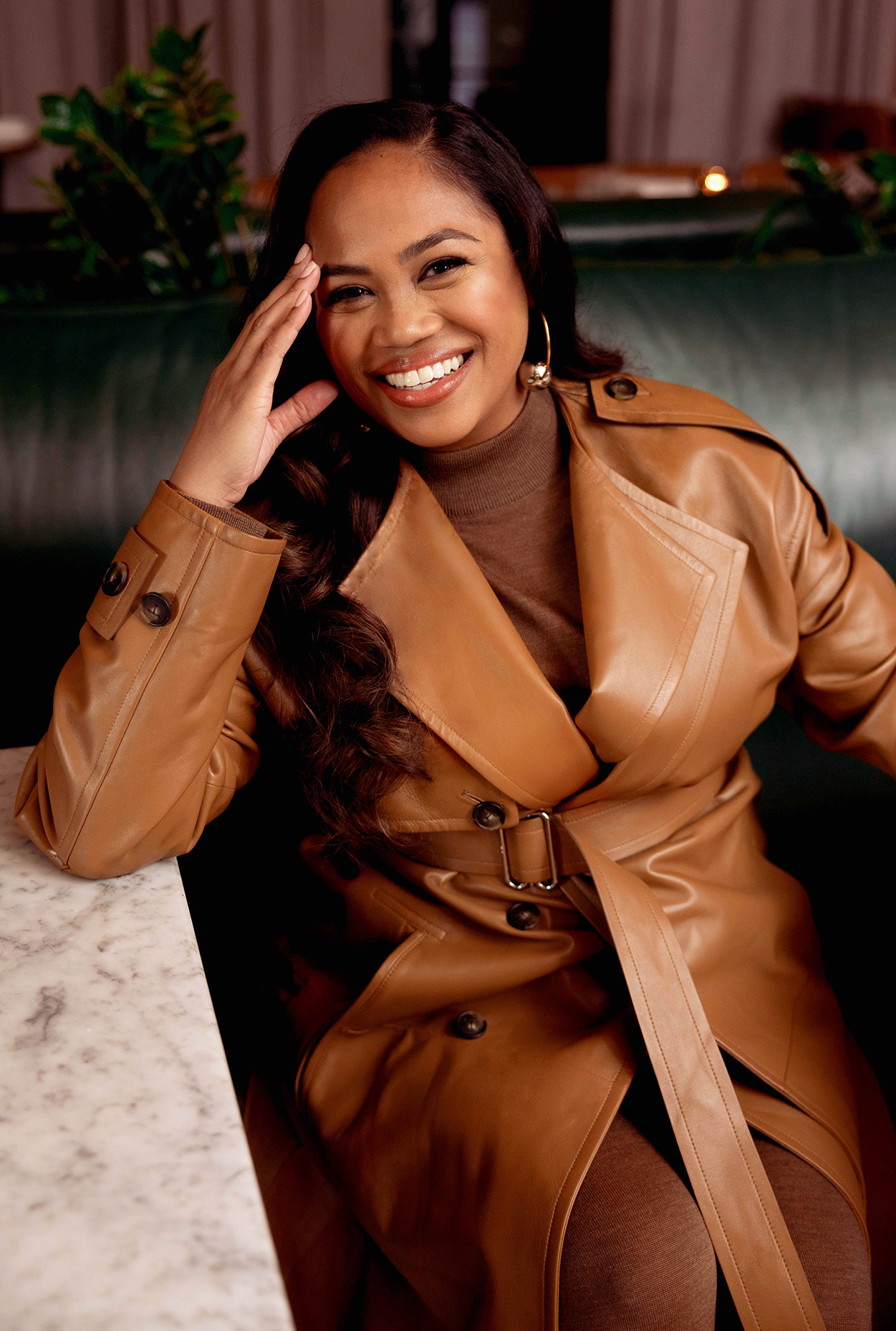
Coogler even recognizes that it can be a bit extreme; chuckling as she recalls the early days of tagging along to “the most inappropriate meetings.” But when asked if she’s ever felt her inclusion was unnecessary, in the days when she was sitting in on deal meetings without an official producer title, she points out that it’s not a question of should she? but why not? Hollywood, as nepo baby discourse has revealed, can be a collection of family businesses.
“We don't have filmmakers in our family,” Coogler says, “so we have each other to turn to and to lean on, and we've become each other's sounding board and safety net…I think we've found a rhythm and a way to do it together in a way that brings us joy.”
We find ourselves leaning into stories about communities that are, I guess you could say, underrepresented, but in a way that shows that complexity and vibrancy and joy in life.
When the Cooglers and Ohanian started Proximity Media in 2018, they were clear-eyed in the mission behind their movies: “We find ourselves leaning into stories about communities that are, I guess you could say, underrepresented, but in a way that shows that complexity and vibrancy and joy in life,” Coogler says.
This perhaps feels the truest reason for why she plunged into filmmaking full-time: to put her advocacy work on a much larger scale. Most notably, Tessa Thompson’s character in Creed, who lives with progressive hearing loss, was influenced by Coogler’s family members who identify as hard of hearing. Through the film’s impact, she saw the opportunity to highlight that community’s stories “at a much different scale.” It was a milestone in Black deaf visibility. Sinners only continues that work, becoming the first streaming film to offer a Black American Sign Language (BASL) interpretation.
When it comes to what's next though, Coogler is tight-lipped; the only name she’ll drop among Proximity Media’s many projects is the long-hyped X-Files reboot. “I wouldn't get ahead of myself to think about next year,” she says. “All I can think about is right now, and I'm just overwhelmed with the positivity around the film and the work that we've done. I think it's a privilege to be a filmmaker. It's not lost on me, and the time we're in, that we get to tell stories that we hope resonate with the audiences.”
Instead of dreaming of gold statuettes on a mantle, Coogler’s thoughts about legacy lie with the three children waiting for their mom to return home. She’s extremely private about her family. When asked whether her kids dress up as Black Panther for Halloween, she assures that “they’re too young for that” before moving on.
What she will share is that she hopes her work will usher in a softer world for them. “I think that's why we're so passionate about the stories we tell, because kindness is so important, and maybe if we have a deeper understanding of each other, that kindness wouldn't come so difficult. I hope that would be an influence to our kids, regardless of what comes about.”
Photographer Lauren Kim | Stylist SK Tang Hair | Stylist Marcia Hamilton | Makeup Artist Tasha Reiko Brown | Creative Direction Montse Tanús | Entertainment Director Neha Prakash | Producer Lindsay Ferro | Line Producer Evan Duran | Location Special thanks to the Kimpton La Peer Hotel
An earlier version of this article misstated the year Proximity Media was founded. It was 2018, not 2021.