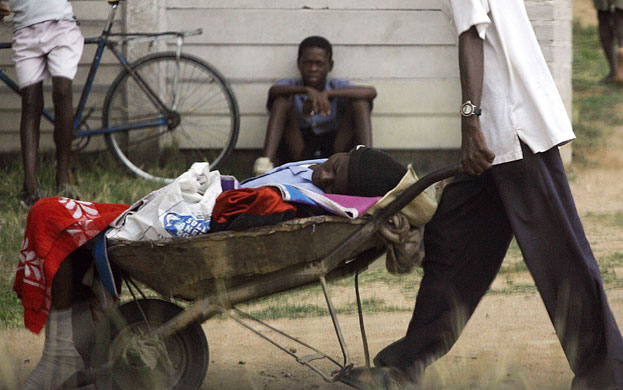
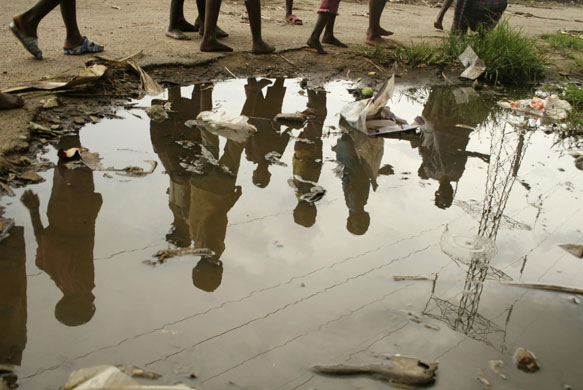
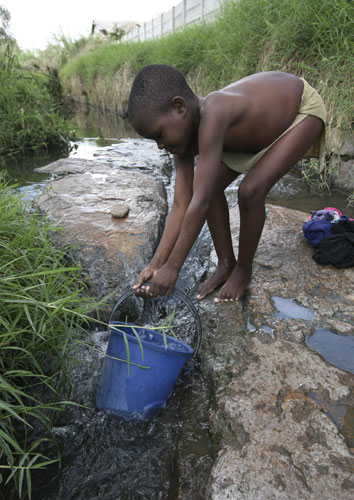
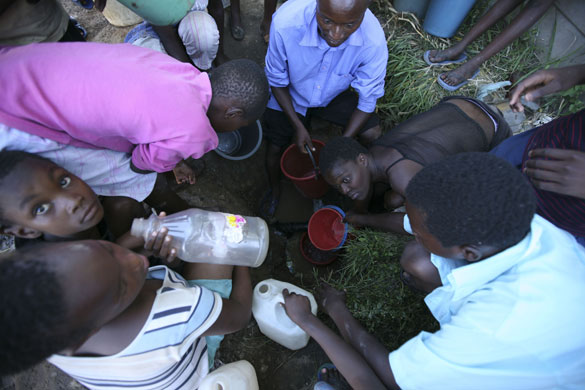
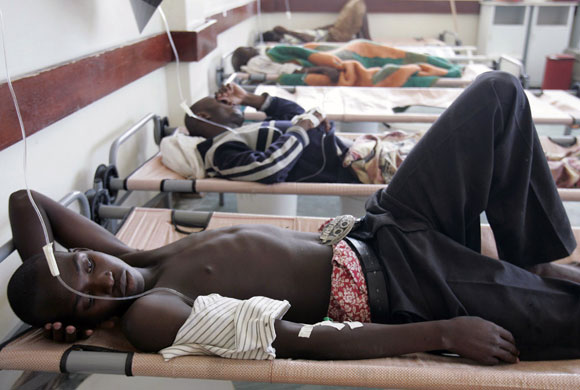
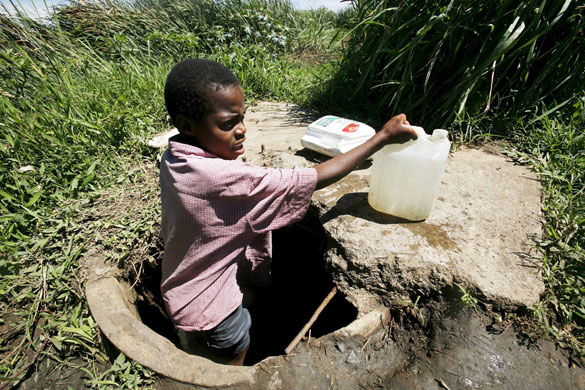
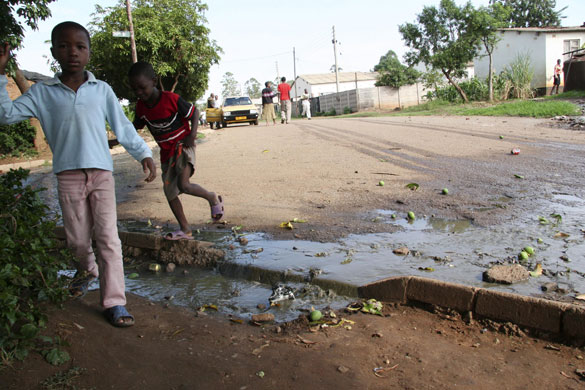
A man pushes his relative in a wheelbarrow to a cholera polyclinic in Harare. The nationwide outbreak of cholera, caused by a breakdown in basic water and sanitation services, has left more than 6,000 people infectedPhotograph: Desmond Kwande/AFP/Getty ImagesChildren walk past rainwater and sewage near HararePhotograph: APA young boy collects water after bathing in a river in HararePhotograph: Tsvangirayi Mukwazhi/AP
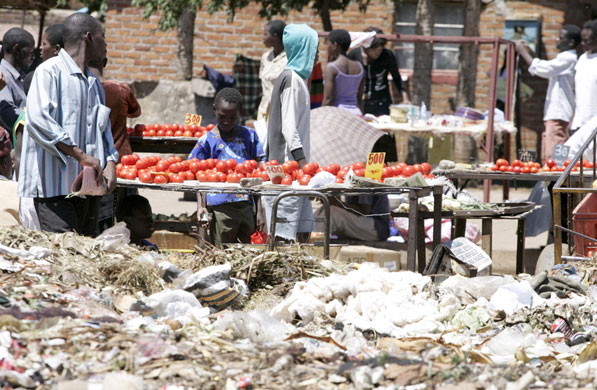
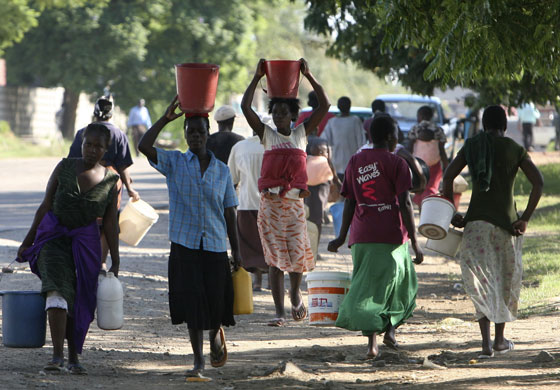
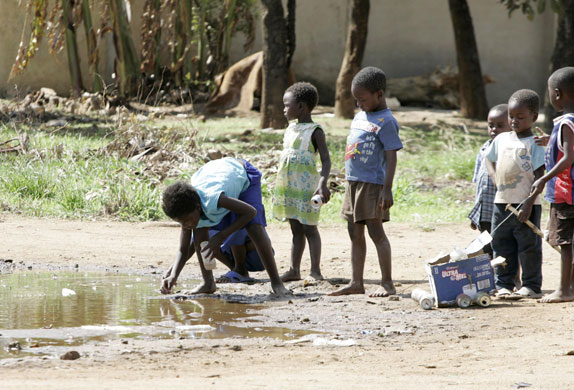
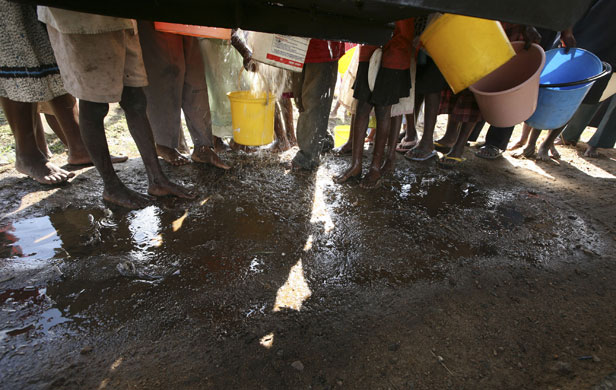
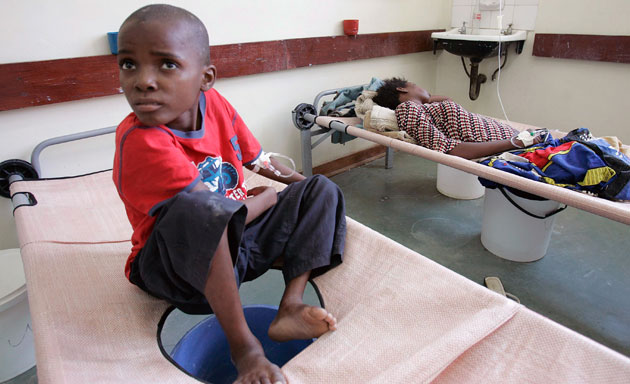
A vendor sells vegetables near uncollected garbage in Glen View, HararePhotograph: Philimon Bulawayo/ReutersWomen and children wait to collect water from an underground source. The shortages of running water in Harare have been caused by a lack of purification chemicalsPhotograph: Tsvangirayi Mukwazhi/APCholera patients in the male ward of Budiriro polyclinic, in Harare. Zimbabwe is set to get vaccines from China to help fight the disease, state media reportedPhotograph: Philimon Bulawayo/ReutersA young boy fetches water from an unprotected well in the Harare suburb of Glen ViewPhotograph: Aaron Ufumeli/EPAChildren walk past sewage water in Glen View, HararePhotograph: Tsvangirayi Mukwazhi/APWomen carrying water in buckets pass others carrying empty buckets towards an underground water source in HararePhotograph: Tsvangirayi Mukwazhi/APChildren play with stagnant raw sewage in the Machipisa suburb of HararePhotograph: Philimon Bulawayo/ReutersWomen and children collect clean water from a Unicef truck in HararePhotograph: Tsvangirayi Mukwazhi/APA boy rests on his bed in a cholera ward of Budiriro polyclinic, in Harare. Zimbabwe's health minister has warned that the cholera outbreak could escalate during the rainy season, which runs to AprilPhotograph: Philimon Bulawayo/Reuters
Sign up to read this article
Read news from 100’s of titles, curated specifically for you.