In 1981, manga artist Yukari Ichijo wondered why the word "action" was used in a notice about her new work, "Yukan Club" (Leisure club) in a girls' manga magazine that was going to run it.
She had been asked to draw for the brand-new magazine, Ribon Original, and was planning to start a comedy about a love circle among six students at a high school for children of wealthy families.
Yet the notice promoted the manga as a "school action comedy."
Ichijo phoned the magazine's editor, who told her that he liked her past works with action elements and wanted her to draw something similar. "What is he thinking?" she thought, but she replied, "I'll do my best."
Still, she found it difficult to include action in a story about Japanese high school students, so she created a detailed backdrop in each character's background and their role in the story so she would be able to expand on it in a variety of situations.
The six main characters are: a doctor's son who is intelligent and takes leadership; a techno-savvy son of the commissioner of the Metropolitan Police Department; a playboy son of the Swedish ambassador; a daughter of a business tycoon; a daughter of masters of a traditional arts; and a jeweler's daughter.
Among them, Yuri, the business tycoon's daughter, "was not the kind of character who appeared in my works," Ichijo, 69, said. With crazy-rich social climbers as parents, Yuri is a girl full of wild vitality who loves to eat.
Once the manga started in the magazine, its popularity soared for the grandness of its scale and the extravagantly hilarious story development -- the six destroy the metropolitan police department building and even outfox the Italian mafia and Hong Kong mafia.
To Ichijo, the outrageous story was a rebound from another work she was drawing at the time for the Ribon magazine -- "Suna no Shiro" (The castle of sands), a serious manga about a woman who agonizes over a love affair.
"[In 'Suna no Shiro,'] I tried to draw the type of woman that I hated, because I was a pro, but that made me frustrated. I fell under a lot of stress and bounced off into the completely opposite direction. I tried to see how ridiculous I could make the story [in 'Yukan Club']." she said.
In any case, a shojo (girls') manga showing a swan-shaped potty was probably unheard of.
Defying the conventions
Ichijo used her childhood poverty as a springboard and made her debut as a manga artist in 1968 while she was still a high school student. She first began building up her creative career by defying the convention of girls' manga of the day. For example, some of the protagonists in her works are very ambitious, from "Designer" (1974), which is set in the fashion industry, to "Pride" (2003-2010), in which two women mature through operas.
Ichijo won acclaim for serious works about independent women shining in glamorous careers. Yet "Yukan Club," an action-packed comedy that is the polar opposite of her serious works, has grown into a long-loved opus boasting enormous popularity.
"It was supposed to be my party-trick work, but it's become my most popular manga. It leaves me with mixed feelings," Ichijo said, laughing. "But it's probably OK. I don't dislike it anyway." She said the six colorful characters all represent her personality.
Since the latest episode in a magazine in 2002, "Yukan Club" has not been updated, partly due to Ichijo's ill health at one point. But she said, "It's not over yet. I may draw it again when I feel like it."
Celebrating 50 years
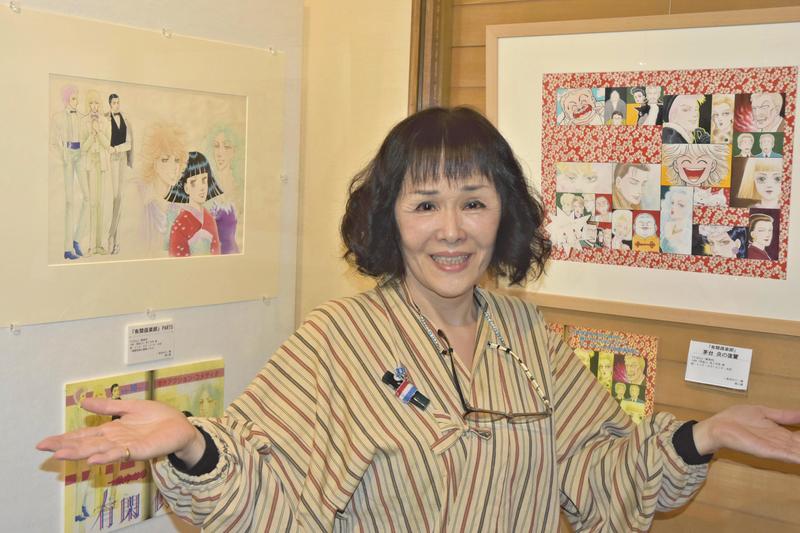
To celebrate the 50th year since her manga magazine debut, an exhibition of her work is under way at the Yayoi Museum in Bunkyo Ward, Tokyo. The exhibition, which will run until Dec. 24, features about 330 items, including original drawings, with a change of the exhibits on Nov. 27. For details, visit www.yayoi-yumeji-museum.jp/
A book of her illustrations, "THE Ichijo Yukari," has been published by Shueisha, Inc.
Read more from The Japan News at https://japannews.yomiuri.co.jp/