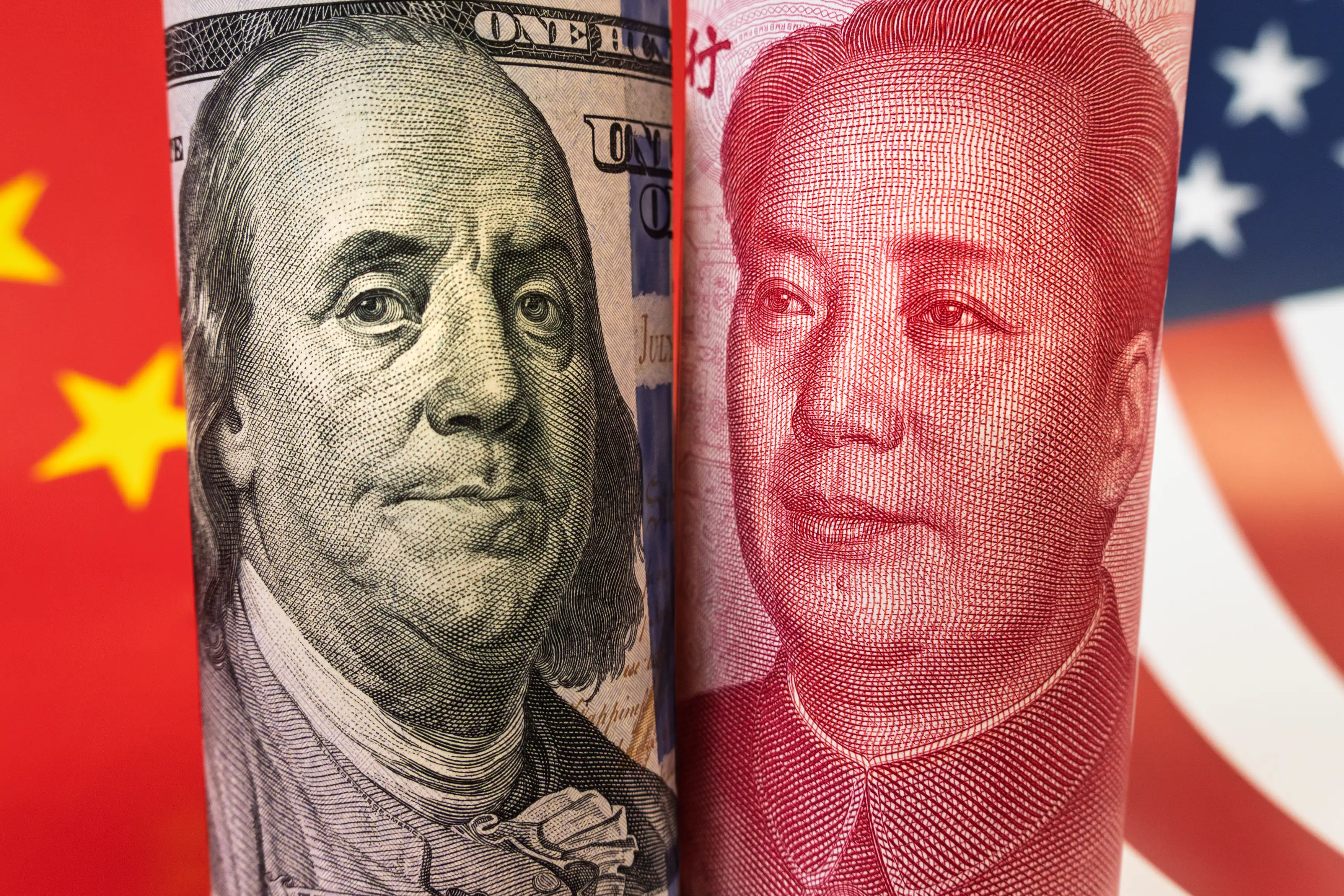
As a weakening rupee drives up the cost of imports from China, some Indian businesses, as reported earlier by The Economic Times, are exploring yuan-denominated settlements to mitigate foreign exchange pressures.
However, exporters, risk experts, and economists tell ET Digital that adoption of the practice remains limited among micro, small and medium enterprises (MSMEs). Most businesses see localisation and supply-chain diversification as more sustainable strategies for managing currency volatility than moving away from the US dollar. Notably, the development comes as Indian manufacturers grapple with rising costs of imported raw materials and components amid currency volatility.
Yuan gains attention, but MSMEs stick with the dollar
For manufacturers dependent on imported inputs, rupee depreciation has created a mixed picture. “For companies like ours, rupee depreciation has a two-sided impact,” says Ankit Patidar, Director and CMO, Shakti Pumps. He says that while exports become more competitive on paper, the benefit gets diluted when imported components, electronic parts, magnets, controllers, semiconductors, copper, aluminium, and certain precision engineering inputs become more expensive.
According to Patidar, the pressure extends beyond individual commodities. “The real issue is margin predictability. When currency moves sharply, pricing, procurement, and working capital all get affected together,” he says.
A similar challenge is being felt across industries.
Ankit Agrawal, Director and Managing Partner at Mysore Deep Perfumery House, says that the rupee depreciation has significantly increased import costs irrespective of whether payments are made in US dollars or Chinese yuan.
“The cost of procuring raw materials and components has risen sharply, putting pressure on manufacturers,” Agrawal says, adding that the weakening rupee has not translated into a proportionate export advantage as global demand remains subdued and export orders have slowed.
Despite growing discussion around yuan-denominated settlements, industry representatives believe yuan adoption remains concentrated among larger companies.
“At this stage, it is still more practical for large corporates and organised mid-sized companies than for small MSMEs,” Patidar says. He argues that large firms possess treasury teams, stronger banking relationships, and greater risk-management capabilities, while smaller businesses continue to rely on familiar dollar-based trade mechanisms.
Aayaan Bery, Sales and Global Marketing Director at Noida-based home improvement exporter KSP Inc., remains sceptical about wider yuan adoption. He says his company continues to conduct international trade primarily in US dollars. “While there is industry discussion around alternate settlement mechanisms, we believe adoption among MSMEs is still limited, mainly because exporters are more comfortable operating within established banking and forex systems linked to the dollar,” Bery says.
Patidar says wider adoption of yuan settlements would require support from financial institutions. “Indian MSMEs are extremely entrepreneurial, but multi-currency management requires treasury knowledge, hedging discipline, documentation accuracy, and risk awareness,” he says. He believes that banks, export councils, and industry bodies must develop simpler products and training mechanisms to enable meaningful participation from SMEs. “Yuan settlement will grow only when banks make it as simple as dollar settlement,” Patidar says.
Deep Mukherjee, Partner & Director, Risk Management and Data Science at Boston Consulting Group (BCG), emphasises that businesses should distinguish between trade settlement and currency-risk management. According to him, companies often assume that shifting to alternative currencies automatically lowers costs, but the economics depend on the nature of their underlying exposure. If a company’s imports or receivables are denominated in yuan, hedging directly in yuan can reduce what treasury professionals call “basis risk—the risk that the currency being hedged and the currency used for hedging do not move in tandem. “The best solution is usually to hedge in the same currency as the underlying exposure,” he says.
The multi-currency opportunity
Economists view the growing interest in yuan settlements as part of a broader evolution in global trade rather than merely a response to short-term currency volatility.
Rumki Majumdar, Economist at Deloitte India, says the emergence of multiple global currencies for trade signals a gradual move away from overwhelming US dollar dominance towards a more multipolar currency system. “A multi-currency system allows India to settle trade in rupees or partner currencies such as renminbi or rouble, reducing exposure to dollar shocks and sanctions risk, especially in the case of importing essential commodities,” she says.
She emphasises that this development comes as India actively pursues multiple free trade agreements (FTAs) and seeks deeper integration with global markets. According to her, the rupee depreciation against the dollar is improving India’s export competitiveness and could support domestic manufacturing as imports become more expensive. The trend could also create an opportunity for India to promote the rupee as a trade currency through bilateral currency arrangements and local-currency settlements, strengthening the country’s global financial standing.
Experts say the transition is not without risks. “The Indian rupee will face higher volatility and complex currency management, especially when hedging markets for other currencies may not be as evolved as for the dollar,” Deloitte’s Majumdar says.
BCG’s Mukherjee says the issue becomes more complex because the Chinese yuan and the US dollar have historically moved closely due to China’s managed exchange-rate regime, leading some market participants to view them as interchangeable for hedging purposes.
However, he cautions that China’s central bank can periodically alter the currency’s calibration, creating risks for businesses that assume the two currencies will always move together. “If your underlying exposure is in yuan, hedging in yuan makes sense. But if the only reason for using yuan is the assumption that it will behave like the dollar, then the strategy needs to be reconsidered,” he says.
According to Majumdar, a multi-currency trade ecosystem may require India to maintain a more diversified reserve basket, increasing the complexity of reserve management. It could also necessitate a more flexible exchange-rate framework, supported by active policy intervention when required.
For MSMEs, the opportunities and challenges are equally significant.
Deloitte’s Majumdar emphasises that local currency settlements can lower transaction costs and potentially improve export competitiveness in price-sensitive markets. However, most smaller companies, especially those in the hinterlands, are without the treasury tools, banking connections, and financial expertise needed to handle diverse currency risks. To fully realise the benefits of a multi-currency trading ecosystem, she stresses that policymakers need to focus on stronger institutional support and a regulatory framework capable of supporting more complex international settlement arrangements.
Localisation over currency shifts
Despite growing interest in alternative settlement currencies, industry officials maintain that reducing import dependence remains the more important long-term objective.
“Yuan settlement does not solve the core problem,” Patidar says, highlighting that it only reduces one layer of currency pain where the supplier is Chinese and the trade exposure is naturally yuan linked. “The core problem is import-dependence. If we are still importing critical components, we are exposed, whether the invoice is in dollars, yuan, or any other currency. So, yuan settlement is useful tactically, but localisation is the real strategic answer,” he says.
Ajay Garg, Managing Director of E3 Group, says the recent depreciation of the rupee has compelled Indian industry to reassess its trade and sourcing strategies. “At E3 Group, we see yuan-denominated settlements as a pragmatic short-term lever to manage currency volatility, but our strength lies in producing domestically what was earlier imported from China,” he says.
Garg says increasing domestic production not only reduces import dependence but also strengthens India’s self-reliance ambitions. “Over the long term, indigenous manufacturing will remain the most sustainable way to safeguard competitiveness and ensure stability for Indian businesses,” he says.
While some businesses expect yuan settlements to reduce transaction costs, BCG’s Mukherjee says the benefits are far from universal. According to him, the decision to move towards the yuan should be viewed as a strategic diversification choice rather than a short-term cost-saving exercise. He notes that dollar-denominated derivative markets remain significantly more liquid than yuan markets, often making dollar-based hedging easier and more flexible for businesses.
Manufacturers say they are already moving in that direction.
Shakti Pump’s Patidar says that while certain specialised components and electronic inputs continue to be sourced from China-linked supply chains, the focus over the last two years has shifted towards localisation, vendor development, and supply-chain resilience. “We are not looking at China only from a cost angle anymore; we are looking at risk, continuity, quality and strategic control,” he says.
Agrawal says his company has already replaced several China-sourced products with Indian-made alternatives wherever feasible, though certain raw materials, natural resources, and specialised components remain difficult to source domestically. “China continues to play a major role in the supply chains of many industries, and dependence on Chinese inputs has not reduced significantly,” he says.
Bery says KSP Inc. has also increased local sourcing over the past few years to reduce dependency on imports and improve supply-chain stability. “For MSME exporters like us, the larger focus today is on building stronger and more resilient supply chains through greater local sourcing, operational efficiency and manufacturing stability, while continuing to work within globally accepted trade and payment systems,” he says.
Avoiding new dependencies
BCG’s Mukherjee also warns against replacing dependence on one currency with another. According to him, diversification is a sensible objective, but businesses should think in terms of a broader basket of currencies rather than a simple shift from the dollar to the yuan. “Overdependence on any one currency is not desirable. Diversification is a strong reason, but it should apply to the overall trade portfolio,” he says.
Beyond business considerations, economists also see broader strategic implications in the growing use of yuan for trade settlements.
Nisha Taneja, Senior Visiting Professor at ICRIER, says Indian importers are being drawn towards yuan settlements for immediate commercial reasons, as rupee depreciation makes dollar-invoiced Chinese imports more expensive, and yuan settlement appears to offer a cheaper and more stable alternative.
She, however, cautions that India’s large trade deficit with China creates a distinct set of concerns. She says what began as a market-driven response to foreign exchange volatility could gradually increase dependence on a China-centred payment ecosystem. Indian importers could end up accumulating yuan liabilities in a currency in which India holds relatively limited reserves and cannot easily hedge domestically. Drawing lessons from other countries, she points to Russia and several ASEAN economies as contrasting examples. While Russia’s yuan dependence emerged under compulsion and resulted in limited financial flexibility, ASEAN countries have been able to sustain yuan settlements because they also generate substantial yuan earnings through exports to China.
“The lesson India can draw is clear. Yuan settlement is sustainable only when a country earns yuan, not just spends it,” Taneja says.
With India’s exports to China remaining significantly lower than its imports, she believes expanding exports to the Chinese market would be necessary for any long-term yuan settlement framework to remain balanced.
Industry bodies, meanwhile, suggest that policy support will be key to strengthening the rupee over the longer term. Rajeev Singh, Director General of the Indian Chamber of Commerce (ICC), says recent measures announced by the Reserve Bank of India (RBI) to attract foreign capital, including the removal of withholding tax and short-term and long-term capital gains tax on government securities, could support the rupee. He says the longer-term solution lies in strengthening domestic manufacturing and local sourcing capabilities. This, he argues, will require policy support to promote domestic production, interest subvention for export finance, and targeted initiatives to help MSMEs access wider overseas markets through e-commerce exports and other need-based facilitation measures.