
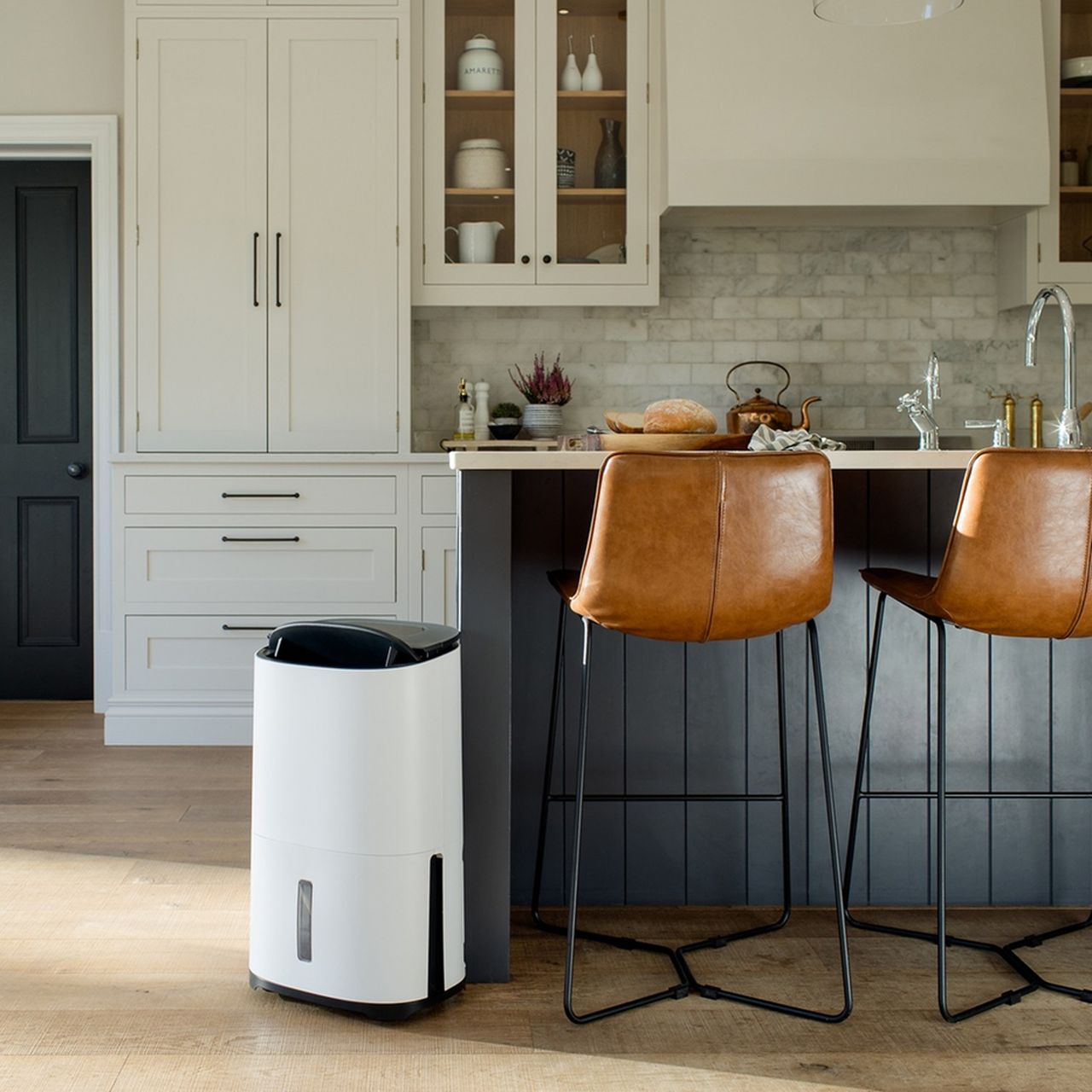
When condensation starts creeping down the windows in our house, the first thing I usually do is turn on my dehumidifier to try to combat it. But experts say that knowing when not to use a dehumidifier in winter is just as important as knowing when to switch it on.
It turns out that there are a few cold-weather-related scenarios where running a dehumidifier can actually be inefficient, ineffective and can make your home less comfortable.
That's all worth bearing in mind before you start thinking about how to use a dehumidifier in winter or investing in one of the best dehumidifiers, as many dehumidifier mistakes tend to show up during the colder months. From rooms that are just too chilly for them to work properly to lowering the humidity, making comfort levels worse, knowing when you shouldn't use a dehumidifier can help save on its running costs, protect your appliance and help your home feel healthier to boot.
Here's when experts say it's better left switched off.
1. When the room is just too cold
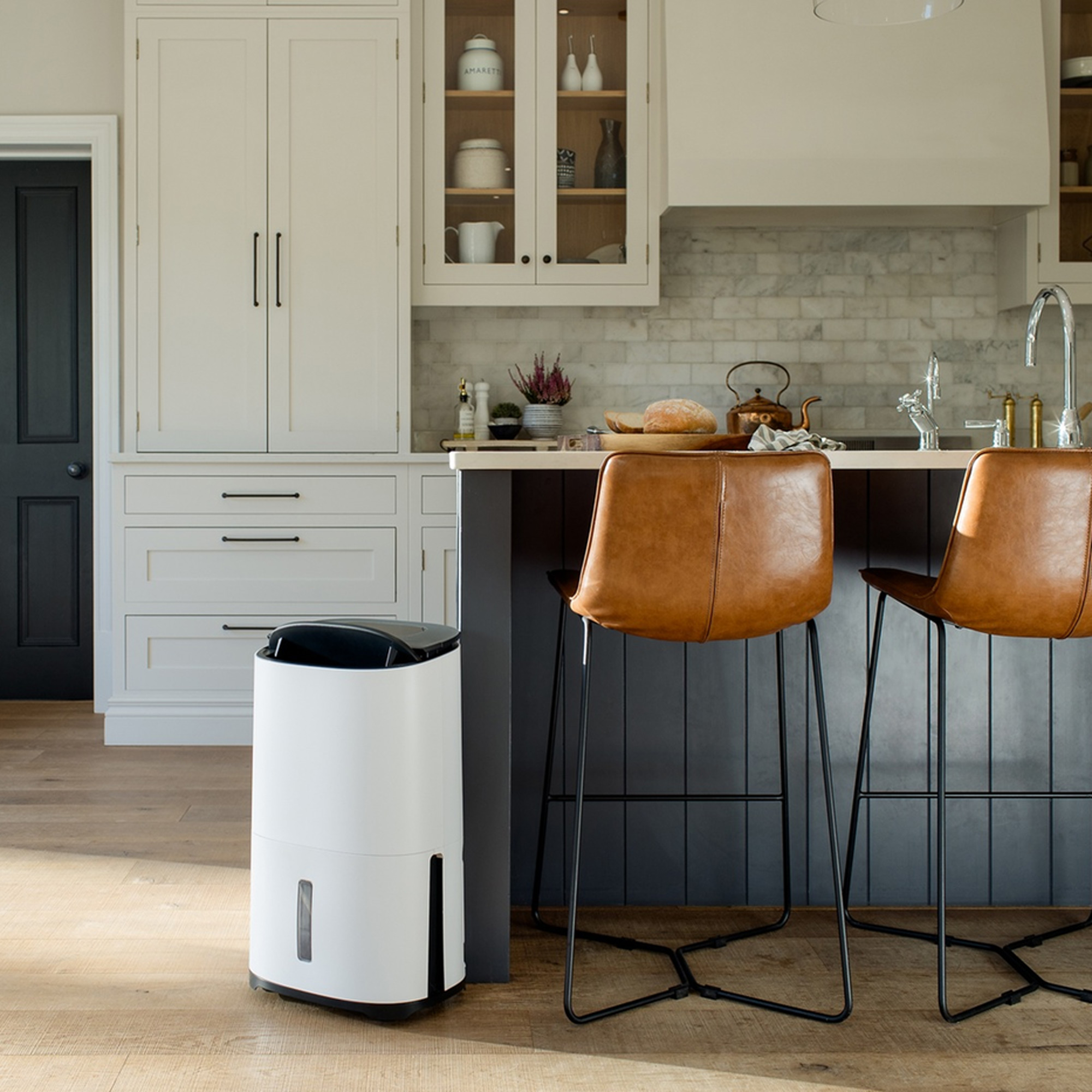
One of the biggest mistakes experts see in winter is running a dehumidifier in a room that's simply too cold. Most compressor dehumidifiers struggle to work efficiently once temperatures dip below around 10-15 °C.
In very cold places like garages, unheated spare rooms or chilly hallways, they can become sluggish, ice up internally or extract very little moisture at all.
'Smaller capacity compressor dehumidifiers should not be used in very cold rooms during winter,' explains Chris Michael, Meaco's CEO. 'Below around 15°C, compressor models lose efficiency and moisture can freeze on the coils, causing the dehumidifier to switch to defrost mode. The smaller the model capacity, the greater the efficiency loss.'
He adds that in unheated or low-temperature spaces and rooms that need a dehumidifier, a desiccant dehumidifier like Meaco's DD8L Pro Desiccant dehumidifier, £259 at Amazon, is a better option.
'It works down to 0°C and releases heat as part of the dehumidification process, warming the surrounding space while drying the air. This makes them especially useful at drying wet washing indoors during the winter months,' explains Chris.
2. In rooms without humidity issues
It might sound counterintuitive, but winter air can sometimes be too dry, especially in homes with constant heating.
A quick check of your indoor humidity levels can help here. Chris says 55% relative humidity is healthy in a home during winter, so 'if the humidity is below this, there is little moisture to remove and the unit will add no benefit.'
He explains, 'instead, use the target humidity mode, so the dehumidifier will only turn on if it detects an increase in moisture. In this scenario, it'll typically switch on overnight or early in the morning when the temperature drops and condensation begins to form in bedrooms from moisture generated from breathing.'
Katie Lilywhite, AO.com's dehumidifier expert, adds that running your dehumidifier when humidity levels are already low, running a dehumidifier could make things worse, causing dry skin, irritated eyes or static shocks.
'The air in winter tends to be drier than in summertime, leaving less moisture in rooms. Running your dehumidifier when humidity levels are already low can cause further problems such as skin irritation and damage to furniture and floors.'
3. When ventilation is the real issue
If condensation keeps returning despite regular dehumidifier use, experts say it's often a ventilation problem rather than a humidity one. Bathrooms without extractor fans, kitchens that aren't aired after cooking or bedrooms where windows are never opened can trap moisture no matter how good your dehumidifier is.
In these cases, improving airflow by opening the windows even briefly can be more effective than running a dehumidifier constantly.
However, should you use a dehumidifier with open windows? The straight answer is no. You always turn off your dehumidifier when you open your windows, especially in winter, Katie advises:
'When windows and doors are open during winter, it lets a constant flow of new cold air into rooms. This makes the dehumidifier work harder, wasting unnecessary energy without improving conditions indoors.'
4. While drying laundry in freezing rooms
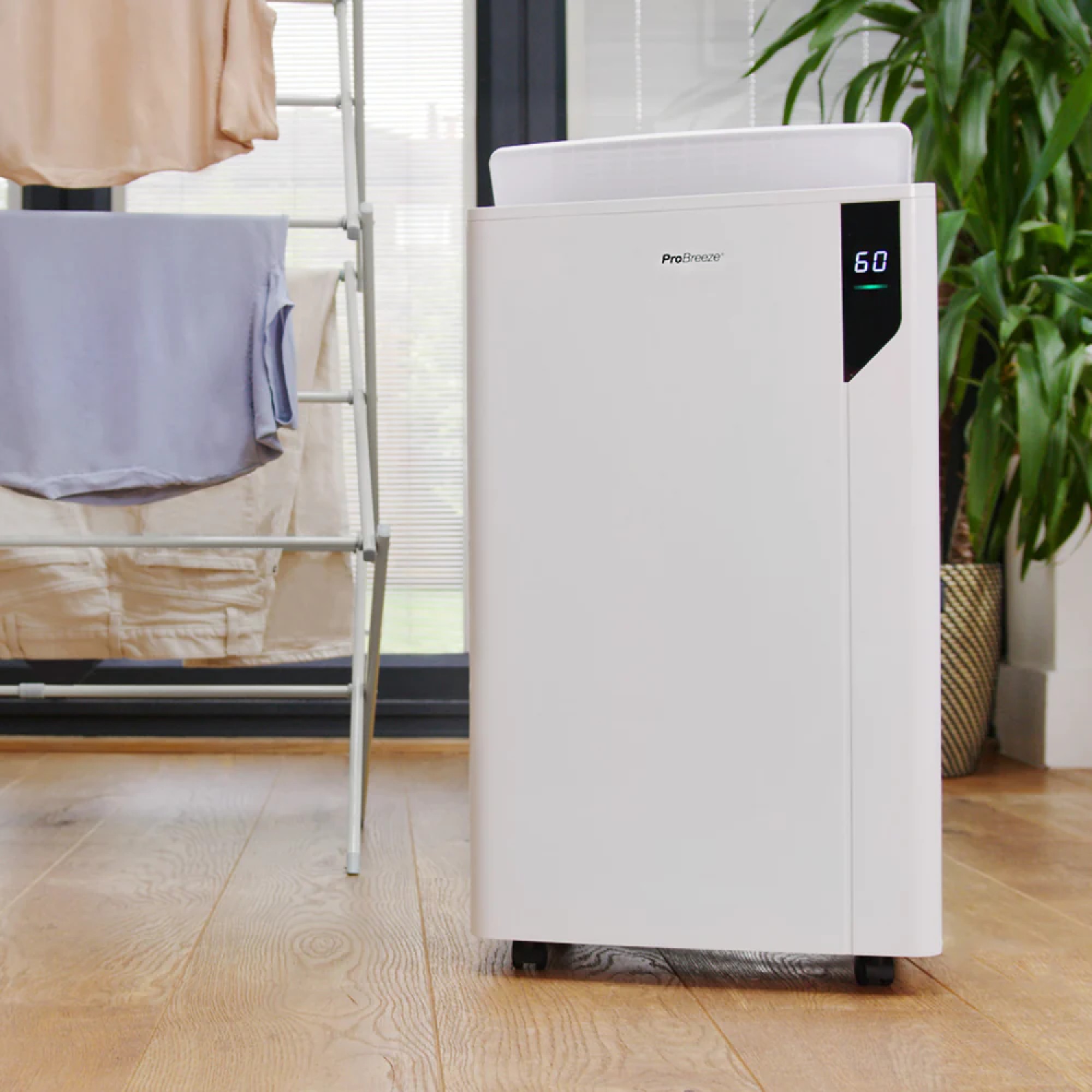
Drying laundry indoors is one of the main reasons many of us rely on a dehumidifier in winter, but experts say temperature matters. If the room is very cold, moisture extraction slows dramatically, meaning clothes take longer to dry and your dehumidifier will work harder.
Chris advises, 'if you are using a compressor dehumidifier to dry wet washing during the winter, ensure the room is heated above 15°C for it to maintain its effectiveness.'
The best dehumidifiers we've tested
Meaco's Arete Two comes in different sizes, from 10L to suit small rooms to a 25L model that'll be the perfect size for a typical UK three-bedroom house.
This 12L dehumidifier is perfect for smaller rooms, and it's also affordable, quiet, portable, and has a built-in carbon filter to remove odours.
If you have a large home, this ProBreeze is the best high-capacity dehumidifier in our guide. It can extract up to 30L of moisture from the air per day.
A dehumidifier is a brilliant winter must-buy, but only when it's used in the right way. Choosing the right dehumidifier for your space, temperature and moisture levels and knowing how to use it correctly, is just as important as knowing when to switch it off.
You'll avoid unnecessary energy usage, wear on your appliance and a home that feels drier than it should be.