Here are the coronavirus morning headlines for Thursday, November 4, as concerns have been raised about rugby fans mixing in Cardiff on match days.
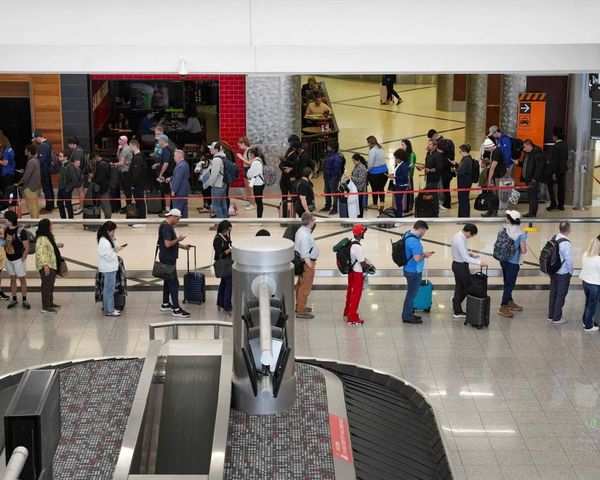
An academic has said that rules asking fans to wear face masks to Wales' autumn internationals are 'not effective', and Wales' health minister Eluned Morgan expressed concern about people mixing in Cardiff on matchday, citing high Covid case rates. Read more here about how likely is Mark Drakeford to bring in further restrictions.
Simon Williams, from Swansea University, told the BBC rules asking fans to wear masks in the stadium concourses but not in seats could be confusing.
The Principality Stadium has asked people wear masks when moving around the ground, but these can then be removed while seated.
Read more: You can find more of our coronavirus coverage here.
"There's two problems. One is people aren't clear as to why, when you're moving through a concourse and seeing people for a few seconds, you have to wear a mask, whereas when you're sitting down next to people for an hour-and-a-half you don't. So people might think 'what's the point?'," Mr Williams said.
"The second is, the act of putting it [a mask] on and taking it off again, people might forget. It's much easier to wear one constantly then remember to put it on and take if off again."
Wearing masks on concourses is part of a number of Covid-related measures in place for Wales' four autumn matches.
Principality Stadium manager Mark Williams has urged fans to follow the rules on mask wearing.
He said: "As we look to next weekend and the game against South Africa, I'd like to remind all supporters to wear their masks when inside the stadium.
"Masks are one of the important ways to stopping the spread of Covid-19, so we urge all supporters to respect their fellow fans and keep their masks on when on the concourses."
Under Welsh law, masks are mandatory on public transport, while Covid passes are needed for large events and nightclubs.
Read more coronavirus stories here.
Latest coronavirus rates for Wales
Seven more people have died with coronavirus in Wales according to latest figures from Public Health Wales.
New figures published on Wednesday, November 3, which covers the 24 hours up to 9am on November 2, shows the total number of Covid-related deaths in Wales now stands at 6,184.
There were also 2,492 new positive cases recorded in the latest update bringing the total number since the pandemic began to 447,655.
The latest seven-day infection rate across Wales based on the cases for every 100,000 people (for the seven days up to October 29) now stands at – a slight fall from the 548.2 reported on Tuesday and a seventh consecutive day where rates have reduced. Cases for your area here.
Headteachers call for GCSE and A-level exams to be scrapped again
Holding exams next summer would be unfair with so many pupils and staff off for Covid-related reasons, some headteachers have warned.
They are calling for exams to be cancelled again and contingency plans for assessed grades to be put in place now to give certainty to candidates and teachers.
A number of pupils have already been pulled out of the November series GCSEs because of Covid.
Regulator Qualifications Wales said last month that if exams have to be cancelled for a third year in 2022 there will be a return to teacher assessed grades, but with slight alterations.
Some school leaders want that plan to be enacted now and details of how exactly it will work to be mapped out by Christmas .
More than 7,000 children missed school every day in Wales in the week before half term due to Covid-related reasons with attendance low in crucial exam years and many specialist subject teachers off.
Vaccine passports 'could prevent future lockdowns'
Introducing Covid-19 vaccine passports can "reduce cases and deaths", according to an article in a leading medical journal.
In an opinion piece published in the BMJ, researchers from the Tony Blair Institute for Global Change said vaccine passports can provide "reassurances" and limit spread in a crowded or enclosed environment.
Kirsty Innes and Daniel Sleat from the institute argue that the passes are "the most accurate tool at our disposal for limiting transmission and avoiding further blanket lockdowns".
They cite research from the institute which found that if the Government pressed ahead with vaccine passports after restrictions were eased in England on July 19, "this could have reduced cases and deaths over the subsequent weeks by as much as 30%".
But the Welsh Government's chief medical officer has described the "actual direct impact" of Covid passes as "probably quite small". Read everything he had to say here.
Dr Frank Atherton said: "The evidence is still building around Covid passes. Lots of other countries around the world have adopted them. Wales decided to adopt them as well. The actual direct impact is probably quite small.
"But there are bigger impacts in terms of the messages that gives and the reminder to people that we're not out of the woods yet that we really are still at a difficult stage in the pandemic, and that we need to do everything so." Full interview with Dr Atherton about the way forward here.
Study records highest rates in England since May 2020
The overall rates of Covid-19 in England are higher than they have ever been, according to one study that has been collecting data since May 2020.
Researchers suggest the increase is being driven by infection in children aged five to 12, and those aged 13 to 17.
The prevalence observed among the younger age group was 5.85%, while in the older bracket it was 5.75%.
Across England it was 1.72%, compared with 0.83% in September 2021.
In January this year, after the Delta variant took hold, the prevalence was estimated to be 1.57%.
However, the study did not run in December last year when the peak of the second wave occurred.
Prevalence refers to the proportion of the participants (67,208) who tested positive during the study period of October 19 to October 29.
Using this data, the React-1 study researchers estimated that the next highest prevalence was in "parent-aged" adults, those between 35 and 54.
Regionally, the highest prevalence was in the South West at 2.18%, with researchers saying this "might be related to widespread reports of people who tested positive using lateral flow tests going on to test negative using RT-PCR tests". Tens of thousands of people may have been given incorrect negative PCR test results
"Reports specifically tied false negative RT-PCR results to a Covid-19 test laboratory in Wolverhampton which received many samples from (the) South West," the paper continues.
In mid-October, NHS Test and Trace suspended testing operations provided by Immensa Health Clinic Ltd at its laboratory in Wolverhampton.
An estimated 43,000 people may have been given wrong negative PCR Covid test results, resulting in them not isolating and potentially spreading the infection to many others.
The errors relate to test results given to people between September 8 and October 12, mainly in the south west of England.
Paul Elliott, director of the React programme, Imperial College London, told a press briefing: "We do mention that in the paper as a possible explanation why we're seeing that cluster of cases in the South West.
"Obviously, we don't know, but I think it's a viable hypothesis."
Commenting on the study, Dr Jenny Harries, chief executive of the UK Health Security Agency, said: "Although the number of hospitalisations and deaths remain lower than in previous peaks, these findings are a powerful reminder that the pandemic is far from over and remains a serious threat to health and wellbeing.
"This new data strongly reinforces the need for all eligible age groups to get vaccinated and to take mitigating measures such as wearing a face covering in crowded places and ensuring good ventilation indoors.
"This is particularly urgent for older people whose immunity may be waning given that several months have passed since they received their jabs. I strongly encourage everyone who is eligible for a third dose or a booster shot to come forward without delay."
Greek health workers protest over mandatory vaccinations
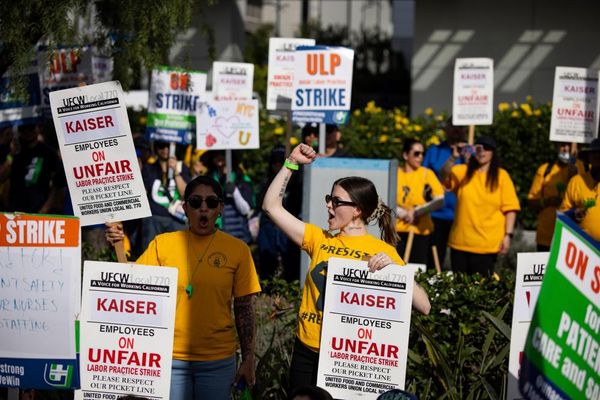
Hundreds of Greek health care workers have protested in central Athens against mandatory coronavirus vaccines for their profession a day after the government imposed more restrictions on unvaccinated Greeks amid a spike in infections, hospital admissions and deaths.
About 300 demonstrators chanted slogans and held up banners outside the parliament building, protesting against regulations that call for unvaccinated health care workers to be suspended from their jobs.
Health care unions have said they do not oppose the vaccines but object to them being required.
Vaccines against the coronavirus are compulsory for workers in Greece's health care sector and those working in care homes for the elderly.
On Tuesday, Greece reported a record 6,700 new daily Covid-19 cases and 59 deaths, bringing the total in the country of about 11 million to more than 750,000 infections and more than 16,000 deaths since the start of the pandemic.
Intensive care units for Covid-19 patients are at over 28% capacity, while regular coronavirus wards in hospitals are nearly half full, officials said.