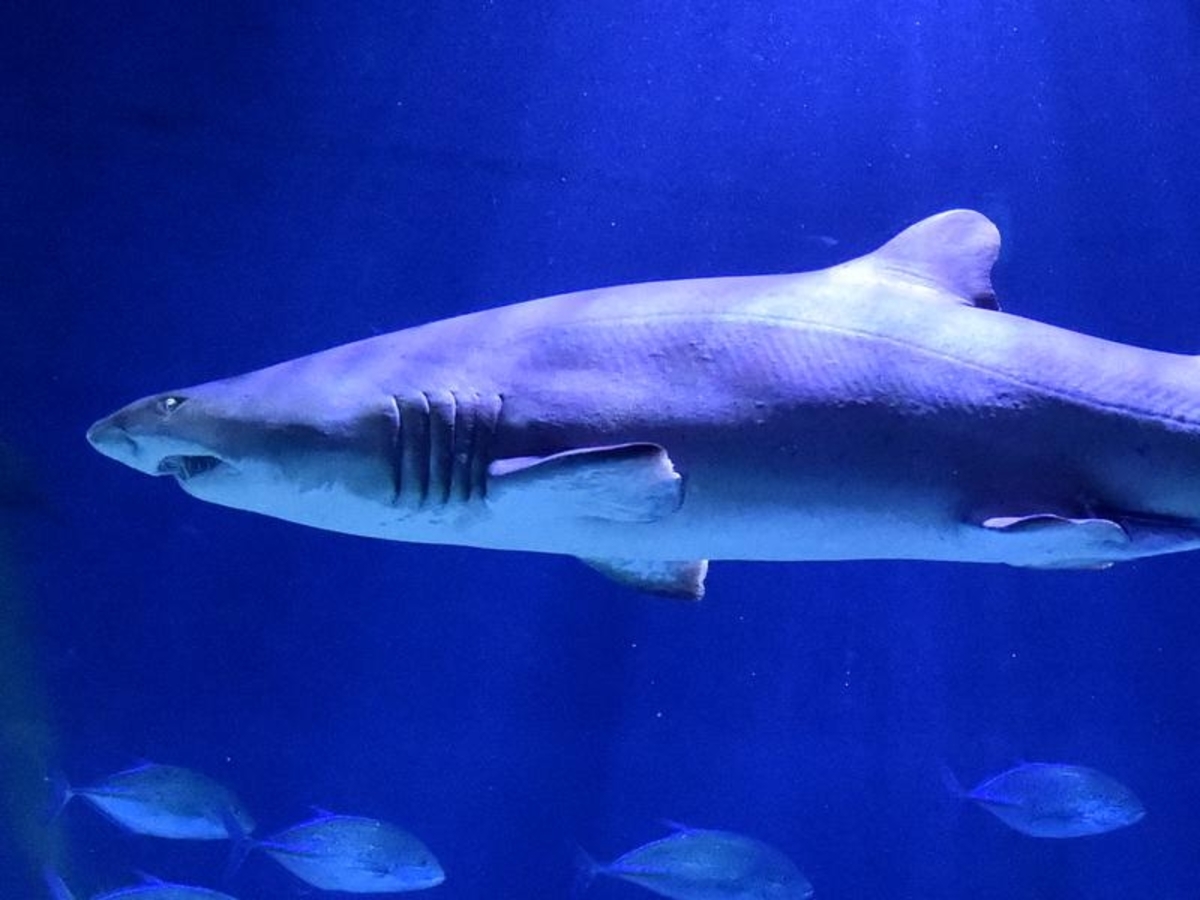
Sharks can mistake humans for their natural prey because they look the same when viewed from below, as the marine predators do.
That's the finding of Macquarie University researchers who say they have confirmed sharks confuse people with seals.
Using video footage taken of seals, surfers and swimmers at Sydney's Taronga Zoo, the researchers used mounted cameras and sea scooters to observe how sharks perceive stimulus atop the water.
Addressing juvenile white sharks specifically, this data was then pumped into a virtual visual system that analysed the short clips and viewed the world through the eyes of a shark.
The team drew on extensive shark neuroscience data to apply filters to the video footage, and then created modelling programs to simulate the way a juvenile white shark would process the movements and shapes of different objects.
The findings have been published in the journal Royal Society Interface and lead researcher Laura Ryan says the poor acuity of juvenile white sharks means that they cannot discriminate between humans swimming or paddling surfboards and seals, when viewed from below.
"We looked specifically at juvenile sharks and that's because they are responsible for the majority of fatal bites on humans," she told AAP.
"Until now, the potential similarity between humans and seals has been assessed based on human vision. However, white sharks have much lower visual acuity than us, meaning they cannot see fine details, and lack colour vision."
As a neuroscientist, Dr Ryan's interest in this field stems from her own passion for surfing and finding ways to mitigate shark attacks.
"The fear of being bitten by a shark crosses your mind. And so for me, having greater understanding helps me to push those thoughts to the side when they occur, because I can rationalise they are quite rare events," she added.
Researchers are now exploring other ways to change how sharks perceive different silhouettes, including the use of LED lights - in a sensible way.
Scientists at the university's neurobiology lab are also working on non-invasive devices, based on vision, which may help protect surfers and swimmers from shark bites.