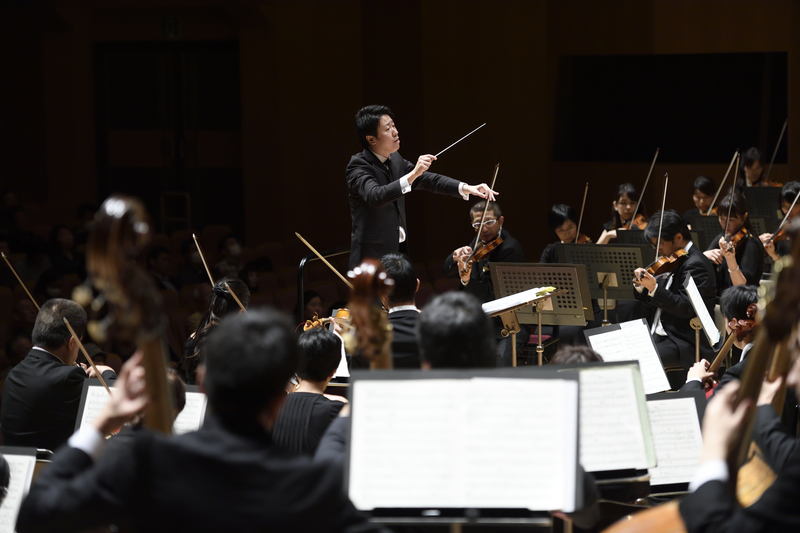
Kentaro Kawase was surprised -- and somewhat puzzled -- when he was asked to assume a key post of the Kanagawa Philharmonic Orchestra about five years ago, likening the offer to a marriage between two barely acquainted people.
In April 2014, accepting the offer made him the youngest principal conductor of a Japanese orchestra at the age of 29. The orchestra, which was founded in 1970, stood at a crucial juncture at that time: It had recently averted insolvency with debts of about 300 million yen and was embarking on a fresh start as a public interest incorporated body.
Kawase questioned the decision to entrust such a leading position to a young man with no major conducting experience. Though he had won second prize at the Tokyo International Music Competition for conducting in 2006 -- with no first prize awarded -- he had only performed with the orchestra twice: once for the competition's prizewinner gala in 2007 and again as a guest conductor six years later.
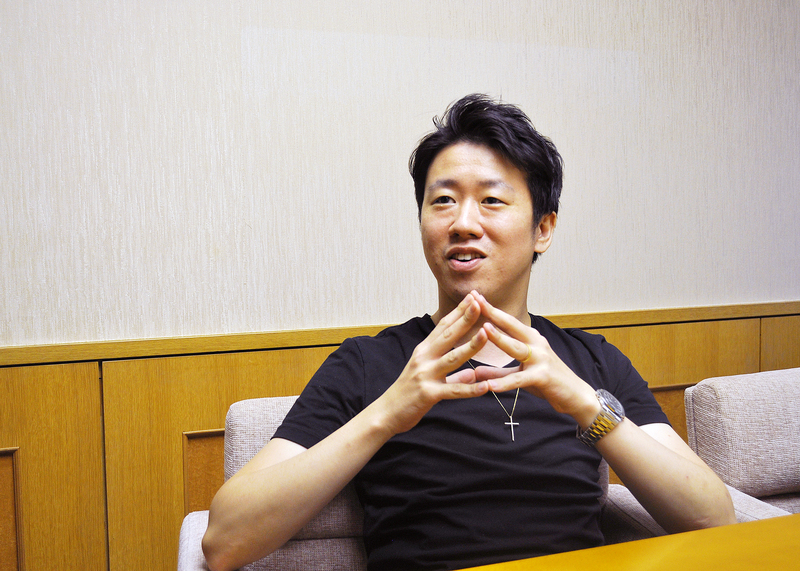
"I really enjoyed performing with the orchestra and wanted to make music with it again, but never imagined I would come back as its principal conductor," Kawase said in a recent interview with The Japan News. "For me, it was like skipping years. I was perplexed as it was like getting married without knowing each other well."
Despite his bewilderment, Kawase embraced the opportunity, as such posts are hard to come by, even for experienced conductors.
However, challenges awaited. To keep its status as a public incorporated body, the orchestra had to remain debt-free for three years. Though startled once more, Kawase resolved to steer the orchestra in his own way.
"Looking back, it turned out to be good that I didn't know anything about what to do as principal conductor. That led me to focus simply on music without worrying too much about the financial losses," he said.
One of Kawase's major reforms related to concert programming, as the Yokohama-based orchestra was disadvantaged by its proximity to Tokyo, where many prestigious concerts and musical events are held. To lure audiences who typically prefer major venues in Tokyo, he has attempted to create unique programs comprised of challenging yet inspiring combinations of pieces with an expanded repertoire.
Now in his fifth season as principal conductor, the 33-year-old has entered his "post-honeymoon" period with the orchestra, and is eager as ever to stir audiences' emotions with creative programming.
Under the theme of "Music as a guide to life," this season opened with a program featuring Leonard Bernstein's works, as this year marked the 100th anniversary of his birth. The program -- comprising "Slava! A Political Overture," "Symphonic Dances from West Side Story" and Symphony No. 1: "Jeremiah" -- was intended to go beyond a celebration of the anniversary, encouraging the audience to muse on themes of politics, ethnicity and religion woven into the scores.
And this October, the orchestra will perform "Berceuse," which includes a children's chorus. Composed by Atsuhiko Gondai, the piece is based on the notes of a mother who lost her daughter in the 2001 knife attack at Ikeda Elementary School in Osaka Prefecture, which left eight children dead and shocked the nation. Kawase described the work as more of an obligation than something he wanted to conduct. Seeking to create unconventional resonance that inspires audiences, the piece will be followed by Mahler's Symphony No. 4, which includes a song called "The Heavenly Life" that represents a child's vision of heaven.
Kawase wants his audience to "taste and feel" rather than listen to the music, an experience that could help audiences better appreciate music.
"I believe a community-based orchestra can comfort and console audiences through music. However, I also hope to turn the concert hall into a place where audiences recall the past and ponder the future through music," he said at a press conference last October to unveil this season's program lineup.
Tangible results emerge
His approach appears to have paid off. In the latest readers' survey conducted by Ongaku no Tomo, a monthly classical music magazine, the Kanagawa orchestra was respondents' fourth favorite Japanese orchestra, up from 10th place in the last poll in 2014.
Along with the orchestra's rising popularity, Kawase's career as a conductor has also progressed, as he has worked with such orchestras as the Nagoya Philharmonic Orchestra and the Hachioji Youth Orchestra, while his contract with the Kanagawa ensemble has been extended through March 2020.
Despite his impressive accomplishments, Kawase remains modest and considers himself lucky. Though conductors in their 20s and 30s have recently become more visible in Japan, Kawase emerged early, which he says worked to his advantage.
"I emerged when there were no major young conductors in Japan," he said. "If there had been more, I wouldn't have been as warmly cared for and nurtured by the orchestra."
His success can nevertheless be attributed to skill and hard work. Born in 1984 in Kokubunji, western Tokyo, Kawase grew up listening to music as a result of his father's love for classical music. His interest in conducting began in his early childhood after he saw a conductor atop a podium, perceiving the conductor as a "cool person." Even as a kindergarten student, he declared his dream was to become a conductor, and naturally went on to study conducting at the Tokyo College of Music. In university, however, his unwavering determination to pursue a career in conducting was rattled for the first time.
"After entering university, I faced reality, realizing there was a high likelihood that even conducting majors might not be able to turn professional," he recalled. "I panicked as I had no other future plans. That made me study very hard."
An encounter with maestro Junichi Hirokami proved to be crucial. Hirokami became his mentor at university, and taught him not only conducting but also important life skills, such as how to think, arrive at judgments and live as a member of society.
"If I hadn't matured as a human being during my four years at university, I would have become arrogant and wouldn't have been where I am now," Kawase said.
Orchestra a 'microcosm of society'
Kawase likens the orchestra to a "microcosm of society." It is no easy task to oversee a professional orchestra comprised of many elite musicians with different and distinct personalities. Yet he is open to suggestions from creative members of the ensemble. Bridging differences and moving the group in the same direction are essential for him to achieve desired -- or somtimes unexpectedly better -- outcomes.
"I'm in the position of the one who gives instructions. But I don't want to reject different ideas without trying them," he said. "At times, the members propose something I would never think of."
His role as the music director for the Hachioji youth ensemble is equally challenging as its members range from elementary school students to 25-year-olds, all of whom have varying skills and experiences.
"If I had known the job of a conductor was so tough, I wouldn't have chosen this profession," he said with a chuckle.
In addition to his colorful interpretative directions, his honesty, lucidity and sense of humor have helped him get close to musicians and develop relationships of trust.
He also seeks to connect with audiences. Indeed, when not on the podium, Kawase -- a soccer fan, cat lover and sneaker enthusiast among other passions -- is like many people of his generation. He once revealed on Twitter that he was not recognized as a conductor and stopped for identification by a security guard at Suntory Hall in Tokyo.
His relatable demeanor has potential to draw many different people into the seemingly staid world of classical music.
"I like people as much as music, perhaps more than music. So I want to be deeply human when making music with others," he said.
Read more from The Japan News at https://japannews.yomiuri.co.jp/