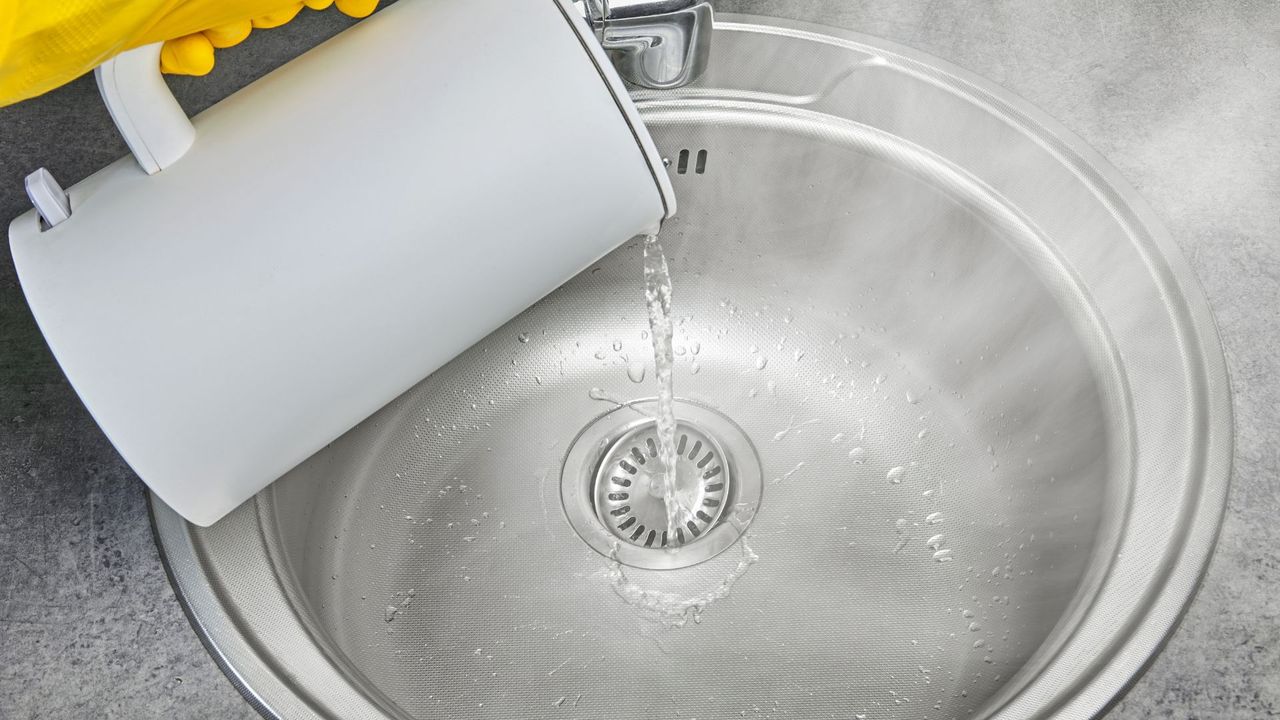
It’s that time of year when all sorts of food residue gets tossed down your drain. And even though you might be careful about what goes down, they can soon get clogged with food remnants and fats that then solidify.
And our drains are more likely to get clogged when we are rushed, especially over the festive season, when we are multitasking in the kitchen more than at any other time of year. Our everyday good habits get short-changed to save time.
We've already advised that plumbers are warning homeowners not to pour boiling water down the drains this winter, but this might leave you asking, "How hot is too hot?"
According to Plumbing Expert Jason Bryant, Director of Plumbing and Sales at Michael Bonsby HVAC, Plumbing and Electric, there's a limit to how much heat your drains can handle. “120°F-140°F [50-60°C] is code and mandated by most municipalities," he advises.
Why you shouldn’t pour boiling water down your drain
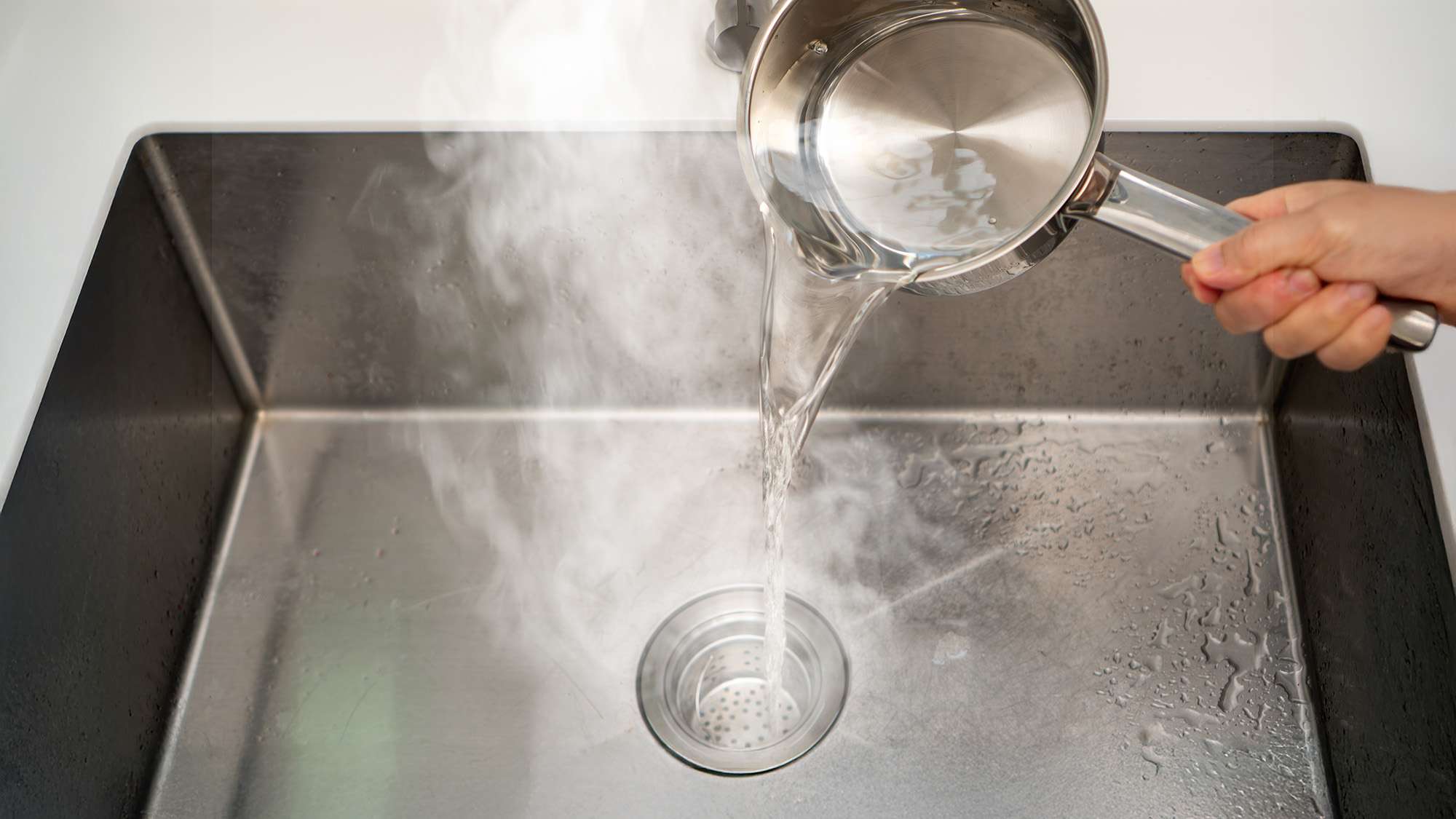
Although pouring boiling water down your drain might melt away any grease and oils, Bryant says it can lead them to re-solidify further down, “potentially making the blockage worse or causing another line to clog.”
He adds, “It can also cause cracks and warping in your pipes or joints, especially in the winter when pipes are much colder. Some piping also has plastic seals that can be damaged.”
But Bryant says it's a common solution people resort to. “People often think putting boiling water down the drain with grease or food will keep it from clogging, and while it can sometimes offer a quick fix, it’s best to stick to a lower temperature of hot water to avoid further complications,” he advises.
How to avoid a clogged drain
“The first piece of advice we give our customers is to avoid putting grease, large food chunks, hair, and coffee grounds down the drain — an easy way to do this is using some type of strainer or screen over the drain opening to catch anything that shouldn't be going down,” advises Bryant.
He also recommends a simple hack to clean your kitchen drain, using baking soda and vinegar, and advises repeating it monthly. Alternatively, you could also try using a drain snake to unclog the gunk.
How hot should you go?
If you do resort to pouring hot water down your drain, Bryant recommends not to go too hot, and to avoid pouring boiling water down your drain, which is 212°F.
Instead of going for the boil, he advises, “120°F-140°F degrees is code and mandated by most municipalities."
And he adds that most residential water heaters only reach 140°F, so instead of heating water, you should be able to use hot water straight from your tap.
“Different piping systems can handle higher temperatures, but you will always be safe and not cause any damage to piping if you stay at 140°F or below," he concludes.

Follow Tom's Guide on Google News and add us as a preferred source to get our up-to-date news, analysis, and reviews in your feeds.
More from Tom's Guide
- I used to literally pull my hair out when cleaning my shower drain — but this 3-step routine has saved me from the worst bathroom cleaning job
- Your toilet can clean itself — all you need is this one natural ingredient in your kitchen
- Forget salt — this one natural item is the key to de-icing your patio