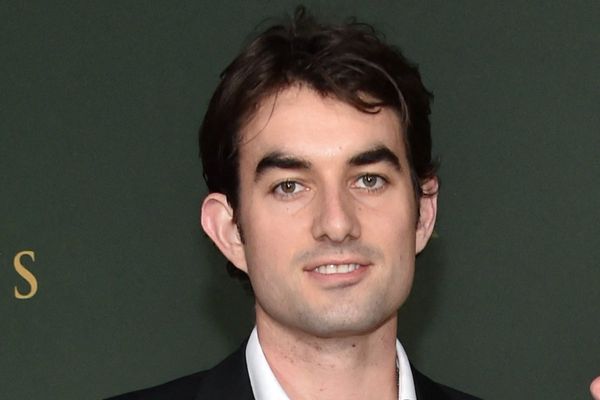
Every day, Chris Sequeira lives with a large hole in his nose and other disfigurement on his face caused by multiple surgeries to treat his cancer.
He would love to wear a facial prosthesis but he can't afford one - and there is no funding to help him get one. And it wouldn't be a one-off cost. Fake noses and cheeks and ear and jaws don't last forever. Some people try to hang on to their existing prosthesis for so long, because they can't buy a new one, that it starts to grow mould, according to Sophie Fleming, who makes them for a living.
By contrast, Australians who need a breast or limb prosthesis after surgery or injury, do have access to funding support from the Commonwealth government.
Mr Sequeira is not backwards in coming forward about the whole situation. He says it's "ridiculous".
"You only have to look at me. Der. We need some sort of a solution," he said.

Head and Neck Cancer Australia gave voice on Wednesday to stories like Mr Sequeira's at an event at Parliament House in Canberra.
The national charity is lobbying for $25.13 million in funding over four years to ensure anyone who needs a facial prosthesis gets one, including those living in remote and regional areas, and that there are also enough trained technicians to make them.
Head and Neck Cancer Australia chair, surgeon Dr Matthew Magarey, said a facial prosthesis was an essential part of recovery for anyone who lost a part of their face to cancer, because they also lost of part of themselves. The prosthetics were not "cosmetic surgery" or a "nice finishing touch". They were vital.
"To cure some of my patients, I have to remove parts of their face. It's incredibly confronting surgery, but for some people, it's the price of survival," Dr Magarey said.
"What's more difficult to understand is that even though these patients have endured weeks of treatment, many patients are left without funding to access the facial prosthetics they need to restore dignity, confidence and their ability to interact with the world around them."

Also speaking at Parliament House was Tracey David from Dalmeny who lost her nose to cancer and would travel seven hours on the bus to receive treatment at St Vincent's Hospital in Sydney.
The 63-year-old said with a hole where her nose had once been, she became a recluse. Even her grandchildren "wouldn't look at me".
"You feel like a freak," she said.

In the end, Mrs David was able to receive a $6500 prosthetic nose, attached to glasses, thanks to philanthropic funding secured by radiation oncologist, Associate Professor Dion Forstner, who treated her at St Vincent's. It changed everything and gave her back her life.
"We just want normality. We just want to be back with our families, in society," Mrs David said.
"We live in such a vain world. Everybody has to look so good. People go and get their nose done just for the sake of it. We just want one."
Adelaide dad Ben Hale lost his right eye to cancer in 2021. He had further surgery to his cheek this year. The 50-year-old was told prosthetic options existed, but there was no pathway, guidance or financial support.
"It was easier not knowing. I knew I wouldn't be able to pay for it anyway," he said.
Mr Hale said he thought twice about going out to watch live bands, which he loved to do, because he didn't want to put up with the same questions and comments about his face. His employer had been supportive but he worried how long he could keep his job, which involved dealing with salespeople.
"This is a distraction," he said, of his face.

Chris Sequeira, 63, lives in Sydney and is a senior procurement officer for Fire and Rescue NSW. He wears a medical mask to work to hide his disfigurement.
"I'm lucky. I know a lot of people who can't work," he said.
Sophie Fleming, a clinical anaplastologist with Prosthetic Art Technology, said a facial prosthetic could cost as much as $12,000 and because they were made from silicone, they would eventually have to be replaced.
"One of the heartbreaking things I'm finding now is that much of my job is keeping these prosthetics alive when they should be being replaced for certain people," she said.
"So I've got people wearing them for years and years and I get them back in and we service them and remove mould that's grown on the inside and throw paint on them and keep these little things alive as much as possible, because they're so valuable. But, really, what a relief it would be to say, 'Look, you need a new one, let's make you a new one. And you don't need to worry about the cost of that'."

The Parliamentary Friends of Cancer Care and Cure co-chairs Labor Senator Deborah O'Neill and National Party MP Dr Anne Webster also addressed the function and both said they supported the cause.
"[Health] Minister [Mark] Butler and his staff are listening to you," Senator O'Neill said.
Other politicians who attended included Social Services Minister Tanya Plibersek and independent ACT Senator David Pocock.