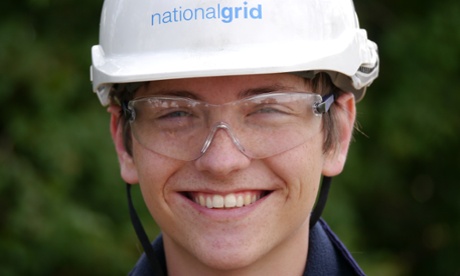
1. What is the Engineer Training Programme?
The Engineer Training Programme, substations, is a challenging three-year development programme which offers a fully-funded foundation degree and develops people into a substation engineer. It covers a wide range of material from basic hand skills all the way up to your foundation degree and NEBOSH qualifications.
2. Why did you decide to join?
It was an easy decision for me. I applied for many places when leaving sixth form including securing a place at university. However, the opportunity to have my foundation degree funded, be able to attend lots of training courses, earn a wage and work for a reputable blue chip company at the same time made it a clear decision.
3. What are the best things about working at National Grid?
The best things about working at National Grid is that you will always be supported and not be expected to carry out any tasks that you are unfamiliar with. This is achieved by the countless training courses and the support from other staff including your mentors. While at work, if you ever feel in doubt over anything, everyone is willing to help and guide you through the process to ensure you fully understand what it is you need to do.
4. Tell us about the culture at National Grid?
National Grid places a huge emphasis on the health and safety of its employees so naturally we have a very strong safety culture. It is evident from day one that health and safety is of prime importance and you will spend a large proportion of your time be trained and gain experience in health and safety. This includes studying for a NEBOSH qualification.
5. What have been the biggest challenges or surprises?
Throughout the course there are a lot of goals and milestones. Not only do you have to study for your foundation degree, which is already compressed into two-week release blocks, you have to pass other exams and objectives. Managing your time through busy periods was the biggest challenge for me but you soon learn to prioritise your work load.
6. Describe a normal day?
There isn’t a normal or typical day as a trainee engineer. You cover such a wide range of work that most days you’ll be doing something totally different from one day to another. This can be from working on one piece of equipment one day to responding to a fault another. You’ll be expected to be hands on, especially during your training.
7. What skills have your developed?
I came directly from sixth form to National Grid so my skills were minimal when I first joined. National Grid has developed my skills in many fields, not only have I improved on my handskills and practical ability, the course demands that you improve your people skills and time management.
8. What are you doing now?
I’m currently in my third year of the programme and will be finishing in September with my permanent post as a substation engineer. Although, officially off programme, the training will continue for another year in order to be competent in the role.
9. What are the opportunities for development at National Grid?
There are a wide range of opportunities at National Grid for development. Once you have finished your training you may want to specialise in a certain field of engineering and also train to become a commissioning engineer. Some people have also gone onto be part of management within the company. Whatever it is you choose to do you are always learning at National Grid.
10. Where do you see yourself in five years’ time?
By that point I’ll be a fully-qualified, competent engineer leading complex projects and responding to faults. I would also like to work towards becoming a commissioning engineer.
11. What advice would you give to someone who is considering alternatives to university?
University is not the only option to further your education and job opportunities. Employers are looking for well-rounded employees who have a wide range of skills. Training programmes like this provide you with not only a foundation degree, but with the skills to become a competent employee.
Content managed and produced by National Grid