
Basil is one of the most popular herbs to grow at home, and can be used in a wide variety of dishes. It also makes a great herb for windowsill containers. If you want a clever shortcut and new plants for free, you can grow basil from cuttings.
You can propagate basil from store-bought herbs by taking cuttings of plants or stems, to add to your yard or grow on a windowsill for year-round harvests. For the quickest results, rooting basil cuttings in water gets you new plants in just a few weeks. The key is knowing the right stems to cut and how to do it, which we reveal here.
Growing basil sustainably in this way reduces waste and is an effective way stop the habit of repeatedly buying plastic-packaged basil. It also gives a new lease of life to plants that would otherwise be thrown out, and the reward is a steady supply of basil leaves for all your culinary needs.
Can You Grow Basil From a Cutting?
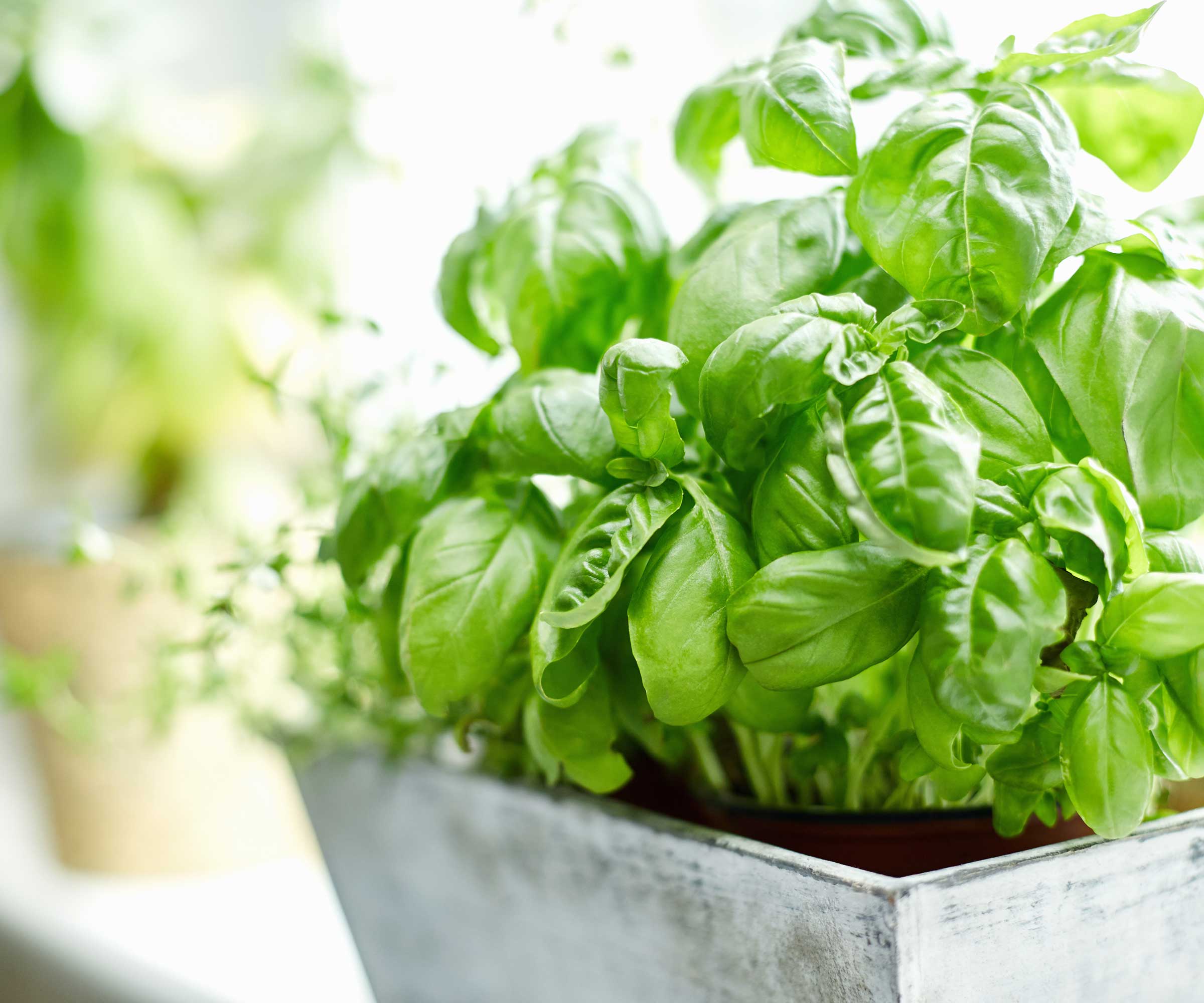
You can grow basil from seed (you can get a range of basil seeds at Burpee) and by taking plant cuttings. When you know how to do the latter, you can regularly propagate existing plants and grow herbs indoors to enjoy basil harvests year-round.
Winter Sims, an educator and Urban Agriculturist at The Brotherhood Sister Sol in New York, claims growing basil in this way ‘helps slow the buy-use-discard cycle and replaces it with regrow-harvest-repeat'.
She adds: ‘Growing basil from cuttings extends the life of basil that might otherwise wilt before being fully used, and allows you to harvest only what you need rather than overharvesting or throwing unused herbs away.’
How to Grow Basil From Cuttings – What the Experts Recommend
‘It is really easy to make a seemingly endless supply of basil plants from just one,' says Lucy Hutchings, an experienced vegetable grower, author, and founder of She Grows Veg. And you can do either from existing plants in your own garden, or from herbs bought in stores.
Store-bought basil comes either as potted plants or prepackaged stems, both of which can be used to grow basil from cuttings and propagate new plants.
If you are using prepackaged cut stems, Winter Sims recommends making sure the fresh leaves are ‘bright green and perky, not wilted or spotted’, and that they ‘feel sturdy rather than limp’.
She also recommends: ‘They need to have no browning at the cut end, as dark, mushy, or dried ends are less likely to root. And they must have a fresh, herbal smell rather than a sour odor.’
- To prepare the stems, have clean and sharp pruning shears, scissors, or a sharp knife, as these tools will take the best cuttings. To quickly put a sharp edge on many pruning tools, this pocket-sized tool sharpener at Amazon can be a useful piece of equipment for your tool shed.
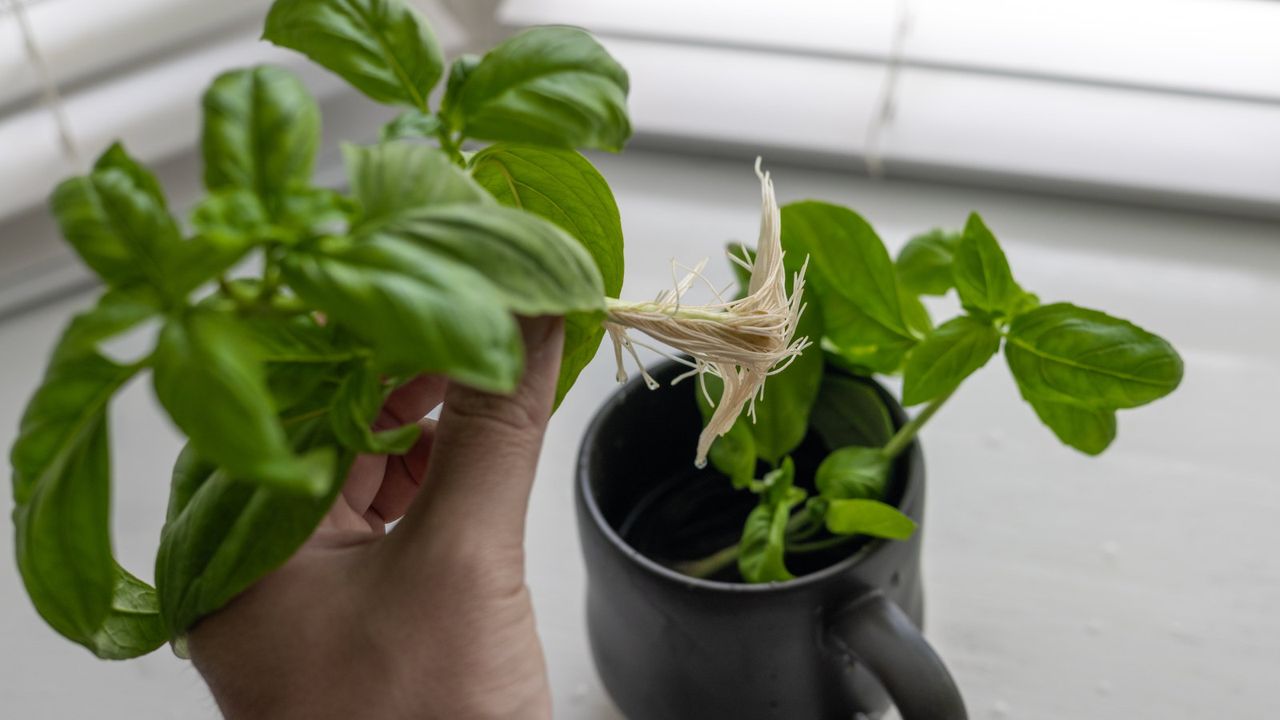
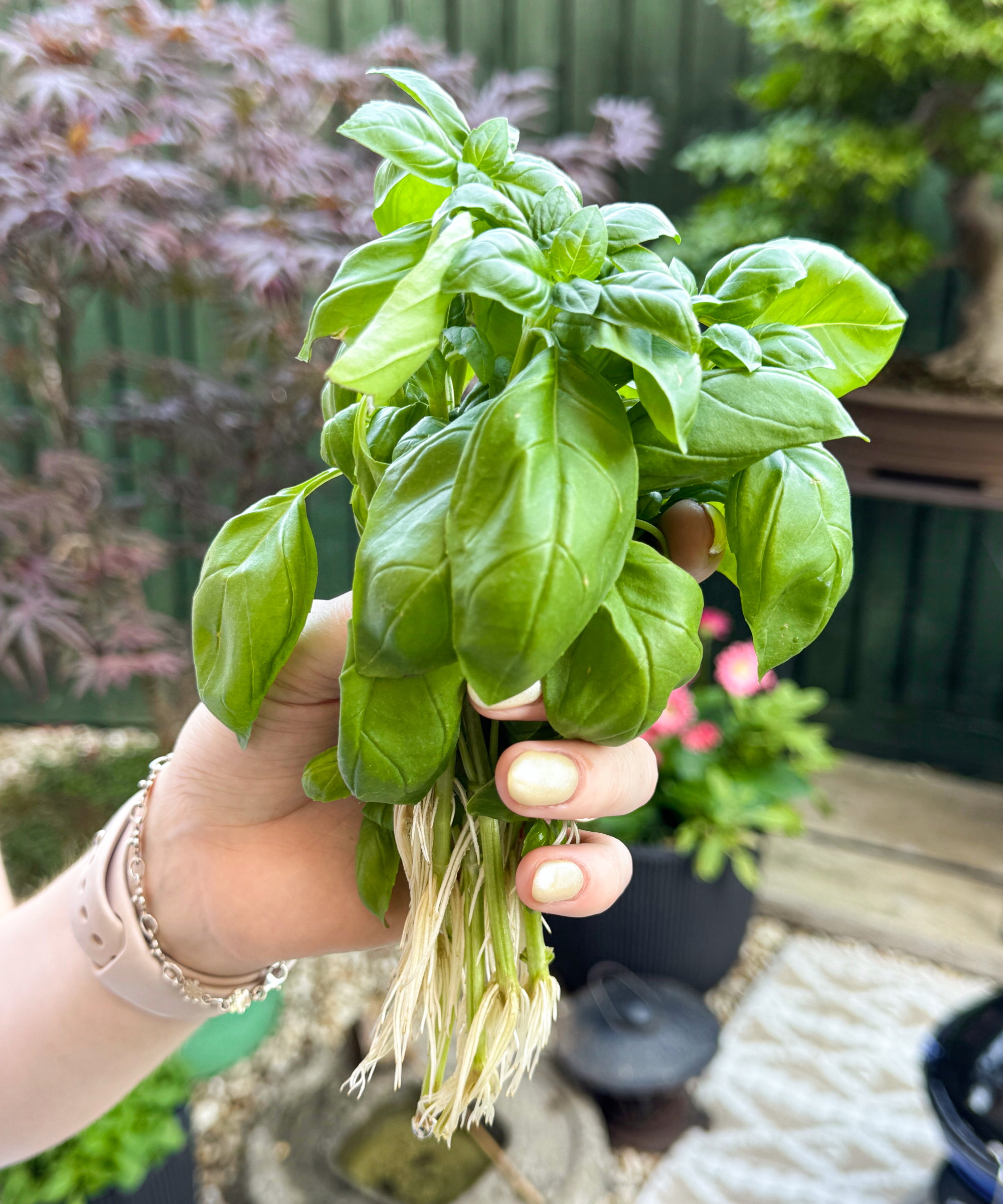
- 'Take cuttings of around 6-8 inches long, remove the lower leaves and place in water,’ says Lucy. A good cutting will have at least one or two healthy nodes at the bottom after being trimmed to a suitable length.
- You can start cuttings in soil, but doing it in water makes it easier to see the roots develop and know when it's time to transfer the cuttings into soil. The water should be room temperature and changed every 1-2 days to stop harmful bacteria from building up.
- Not changing it is a water propagation mistake to avoid, as stagnant water can harm the health of your cutting.
As for the location, choose somewhere with bright, indirect light. A sunny windowsill is ideal, but it doesn’t want to get direct sunlight, which can scald the cuttings.
‘Basil cuttings prefer a warm environment to root well,’ recommends Caroline, chief editor at Mars Hydro, the experts in indoor growing. ‘A room temperature between 60°F and 70°F is ideal.
Roots should start forming within a few days. 'Once there are a few decent-looking roots, pot up your cutting and enjoy your new basil baby,’ says Lucy.
But how quickly should you expect it to get to that point? Winter expects the first signs of root nubs within five days. ‘Within 7-10 days, roots become clearly visible and reach about ½-1 inch long,’ she adds. ‘Within 10-14 days, roots are typically 1-2 inches long and ready to be planted in soil.’
However, Winter warns that if stems turn brown or go mushy, they are ‘unlikely to recover’ and ever start developing roots. In this scenario, it is better to cut your losses.
When healthy stems develop roots that are two inches long, remove the cuttings from the water and pot them into a container filled with soil for container gardening. A good potting mix should be light in texture and retain moisture, like this organic potting mix at Burpee.
Place this container onto a sunny windowsill to continue growing. It will thrive in a warm and sunny environment, such as a bright kitchen windowsill with at least six hours of light a day.
Once the plants reach at least six inches, prune the basil to encourage branching and the production of more stems to harvest. Regularly pinching plants is a key way to help basil grow bigger and last longer.
An alternative way of growing new plants for free is to save basil seeds. Many gardeners grow basil as an annual plant, and sow new seeds each year.
If you do this, then collecting seeds and resowing them is a more sustainable method. It also saves you from having to purchase seeds each year.
To save basil seeds, allow some plants to go to flower and form seed pods at the end of each season.
You can collect the seeds from the pods once they turn brown and dry, and store them in a paper envelope (you can get seed envelopes at Amazon that have boxes in which to write the type and variety) or a glass jar. The seeds are usable for up to five years if they are stored properly.
This vintage matte metal indoor herb planter set comes with three pots and a decorative drip tray measuring 12.5” L x 4” W x 1” H.