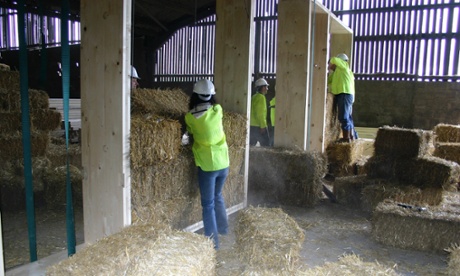
“It sounds airy-fairy but it’s very difficult to walk inside and not touch the walls,” says Harriet Wishart of the two straw bale cottages she and her husband, Andrew, have built on their farm near Canterbury.
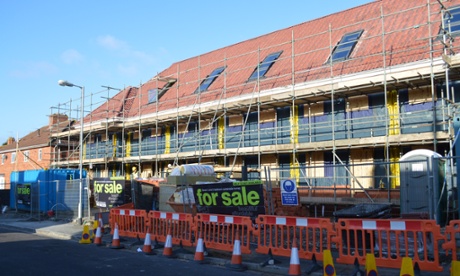
Seven homes created out of straw bales in Bristol have caused a flurry of interest in the miraculous properties of the humble straw bale. More than 3m tonnes of straw go to waste each year, so straw is available, affordable and makes for superb insulation. Straw homes can cut heating bills by 90% and houses are not merely carbon neutral but carbon negative – the straw walls store the carbon captured by the growing wheat.
Until now, however, the construction industry has ignored straw and most straw homes have been put up by self-builders such as the Wisharts, whose cottages are holiday lets. “It’s not highly skilled like ordinary building – the material is really quite forgiving,” says Andrew, and yet they still found it “jolly hard work”, as Harriet puts it. She was nervous about having a “lumpy, bumpy house” but says the walls are only gently rounded because of their (lack of) plastering skills – straw bale homes can have straight edges.
People respond with “wonder and awe” when they first move in, says Barbara Jones of Straw Works, which has helped build more than 500 straw buildings in Britain. “They eulogise about it and say it’s so cosy, so warm and the ambience is so fantastic.”
John Butler clad his brick bungalow in straw and built a straw bale extension, moving in last June. “It’s definitely a lot warmer than any house I’ve lived in, even when unheated,” he says. Butler appreciates the acoustic properties (straw blocks external noise) and minuscule heating bills – he now heats his whole house with a wood-burning stove.
What about fire? And rodents? “Those are the classic questions,” says Jones. In fact, she says, compressed straw is too dense for rats and mice to burrow through. The compressed walls also repel fire: tests have shown a straw bale house is less of a fire-risk than a traditional house.
Could straw homes solve the housing crisis? “Definitely,” thinks Jones. The obstacles are the prohibitively high price of land, which thwarts aspiring self-builders, the reluctance of the “creaky” construction industry to adopt “new” materials, according to Jones, and a lack of investment: because straw is not a hi-tech “product”, the construction industry can’t make money from it. This creates a final stumbling block: most straw builders can’t afford to do all the tests to convince mortgage providers that their houses are extremely safe and will last longer than traditional homes.
Supported by EU grants and Bath University engineers, the Bristol homes have undergone the necessary tests to be eligible for mortgages – so straw bales may finally seduce volume builders.
Jones welcomes that: “In some ways, the facts are so good the industry can’t believe them.”