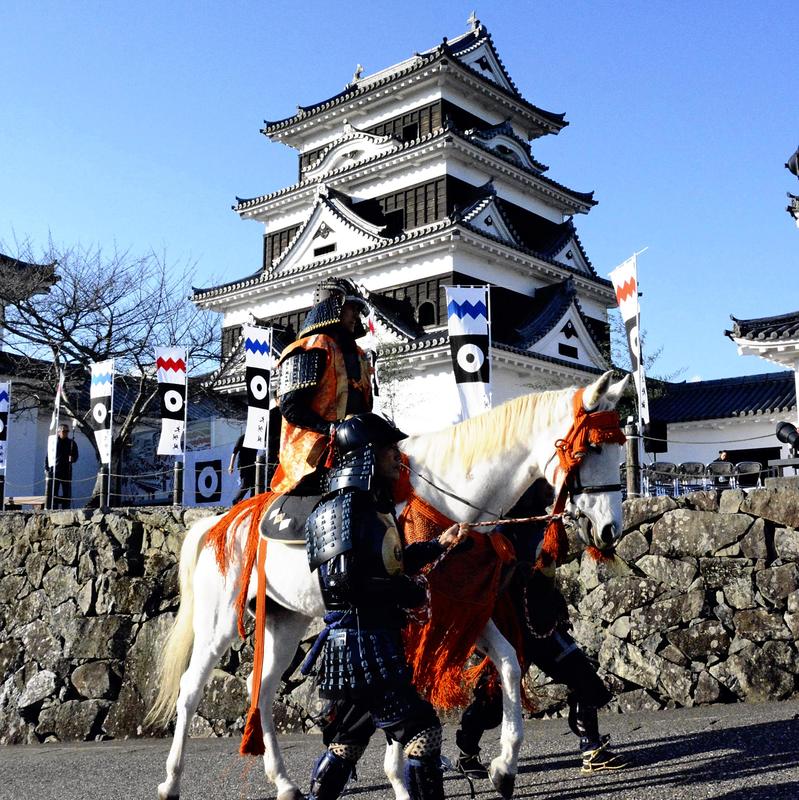
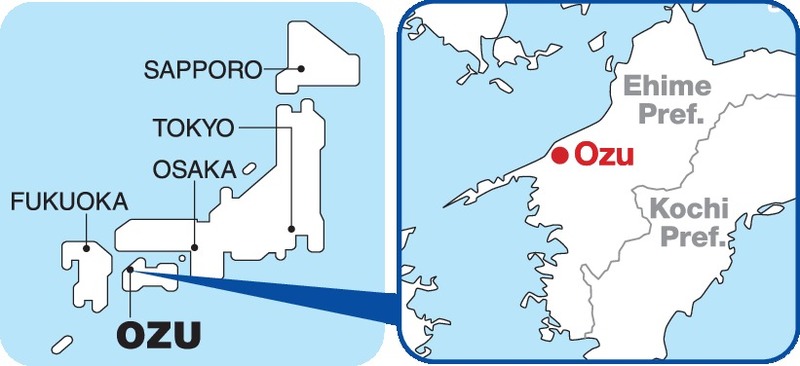
OZU, Ehime -- The city government of Ozu, Ehime Prefecture, is scheduled to begin "castle stays," a service in which visitors can stay overnight in the inner keep of Ozu Castle.
The service is slated to start in April this year. Guests will enter the precincts of the castle on a white horse and clad in the full armor of a samurai warlord. They can observe the moon from a watchtower and enjoy other experiences that will make them feel like the lord of the castle.
A single group of four or so people can be accommodated per day, at a planned cost of at least 1 million yen for an overnight stay. The city government is aiming to draw mainly foreign tourists through the service.
The inner keep of Ozu Castle is a four-story, four-roofed wooden structure. It was once the residence of feudal lords of the Ozu domain, who controlled a fief worth 60,000 koku of rice (one koku is about 180 liters).
The original castle was torn down in 1888 after the Meiji government ordered the demolition of many castles. The current structure was reproduced in 2004 based on photographs, miniature models and other data on the original.
On Nov. 8 last year, officials of an organization designated to manage the castle conducted a trial in which they stayed in the castle themselves. Natsuko Godai, a singer who serves as a tourism ambassador to promote "Hijikawa Arashi," was invited to participate.
Hijikawa Arashi is a strong local wind observed from autumn to winter along Hiji River. The river is connected to the inland Ozu basin, where a cold air mass accumulates at night as surface heat cools and the cool air overflows into the Seto Inland Sea through a narrow valley along the river.
In the trial stay, one of the officials clad in the full armor of a castle lord entered on the back of a white horse. People dressed as a rifle unit of the Ozu domain welcomed the visitor by firing salutes.
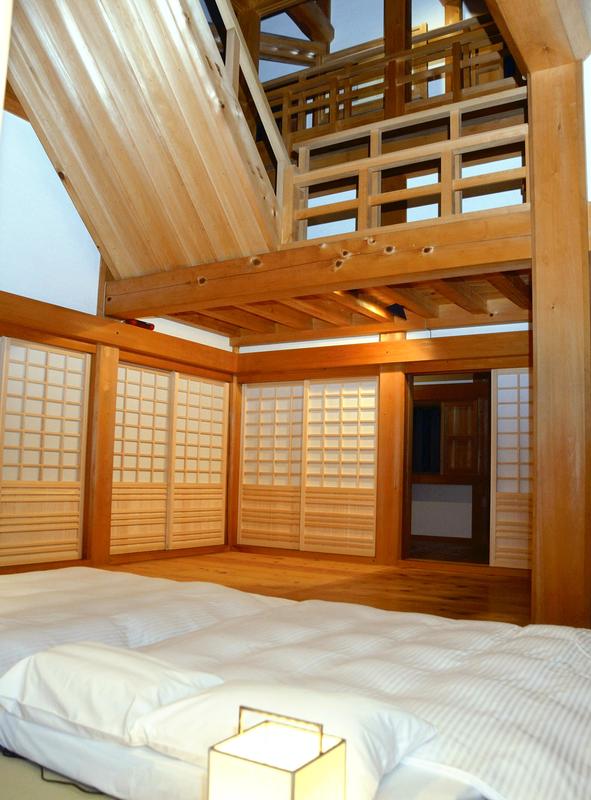
Godai received a certificate as the castle lord and was guided by an official playing the role of the karo, or chief retainer of a feudal domain. Godai saw a two-story-high ceiling inside the space, which is rare in a castle structure, and a drawing of the castle building. Listening to explanations about the structures, she imagined the lives of castle lords in those years.
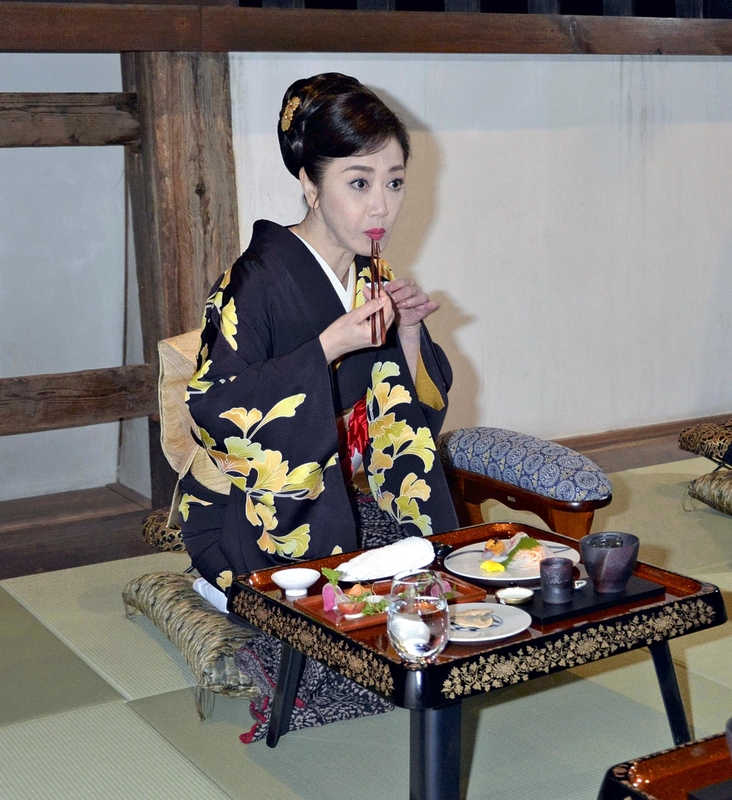
In the castle keep, local people performed kagura dances. In the Koran Yagura, one of the castle watchtowers that is designated as an important cultural asset, Godai enjoyed a meal that included many local specialty foods, such as vegetables grown in the area and seafood from the Seto Inland Sea.
"Visitors can enjoy a luxurious experience that they can't have in real life, so I strongly recommend young Japanese people try this, too."
When the accommodation service starts, the first floor of the keep will be used as a bedroom. Tatami mats will be laid in the center of the floor and shoji sliding doors made of wood and paper will surround the space.
A bath will be prepared in the Ninomaru outer citadel, and a kitchen and restroom provided inside vehicles,
City government officials and others concerned stayed in the castle during the trial, confirming emergency exit routes and guide lights for disaster prevention and checking sanitary conditions.
According to the city government, there are still many old-style houses evocative of the days when the city was a castle town, and tourism facilities that are also cultural assets. The city government aims to promote its tourism industry and vitalize the local economy by using these tourist resources.
The city government plans to utilize Garyu Sanso, a villa initially built as a vacation house for lords of the feudal domain. The villa is also designated as an important cultural asset. In the private sector, companies have refurbished eight old folk houses into accommodation facilities and restaurants.
The castle stay service will be available from 5 p.m. in the evening to 9 a.m. on the following day, as the entrance for ordinary visitors closes at 5 p.m. The city government plans to use part of the revenues from the service to help preserve tourist facilities that are cultural assets.
Osaka-based Value Management Co., which operates the castle stay service, has also had success with lodging services in old folkhouses. Company President Jun Tarikino, 46, said, "We want to energize the city through economic effects from a project that lets visitors see and utilize its resources."
Read more from The Japan News at https://japannews.yomiuri.co.jp/