
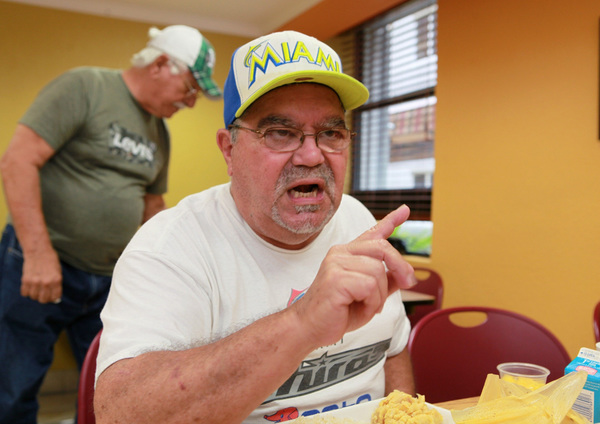
MIAMI _ If you expect to find agreement about the ongoing presidential campaign among older voters, you're likely to be disappointed. The 60-and-older set, in South Florida at least, is as divided as the rest of the country.
And if you think their votes will hinge solely on the issues of Social Security and Medicare, you're selling one of the most politically active electorate groups short. Across retirement communities and meal sites, at social events and in private homes, older voters publicly worry about other issues, including climate change, immigration, terrorism and the economy.
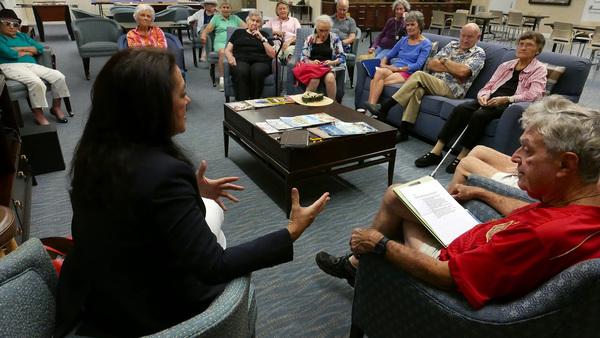
"We are interested in many things," said Gary Sisler, an 82-year-old retiree who leads a current events group at East Ridge at Cutler Bay, a retirement community. "We're not just about one or two issues."
Indeed, since the East Ridge group began meeting earlier this year, members have debated U.S. policy on Cuba, sea level rise, the Clinton Foundation, the war on drugs, algae in Florida Bay and the national debt. This isn't unusual. A January survey by Next Avenue, a PBS-supported aggregated website for older people, showed that among its readers the issues of aging actually placed fifth, but the state of the economy topped the list of concerns, followed by healthcare, climate change and foreign policy _ ahead even of terrorism and immigration.
Those concerns have to do with legacy: Older voters want to leave a safe and healthy world to their children and grandchildren.
Art North, an 87-year-old East Ridge resident, frets about government dysfunction and Washington's inability to get things done. "We have become a country of rigid categories, and there is no discussion on the issues," he said. "The art of compromise is dead."
The retired Methodist minister also worries about the growing problem of income inequality. While he feels secure about meeting his own financial needs, he knows that "younger people in their 50s believe those [social] programs that my generation has won't be around when they get around to retiring."
A few miles north, at the Vernon Ashley Plaza Public Housing in Hialeah, Adela B. Ramos, 71, is worried about the possibility of an abrupt change in foreign policy. "I don't want war," says the former sewing and textile operator who retired two years ago. "I don't want to send our young men overseas. We've already had too much war."
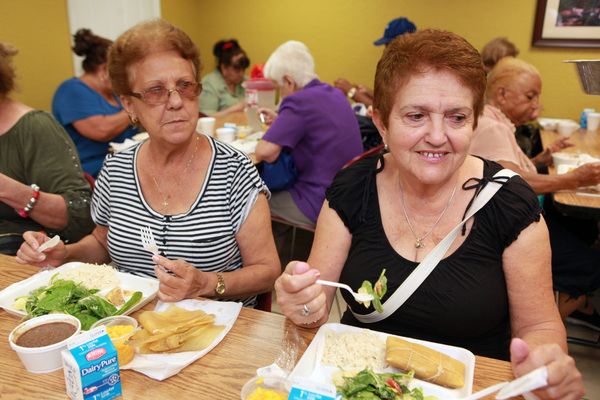
At The Palace at Coral Gables, a luxury retirement community, 87-year-old Midge Pasternack says she worries about climate change and terrorism _ two ongoing events that are changing the world her children will inherit. "I tell them [fellow Palace residents] call Sen. Rubio, call Sen. Nelson, call your congressman," she says. "These are the things I'm really concerned about and that they should be concerned about."
While older voters' concerns are wide-ranging, the economics of retirement _ how to pay for medication, how to survive on a fixed income, how to find affordable housing _ remains a core issue. The solvency of Social Security seems particularly worrisome. Yet older voters complain that this presidential election cycle is short on policy details but long on scandal and accusations.
Julia E. Montagne, a resident at Vernon Ashley, wonders if the government program that has helped her survive in retirement will be around for her daughter and granddaughter. "I wish these things would not change, that the benefits would continue when they get ready to retire," she says. "But I'm not sure they're still going to be around. I do worry for them."
A recent AARP survey showed that women voters 50 years and older overwhelmingly want fast action to strengthen Social Security. Seventy-two percent want action to be taken "immediately," and another 20 percent say changes need to be made within five years.
This isn't surprising. "Women are more concerned about this because of their longevity," explains Zayne Smith, associate state director of advocacy for AARP. "But there's also the fact that women don't have as much work history as men," and Social Security tends to provide a larger percentage of their retirement income.
Yet, the future of Social Security is an issue that transcends gender and even socioeconomic boundaries. At The Palace, residents' Social Security checks make up "a very small part of their retirement income," according to Ken Fishman, a 77-year-old retired attorney, "but we're still concerned for our children and grandchildren _ what will be there for them."
Trustees have warned that Social Security payouts will have to be reduced after 2034 if no action is taken to keep the program afloat, but solutions to remedy the projected shortfall have proven divisive. Republicans favor raising the retirement age and changing the way government calculates cost-of-living adjustments to a less generous formula. Donald Trump has said he won't cut Social Security and expects to fund benefits by creating new jobs to generate more payroll taxes. Hillary Clinton, on the other hand, wants to increase Social Security taxes on those earning more than $250,000, but she opposes reducing annual cost-of-living adjustments and increasing the retirement age. (Under current law, any income above $118,500 is free of Social Security taxes.)
Many seniors side with Clinton. In a recent Senior Citizens League poll, 70 percent of older Americans, both men and women, believe the program's solvency can be improved by raising the taxable wage limit. Only 38 percent of survey respondents supported raising the full retirement age to 68.
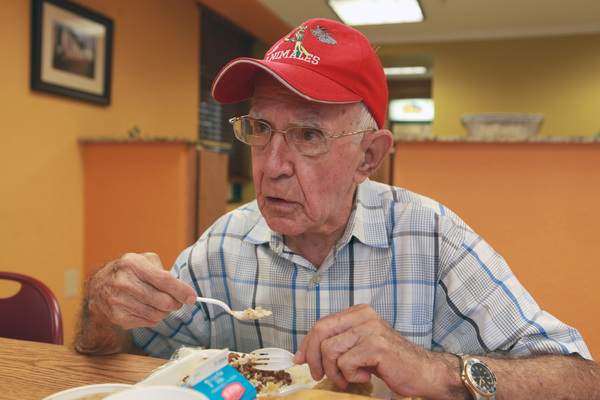
"More and more seniors are aware that lifting the [wage] cap is a solution, that the program would not only be solvent but continue for many more years," explained Mary Johnson, a policy analyst for the Senior Citizens League. "That's the preferable solution for most of them."
As with Social Security, Medicare remains a government program older voters want to keep intact. In interviews and polls, seniors are concerned about the increasing cost of healthcare. Skyrocketing drug prices and spiking premiums have eaten away at their disposable income.
"Social Security," Johnson adds, "has simply not been enough to keep up with rising healthcare costs at a time of life when health is likely to be declining. So they have to dig deeper into their retirement savings if they have any, and even then there's the worry that it will run out."
In a presidential race that has shocked the savviest and most seasoned observers, most older voters say they'll vote along party lines. A few, though, are switching sides. Reynaldo Sierra, 67, was a registered Republican until he changed to a nonpartisan affiliation to protest the Iraq War. This time around he will vote for Clinton _ but he acknowledges it's a dispiriting choice.
"I don't like either candidate, but I'm not voting for Trump," he explained. "He has said some terrible things and I don't trust him."
WHERE CANDIDATES STAND
Social Security
Hillary Clinton: Wants to raise Social Security taxes on people making more than $250,000 annually but opposes raising the retirement age. She also wants to give credit to people who take time off from work to fulfill family caregiving duties.
Donald Trump: Has said he won't raise Social Security payroll taxes and will deal with a future shortfall by collecting more payroll taxes through jobs he will create or bring back stateside. Some of his advisers, however, have said everything is on the table when it comes to social service programs.
Medicare
Clinton: Has proposed expanding Medicare to allow people 55 and older to voluntarily pay to join Medicare. She also said she will fight the privatization of the program.
Trump: Has been quoted as saying he doesn't want to cut Medicare because "it's not fair to the people that have been paying in for years." The Republican platform, however, calls for a form of privatization.
Drug Costs
Clinton: Wants Medicare to negotiate drug prices for its beneficiaries. (Under current law, it is not allowed to do so now.) She favors capping what insurance can charge on out-of-pocket costs and importing drugs from other countries if they meet U.S. standards on safety and quality.
Trump: Also wants Medicare to negotiate drug prices. He has said consumers should have access to drugs from other countries as well.
Healthcare
Clinton: Wants to keep and expand the Affordable Care Act. She has proposed expanding Medicaid in states that haven't done so already. She also favors a government-run insurance plan that would compete with private insurers.
Trump: Has said he will work to repeal the Affordable Care Act, but wants to allow the sale of health insurance across state lines, a change that he believes will force healthcare costs down.