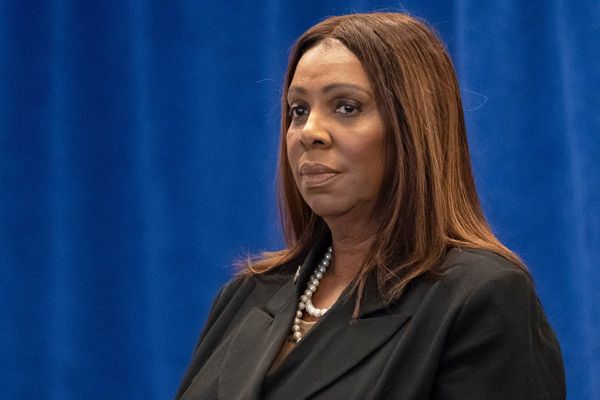
WASHINGTON _ Former acting Attorney General Sally Yates gave her first public account Monday of her role in the ouster of former national security adviser Michael Flynn, recounting how she warned White House lawyers in January that he "could be blackmailed" by Moscow, may have violated criminal statutes and had misled Vice President Pence about his dealings with Russian officials.
"We believed that Gen. Flynn was compromised," Yates told a Senate Judiciary subcommittee investigating Russia's role in the 2016 election.
Flynn, a retired Army three-star general, was forced to resign as President Donald Trump's top national security aide 18 days after Yates first alerted the White House on Jan. 26, but only after news stories revealed the existence of a transcript of Flynn's conversations with Russian Ambassador Sergey Kislyak. The diplomat's calls were recorded as part of routine U.S. intelligence monitoring of ranking foreign officials.
At issue is whether Flynn improperly indicated to Kislyak that the Trump administration would ease or reverse economic sanctions that President Barack Obama had imposed on Moscow in retaliation for Russian interference in the U.S. presidential campaign. Flynn denied doing so, and Pence later issued a similar denial.
Yates said she and a senior official in the national security division at the Justice Department met with White House counsel Donald McGahn and one of his top aides on Jan. 26 and again the next day in a secure facility at the White House to discuss statements by Flynn and others "that we knew not to be the truth."
"We weren't the only ones who knew of this," Yates said. "The Russians also knew."
Yates said that FBI agents had interviewed Flynn on Jan. 24 about his contacts with the Russians and that armed with that material, she felt it was "critical that we get this information to the White House in part because the vice president was unknowingly making false statements to the American public and because we believed that Gen. Flynn was compromised," she said.
"To state the obvious, you don't want your national security adviser compromised with the Russians," she added. "You don't want the Russians to have leverage over the national security adviser."
Former Director of National Intelligence James Clapper, who also testified, said he agreed that Flynn's conduct had posed a risk.
"There's certainly a potential vulnerability," Clapper said. "There's no question about it."
The testimony came shortly after it emerged that Obama had warned Trump two days after the election in November against picking Flynn as his national security adviser.
Obama delivered the warning, which first was disclosed by NBC News, when he met Trump for 90 minutes in the Oval Office, according to a former senior Obama administration official.
Obama had not planned on saying anything about Flynn, the former official said, but he told Trump he should "think twice" about hiring him after they got into a conversation about personnel.
Sean Spicer, the White House spokesman, said Monday that Obama made clear to Trump that he "wasn't exactly a fan" of Flynn, who had criticized the Obama White House policy on Iran after he left the Pentagon.
Yates, a holdover from the Obama administration's Justice Department, was acting attorney general for 10 days after Trump took office. She was fired when she said the Justice Department would not defend Trump's executive order seeking to bar travel from seven Muslim-majority countries.
Ahead of the Senate hearing, Trump sought to distance himself from his former adviser's troubles, citing the decision by the Defense Intelligence Agency to extend Flynn's security clearance after he retired in 2014.
"General Flynn was given the highest security clearance by the Obama Administration _ but the Fake News seldom likes talking about that," he tweeted Monday morning.
Trump also urged lawmakers to ask Yates about the leak of information about Flynn.
"Ask Sally Yates, under oath, if she knows how classified information got into the newspapers soon after she explained it to W.H. Counsel," he tweeted, referring to Yates' conversation with McGahn.
Flynn and Kislyak were in touch in late December, including on the 29th, the day the Obama administration levied sanctions in response to a determination by U.S. intelligence agencies that Russian President Vladimir Putin's government had interfered in the U.S. campaign in an effort aimed, in part, at helping Trump win.