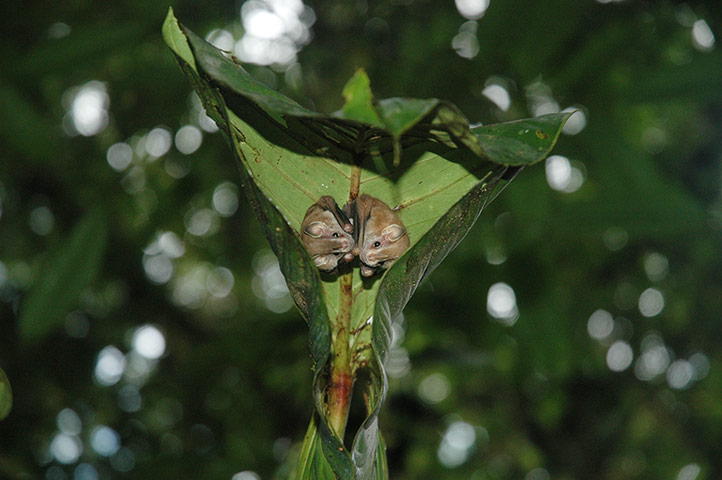
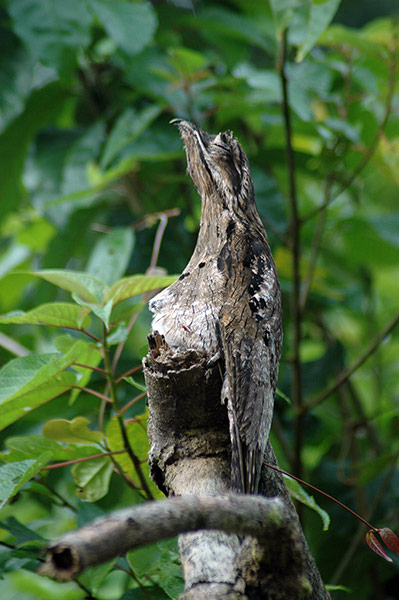
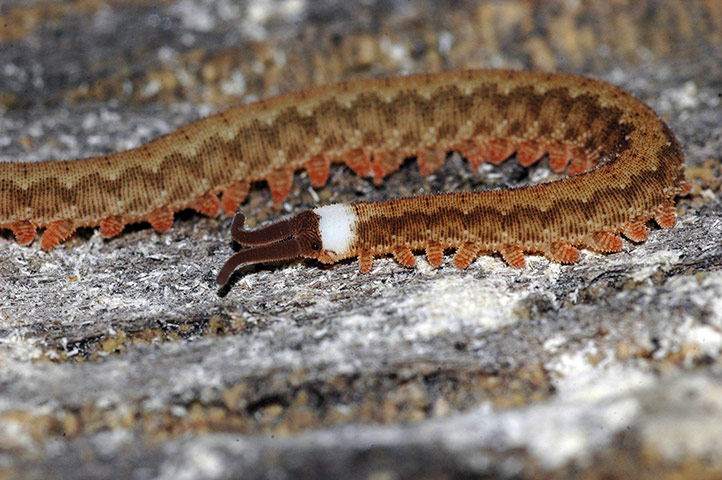
Among the 100 or so species of bats in Yasuni, half a dozen build tents to protect their families from the torrential rainsPhotograph: Kelly Swing/Estacion Tiputini Colegio de Ciencias Biológicas y Ambientales/Universidad San Francisco de QuitoA highly camouflaged bird, the common potoo, hides quietly at the end of a broken branch while protecting a nestling under its breast feathersPhotograph: Kelly Swing/Estacion Tiputini Colegio de Ciencias Biológicas y Ambientales/Universidad San Francisco de QuitoVelvet worms are evolutionary 'missing links' that are not missing at all; they're intermediate between earthworms and millipedesPhotograph: Kelly Swing/Estacion Tiputini Colegio de Ciencias Biológicas y Ambientales/Universidad San Francisco de Quito
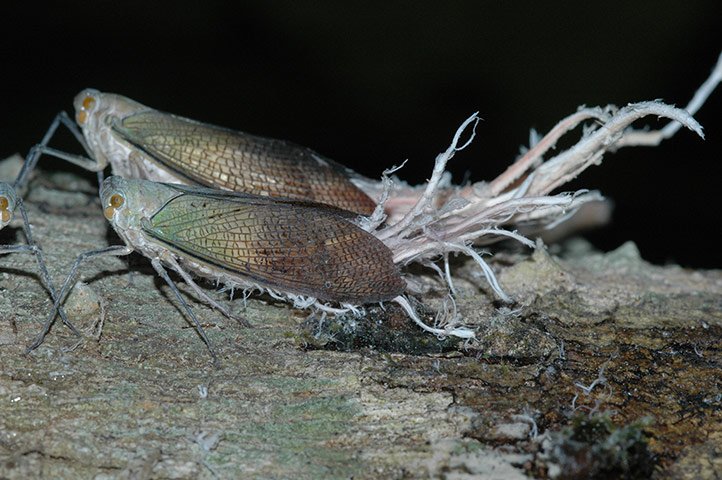
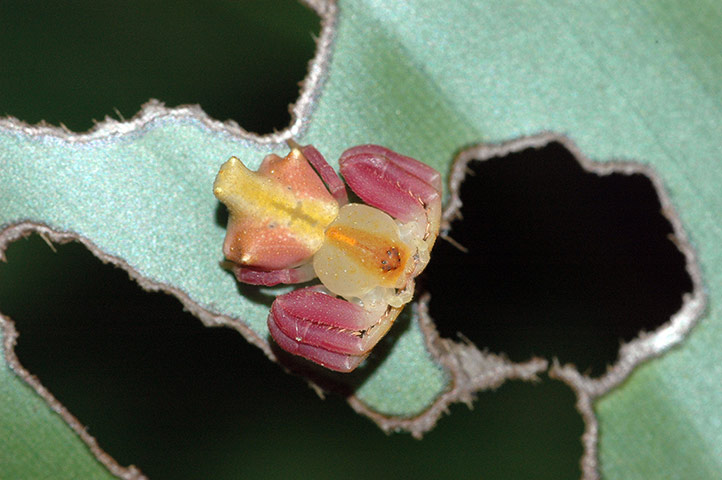
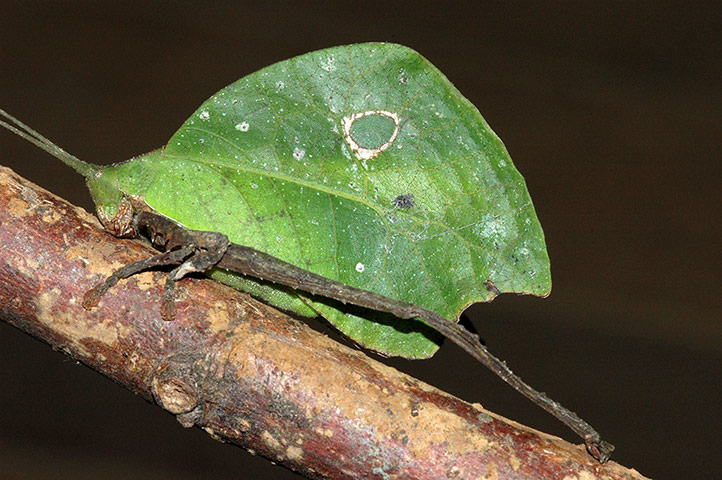
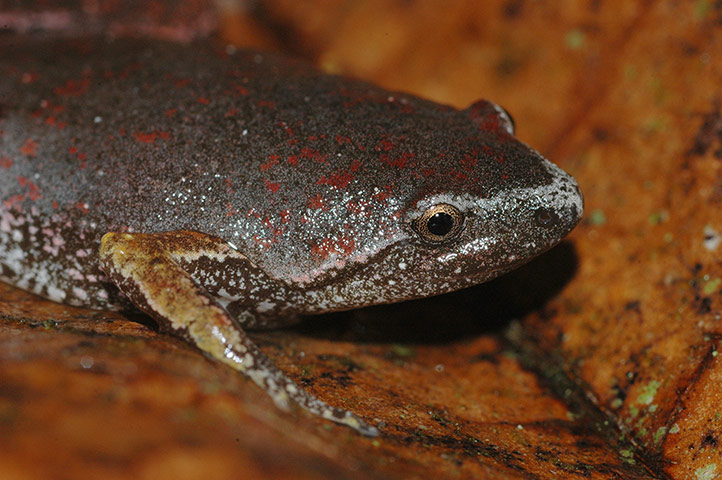
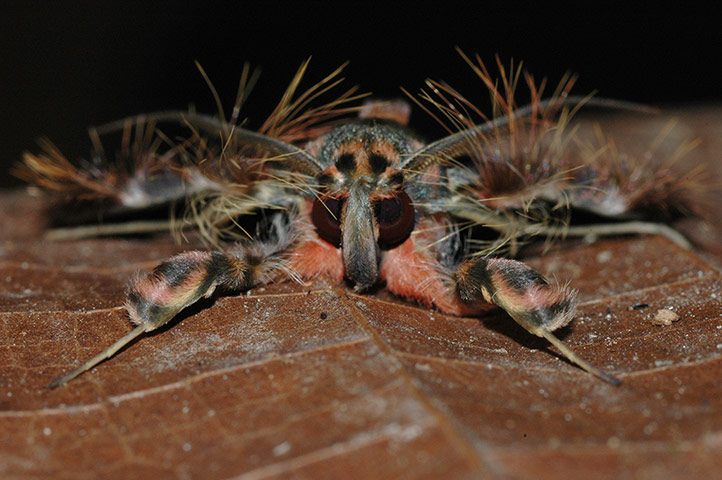
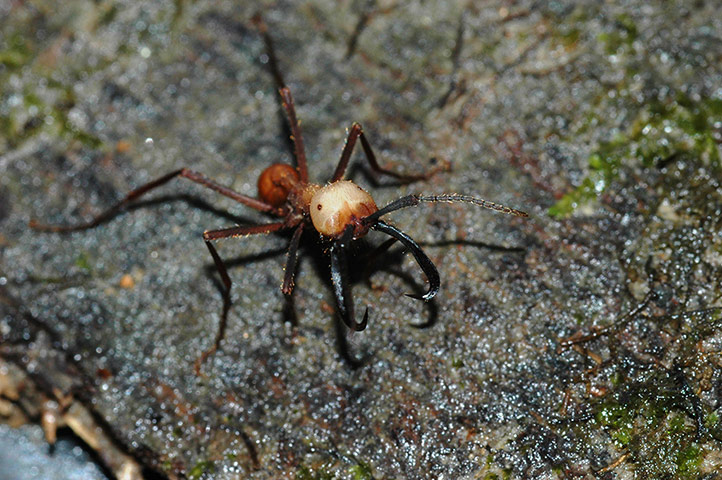
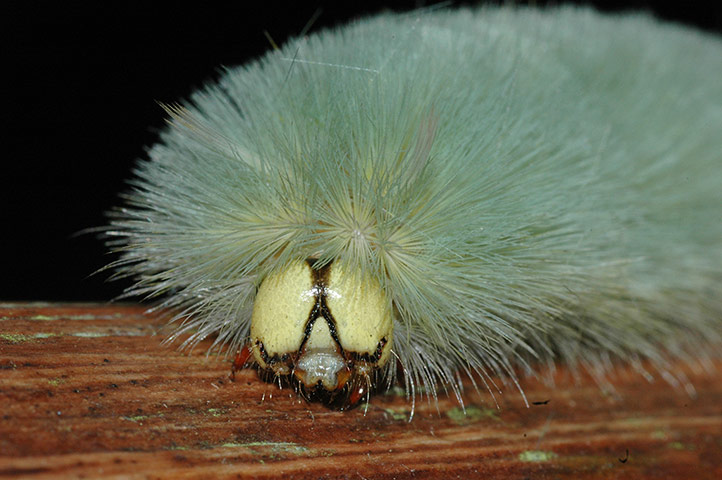
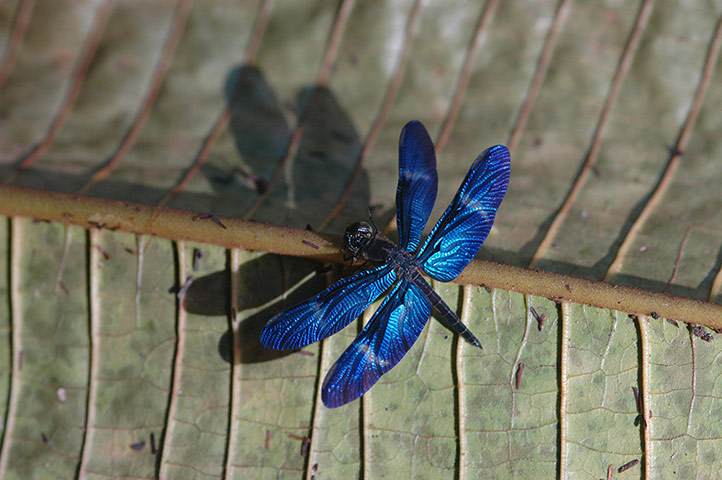
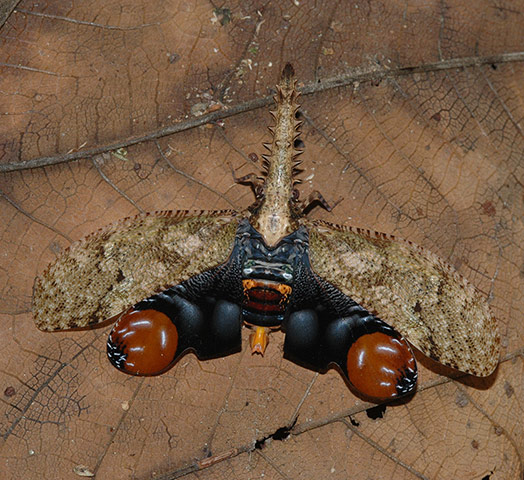
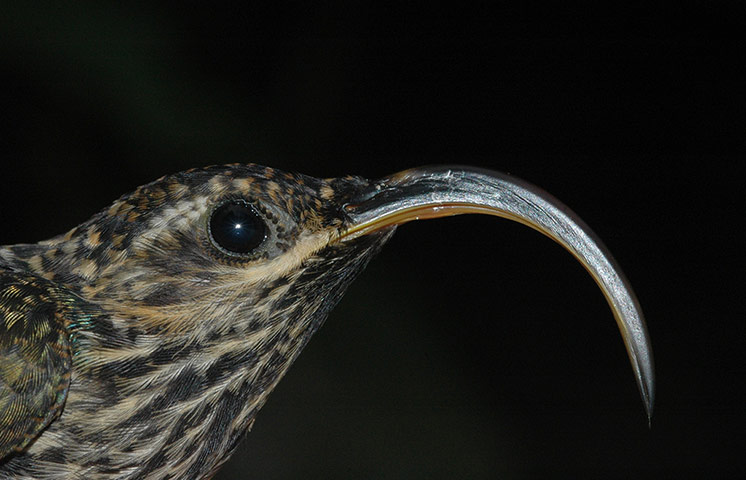
Some relatives of the cicadas produce waxy secretions that accumulate to form feathery extensions; little is known of their functionPhotograph: Kelly Swing/Estacion Tiputini Colegio de Ciencias Biológicas y Ambientales/Universidad San Francisco de QuitoCrab spiders come in many shapes and colours to avoid detection by their prey Photograph: Kelly Swing/Estacion Tiputini Colegio de Ciencias Biológicas y Ambientales/Universidad San Francisco de QuitoApparently, resembling a leaf isn't sufficient camouflage; this katydid has evolved to look like a damaged leafPhotograph: Kelly Swing/Estacion Tiputini Colegio de Ciencias Biológicas y Ambientales/Universidad San Francisco de QuitoThe face of a narrow-mouth frog; these amphibians hide in the leaf litter and have calls that are reminiscent of sheepPhotograph: Kelly Swing/Estacion Tiputini Colegio de Ciencias Biológicas y Ambientales/Universidad San Francisco de QuitoSome moths have feathery projections around their faces; they're probably involved in courtship but no one knows exactly what they're for Photograph: Kelly Swing/Estacion Tiputini Colegio de Ciencias Biológicas y Ambientales/Universidad San Francisco de QuitoYasuni is home to at least 600 species of ants; this army ant soldier with its 'ice-tong' mandibles stands guard over a line of workersPhotograph: Kelly Swing/Estacion Tiputini Colegio de Ciencias Biológicas y Ambientales/Universidad San Francisco de QuitoThere are thousands of species of butterflies and moths in Yasuni so there is an equivalent number of caterpillars with endless odd and impressive looksPhotograph: Kelly Swing/Estacion Tiputini Colegio de Ciencias Biológicas y Ambientales/Universidad San Francisco de QuitoIn the temperate zone, most dragonflies have transparent wings but this Amazonian species has iridescent wings that glow in the afternoon sunPhotograph: Kelly Swing/Estacion Tiputini Colegio de Ciencias Biológicas y Ambientales/Universidad San Francisco de QuitoThe eyelash frog blends in exceptionally well with the leaf litterPhotograph: Kelly Swing/Estacion Tiputini Colegio de Ciencias Biológicas y Ambientales/Universidad San Francisco de QuitoWhile praying mantis are not uncommon in Yasuni, this brightly coloured species is very rarely observed Photograph: Kelly Swing/Estacion Tiputini Colegio de Ciencias Biológicas y Ambientales/Universidad San Francisco de QuitoDue to amazing camouflage, some insects, like this mossy walking stick, are rarely seenPhotograph: Kelly Swing/Estacion Tiputini Colegio de Ciencias Biológicas y Ambientales/Universidad San Francisco de QuitoThe saw-snouted wax bug, a relative of the cicadas, has a toothy hollow projection on its face whose function is unknownPhotograph: Kelly Swing/Estacion Tiputini Colegio de Ciencias Biológicas y Ambientales/Universidad San Francisco de QuitoThe extremely curved beak of the sicklebill hummingbird exclusively fits into certain curved flowers where it collects the nectar it feeds uponPhotograph: Kelly Swing/Estacion Tiputini Colegio de Ciencias Biológicas y Ambientales/Universidad San Francisco de Quito
Sign up to read this article
Read news from 100’s of titles, curated specifically for you.