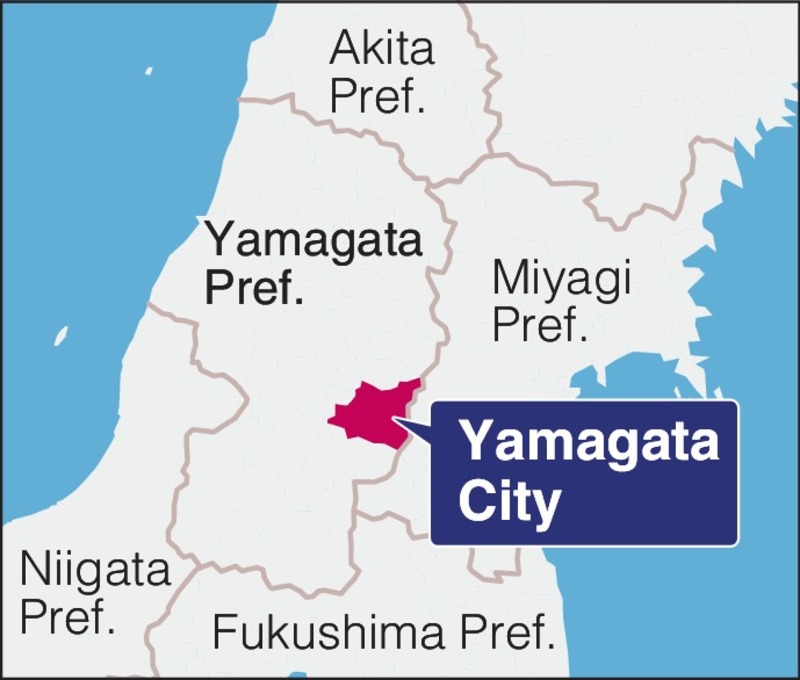
YAMAGATA -- The Zao Onsen hot spring and ski resort in Yamagata is famed for its spectacular "snow monsters" -- alpine trees covered in snow and blown into unusual, monsterlike shapes by strong winds. After the bubble economy burst in the early 1990s, visitors to Zao Onsen from around Japan steadily declined. Zao had become increasingly dependent on foreign visitors, but the novel coronavirus pandemic has decimated their numbers. Amid these challenging times, the resort district is turning to efforts aimed at attracting locals and people living in nearby areas. Although still in their infancy, these efforts could become a new source of energy and economic activity in this hot spring town.
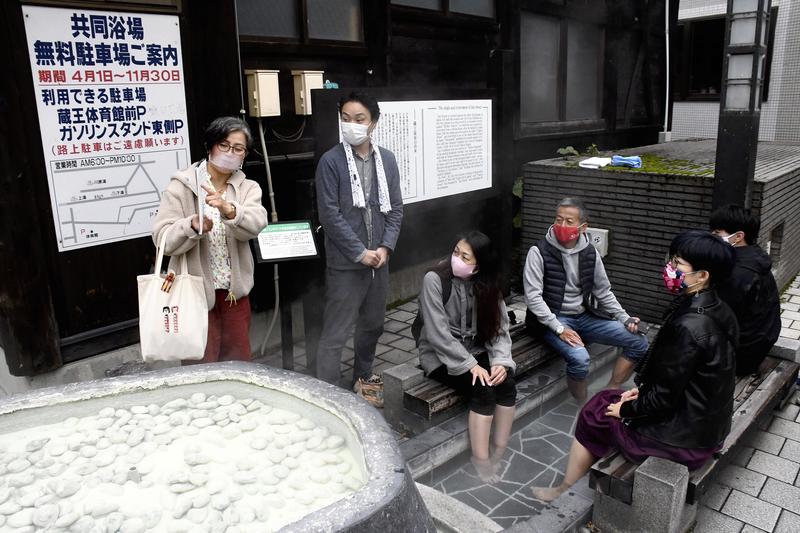
On Oct. 17, Hiromi Ito guided five people on a tour through the hot spring resort. "Zao Onsen's hot spring water is the most acidic in Yamagata Prefecture, and the second- or third-most acidic in the whole country," said Ito, 45. During the tour, Ito explained about this resort's 1,900-year history.
As the tour participants dipped their feet in a communal footbath and warmed their hands in small handbaths on Takayu-dori street in the center of Zao Onsen, Ito detailed the unique qualities of the water in the springs. A university employee from Yamagata who is a frequent visitor to Zao Onsen was amazed by Ito's depth of knowledge. "I didn't know the water here was so acidic. That impressed me," he said.
This tour was organized by Naoya Take, president of Label Link, which operates Takayudo, a shop selling hot-spring themed goods on Takayu-dori, and does other things to promote tourism in the region. Take, 35, hails from Asahikawa, Hokkaido, and was previously a sales rep for the publisher of Jalan travel information magazine. He had published a feature on Zao Onsen as he has been involved in promotion of hot spring towns since about 2012. He moved to Yamagata in 2019 and quit his job. While he was smitten by the friendliness of the locals and the resort's atmosphere, he was equally driven by a desire to help Zao Onsen regain its luster.
According to prefectural government figures, about 2.46 million people visited Zao Onsen in fiscal 1990, when skiing was extremely popular in Japan. That number had steadily dropped to about 800,000 in fiscal 2019. The coronavirus pandemic compounded this decline and dealt a stinging blow to the resort.
Take felt the best way to kick-start Zao Onsen's economy was to make locals and people from nearby areas take another look at the resort's charms. In late July, before the tours started, Take started a riddle-solving event in which participants wander through Zao Onsen to find the answers. More than 470 people had taken part in the brain-teasing events as of mid-October. "Many people supported this event, even though leaving their house wasn't so easy," Take said.
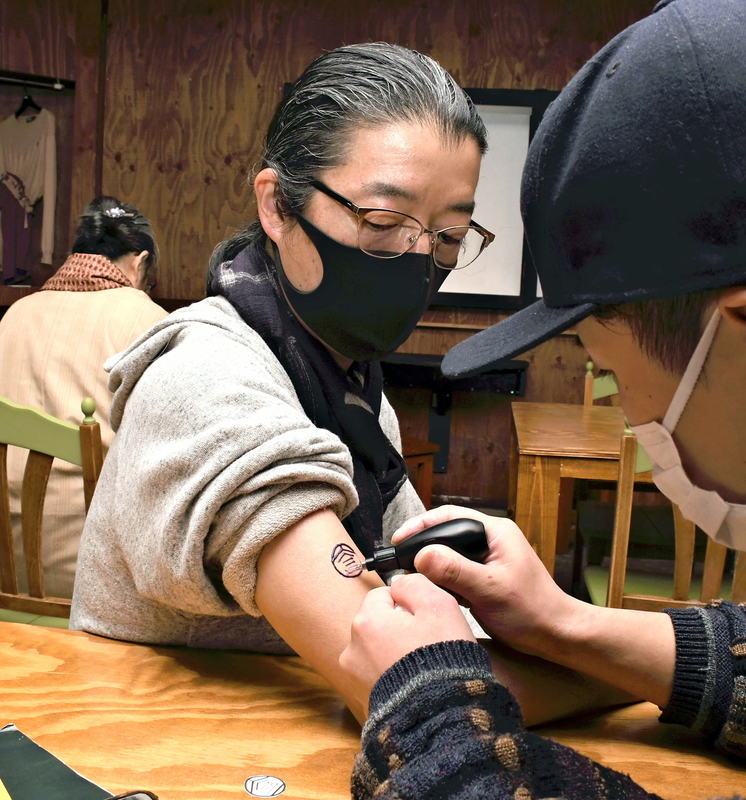
Zao Onsen has another venue that encourages social interactions. In September, students from the Tohoku University of Art and Design, which is in Yamagata, established World Cafe Palette. This facility on the Juhyo-dori street was previously a kokeshi wooden doll workshop, but has been refurbished. Artworks drawn by the students are displayed on the walls and other exhibitions are held at this space for relaxing. Irregular events held at the facility include classes for making lanterns made of wax and bodypainting workshops featuring jagua dye that lasts for up to about two weeks.
"Soaking in the hot springs is great, but we thought more people would come to Zao Onsen if it had places where they could do fun activities," said Yugo Yokota, 25, a third-year student at the university and a representative of the facility.
The Zao Onsen Tourism Association has welcomed these recent efforts by younger people to attract visitors. "We're very grateful," said Hironobu Kurozaki, director general of the association. In recent times, micro-tourism -- visiting tourist spots close to one's home -- has been gaining traction. Take is keen to work with and support nearby areas.
"To get more people coming to Zao Onsen, we want to cultivate demand for tourism from our own region," Take said.
Read more from The Japan News at https://japannews.yomiuri.co.jp/