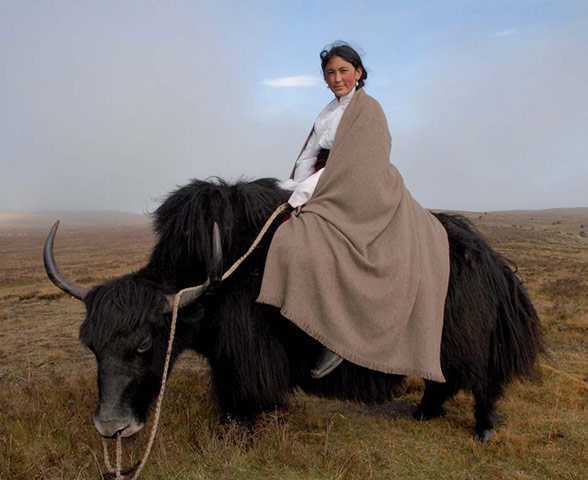
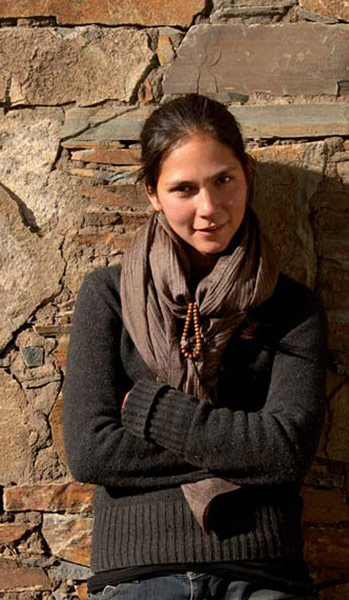
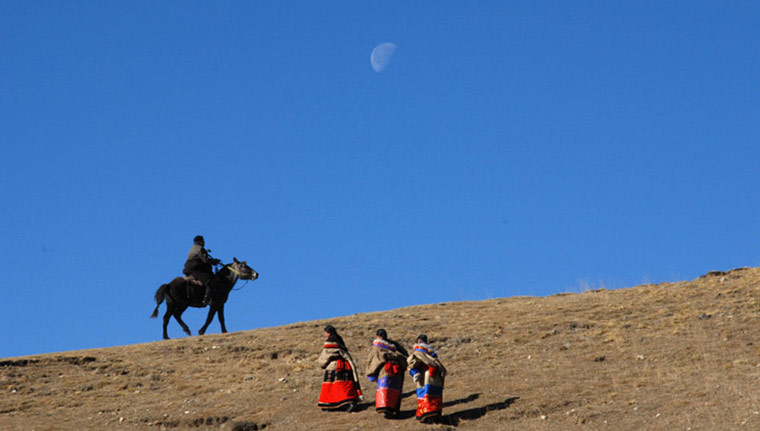
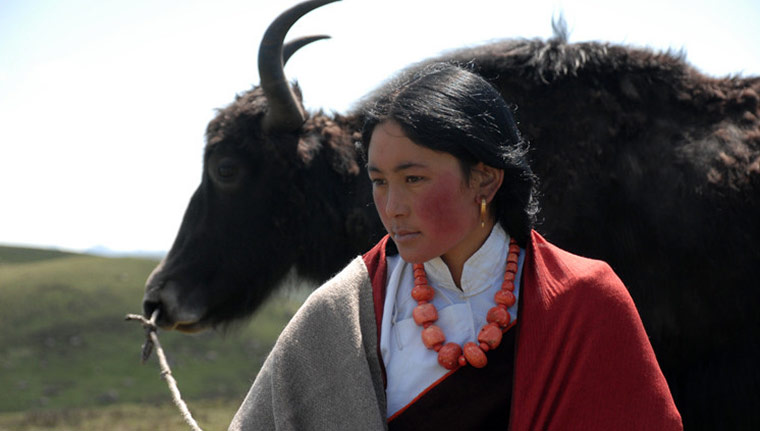
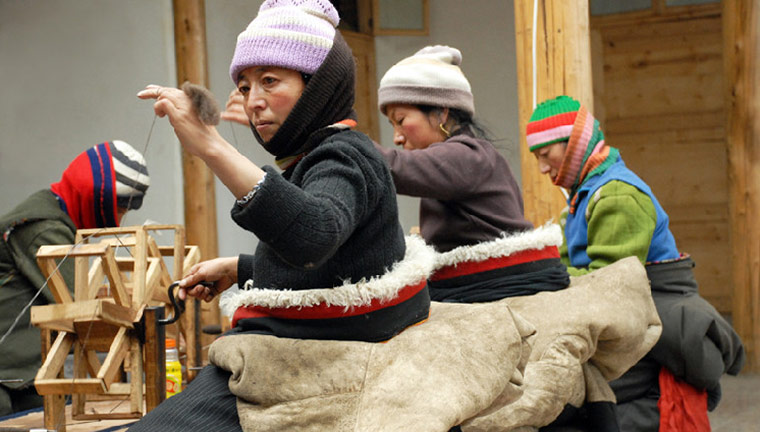
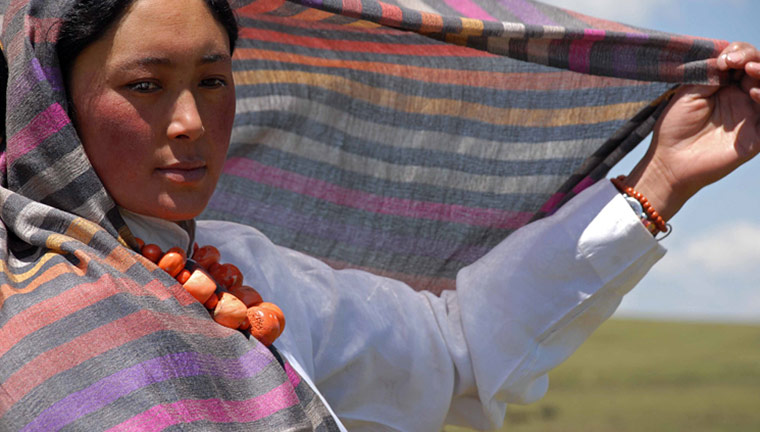
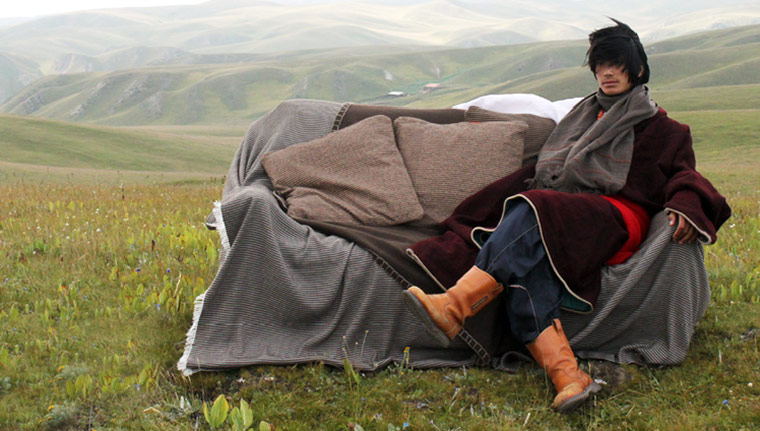
Tibetan nomads hold the secret to one of the world’s softest and most valuable wools: not cashmere, merino or vicuna, but yak. These shaggy beasts are the unexpected providers of sought-after shawls to French fashion houses and a new opportunity for China’s drylandsPhotograph: PRThe Norlha workshop, brainchild of half-Tibetan Dechen Yeshi, buys khullu, or yak wool, directly from nomad families. Norlha aims to revitalise traditional craft by making it both valuable and sustainablePhotograph: PRAn alternative to cashmere is good news for China, where overgrazing due to the glut of production is turning grassland into desert. Using wool from China’s already plentiful yak population eases overgrazing. And, by tapping into a traditional art, Dechen Yeshi hopes to improve living standards for nomadic yak herders, who are among China’s poorest inhabitants, and to allow them to enjoy a steady wage without having to flee to cities and abandon their way of lifePhotograph: PR
Norlha’s ‘workshop on the rooftop of the world’ is located high on the Tibetan Plateau, at an altitude of 3,200 metres where temperatures plunge below minus 30c. Here, nomadic people are outnumbered five to one by yaks, the sturdy beasts who have supported nomads for centuries, providing everything from butter and cheese to dung for fuel, and, beneath a thick layer of coarse hair, the softest wool imaginablePhotograph: PRAt the Norlha workshop it takes one woman a month to spin 2kg of wool from 300kg of raw material, just enough to make two Norlha shawlsPhotograph: PRWhen Dechen Yeshi took the shawls to Paris, the novelty of yak wool generated interest at fashion houses from Sonia Rykiel to Arnys where this traditional handicraft now sells for well over €500 a piecePhotograph: PRYak wool is warmer than merino, as soft as cashmere and as tough as camel, and so has made a welcome addition to a marketplace that is growing weary of cashmere Photograph: PR
Sign up to read this article
Read news from 100’s of titles, curated specifically for you.