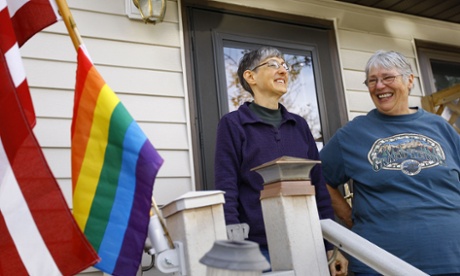
Same-sex marriages are set to begin in Wyoming on Tuesday after state officials declined to appeal against a federal district court ruling.
The state attorney general, Peter K Michael, said Monday he would file a notice in district court at 10am on Tuesday morning that the state would not appeal against judge Scott W Scavdahl’s Friday decision to strike down Utah’s ban on same-sex marriage. Once the notice is filed, Michael said, clerks will be required to issue marriage licences to same-sex couples.
“After reviewing the law and the judge’s decision that binding precedent requires recognition of same-sex marriage, I have concluded that further legal process will result in delay but not a different result,” Michael said.
Wyoming’s law was challenged by four couples. On Friday, Scavdahl issued a preliminary ruling against the law, but gave Wyoming officials until this Thursday to decide whether to appeal against the decision.
“While this is not the result I and others would have hoped, I recognise people have different points of view and I hope all citizens agree, we are bound by the law,” said Governor Matt Mead in a statement on Friday.
State officials declined to appeal because they would have appealed to the same federal circuit court that struck down same-sex marriage bans in Utah and Oklahoma. The US supreme court declined to review the decision, a de facto imprimatur.
“This result is contrary to my personal beliefs and those of many others,” said Mead. “As in all matters, I respect the role of the courts and the ruling of the court.”
Advocates said the decision not to appeal against the court’s decision allows Wyoming to live up to its nickname, the Equality State.
“We are thrilled that the state of Wyoming will truly live up to its promise as the Equality State and that same-sex couples and their families will no longer live with the indignity of injustice that has caused so much harm to so many people over the years,” said the Wyoming Equality executive director, Jeran Artery, in a statement.
Wyoming is informally called the Equality State because it was the first to allow women to vote, in 1869. It did so to meet population requirements for statehood.