There was a heat haze at the Vila Real Circuit on Sunday and in the shimmering air you could almost see a Ford GT40, a Porsche 908, an Alfa 33 and a Ferarri GT40. It was a petrol-heads’ mirage at one of motor sport’s greatest settings.
With no German Grand Prix to prepare for I went to Portugal for the eighth round of the World Touring Car Championship; it was a sort of turbo-busman’s holiday.
There is a deep passion for motor sport in Portugal, especially in the north of the country, and between 1931 and 1991 the Circuito Internacional de Vila Real, the venue for so many sports and touring car championship races, was considered by many drivers to be among the best street circuits in the world. “I have always had fond memories of Vila Real, the crowds, the beautiful scenery and great enthusiasm the Portuguese had for racing,” said Stirling Moss.
In Formula One terms Portugal, like Germany, is among the dispossessed; there has not been a grand prix at Estoril since 1996. So when it was announced that international motor sport was returning to Vila Real, and that the WTCC would stage a race there for the first time, anticipation was high.
François Ribeiro, the WTCC general manager and promoter, told me: “For me Vila Real is a sleeping legend. It has been one of the best-kept secrets of the past 20 years. The track is just unbelievable. It is a mix of Macau and the Nürburgring. When I saw it for the first time at the end of last year I thought we had to bring the WTCC here. It’s the best street circuit I’ve ever seen. It’s fast, challenging, a natural lay-out. Without chicanes the average speed here would be 175kph. That’s very quick, without any straight lines.
“The circuit used to go over the bridge. That’s not possible any more. But we still used more than two-thirds of the old track.”
The first Formula One race I attended was the Australian Grand Prix in October 1986, when Nigel Mansell’s exploding tyre robbed him of a deserved world title. I did not go to F1 races in the 60s and 70s (far too young) but as I wandered around the Vila Real circuit over the weekend I imagined that it must have been something like this, more relaxed, less self-conscious and insular, and with spectators and drivers more connected.
WTCC is not the model for FI. I agree with Paul Hembery, Pirelli’s motorsport director, who told me: “We are involved with about 250 motor sport events and 249 of them would like to be where F1 is right now.”
But my weekend in Vila Real, a small, vibrant town beside the Douro river valley, with its strong associations with wine and port, was a reminder of what the bigger motor sport brand may have lost over the years. Ribeiro told me: “Unlike F1 there are no headaches, no pit stops, no strategy, not 100 different tyre compounds. It’s bumper-to-bumper action. No DRS, no push-to-pass button. Overtaking is real. I’m not a fan of all that stuff that makes racing a bit virtual. I prefer to have real overtaking, not fake overtaking.”
Ribeiro – WTCC’s Bernie Ecclestone – is an interesting character. At home, in Paris, the 43-year-old drives a Smart car. He tried, and failed, to qualify for the Olympics as a sailor. “I’m passionate about my job but not about motor sport,” he says. “In my position it would be very dangerous to be passionate. To be a promoter you have to deal with many different parties who are all passionate – teams, drivers, promoters, the FIA, manufacturers. I have to make everyone work together, to steer the championship and ensure everyone is going in the right direction.”
He works with Eurosport, who cover the WTCC, but is also heavily involved with digital coverage and social media, which he calls “super-important”.
Rob Huff, 35 and from Cambridge, was the 2012 WTCC champion. “This is my 11th year in the championship and the thing I love about it is that it’s so open to everyone,” he says. “The fans can come in the paddock. And we have hardly any merchandise shops. We give it away free. If our fans support us it’s what they deserve. And we like seeing our colours up in the grandstands.”
Huff’s father, Peter, fired his enthusiasm for motor sport and his family funded his career, spending a little over £100,000. “When people come and watch us they’re addicted to it,” he says. “And it’s easy to become involved in. The racing is real. We are a bit rugged with each other, with plenty of side-by-side racing, and that’s what people want.”
He describes Formula One as “a different planet”. “I like the technology but the racing is pretty poor and it’s just not motor sport as I see it.”
Tom Chilton, the brother of former Marussia F1 driver Max, has been a WTCC driver for four years. He says: “It’s very competitive and professional. We’re not as big as Formula One but you are allowed within a mile of us without buying an expensive ticket. We are a very friendly circus that travels around the world. And I think touring cars gives you some of the best racing in the world.”
There was a suggestion of Monaco about this tight street circuit on Sunday, with spectators cheering from decorated balconies. There were two races, with grid positions for the leading 10 drivers reversed for the second outing.
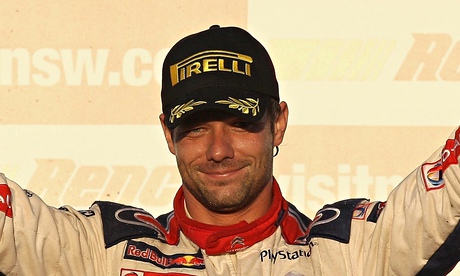
The nine-times world rally champion Sébastien Loeb was in the lineup along with his Citroen team-mate and championship leader, José María López. The former F1 drivers Tiago Monteiro and Gabriele Tarquini were also on show.
China’s Ma Qing Hua won the big race in the evening, his first success of the season. The race ended four laps early with a red flag following a crash, conveniently creating enough time for a large white port aperitif before dinner.