A book written by the then teenage author Naoki Higashida 15 years ago has appeared in a new form in Japan this spring, as a film adaptation by a British director. Now that it has been read in many parts of the world, the author has come to realize that writing means more than just what he does to prove his own existence as a human being.
"Now I believe that by writing, it proves the existence of others as well, because it becomes something meaningful only through people who read my books," Higashida said in a recent online interview with The Japan News. "No one can live alone. My present and other people's present are connected. Isn't this what we call a bond?"
Hoping his first-person account would help "mothers and fathers understand the feelings of their children," the young Higashida wrote the book "The Reason I Jump: The Inner Voice of a Thirteen-Year-Old Boy with Autism," explaining how and why he perceives the world the way he does.
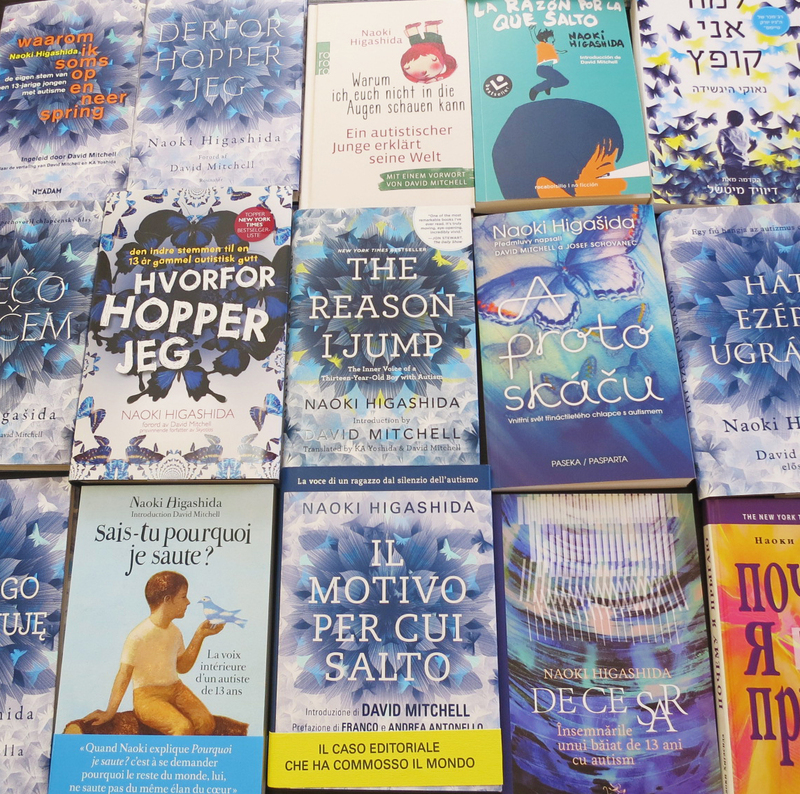
Utterly an eye-opener, the book provided fresh insight beyond the long-held beliefs of experts in the field and was a ray of light for people who have an autistic family member. It also introduces a world that had been mostly unknown and unshared to those who previously had no contact with autistic people.
Translated into English and subsequently more than 30 other languages, about 1.17 million copies have been sold worldwide.
Now 28, Higashida is hoping his thoughts will reach people with autism themselves.
"By conveying how I feel, I was hoping they will feel better, even if only slightly," he said, pronouncing the Japanese syllables of his words one by one while tapping Romaji alphabet letters written on a paper board. "There are people who are going through tremendous hardship because they are not able to put into words the things that are troubling them."
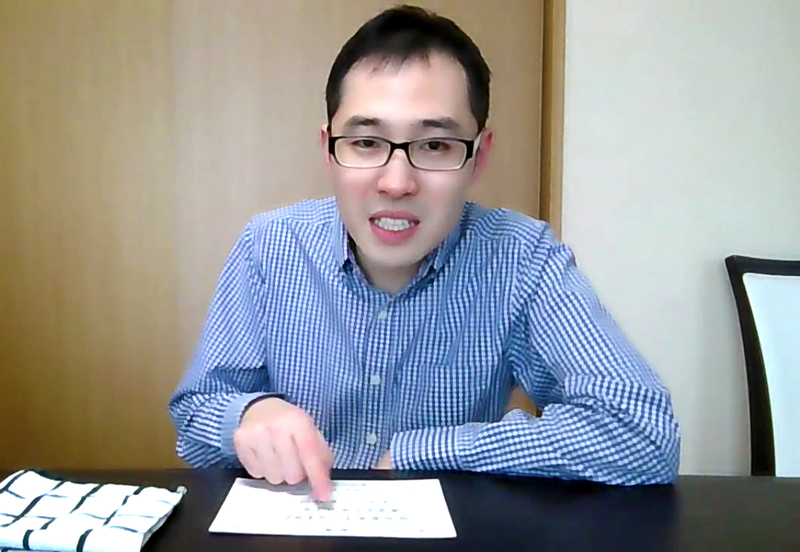
Sitting in his office in Kisarazu, Chiba Prefecture, Higashida used the homemade QWERTY board to help himself speak during the online interview. Pointing at letters helps him to bring words out from inside himself; otherwise, he finds them vanishing as he tries to speak. Almost nonverbal, he was diagnosed with severe autism at the age of 5.
The idea of a documentary based on "The Reason I Jump" came from producers Jeremy Dear and Stevie Lee, whose son Joss is autistic. They wanted to adapt the book after reading its English edition -- co-translated by British novelist David Mitchell and his wife, KA Yoshida -- as it greatly helped them understand their son.
Director Jerry Rothwell's documentary features five nonspeaking autistic persons, including Joss, in Britain, India, Sierra Leone and the United States.
Some authors may become overly concerned about how a film version of their original work will turn out. But it wasn't the case for Higashida.
"Not only for movies, but also books, readers do not always react in the way the writer intends. How they feel about something is an individual's freedom," he said. "In the same way, I was hoping the director would make this film in the way he interpreted my book because the original work is like a foundation for a movie."
In fact, Higashida was fascinated by how visual and auditory perceptions were rendered in the movie.
Passages from his book are also sprinkled over the 82-minute film as narration. The words through which the teenage boy divulges his inner self echo as if overlapping with the joys and sorrows felt by the five others.
While highlighting how different ways of communication can build relationships, the documentary does not let the audience look away from the painful moments and long-existing social stigma that confront autistic people and their families.
Just like Higashida's book, the film will get many viewers thinking, changing something in them, consciously and unconsciously.
Last year, "The Reason I Jump" earned awards at the Sundance Film Festival among other international festivals. "Rather than a big change, I hope there will be more people who will find autism more familiar to them by watching this movie or even hearing of it," Higashida said ahead of its release in Japan on World Autism Awareness Day on April 2.
-- Sharing stories, showing beauty
Higashida continues to write, with his works ranging from essays and short stories to poems and picture books. He loves writing and has had 23 books published so far.
"I feel as if I am free from everything," Higashida said in an email message sent following the interview. "While I'm writing, I can forget the fact that I'm disabled and psychological burdens that vex me."
He has the ambition to write a type of story that no one has ever read before. "I've had a vision for it for a long time, but it's only an image, and yet to be put into words," he said via email.
In his latest book, published in November last year, he said he wants to see how the world is changing. Certainly, the ongoing pandemic has made him a witness. Is there light at the end of this long tunnel?
"I don't know if there is, but we'll still make our way through the exit. Even if the world out there is different from what we see now, as long as we have feelings, there will be hope," he said in the interview. The wisdom and ingenuity to live and the intuitive power to survive are such feelings, he added.
As for everyone, it's been a tough year for him. "Time never stops no matter what happens. Despite the difficult days, it's important to look forward and move ahead; that's what I believe."
He has participated in four online lectures in the past year or so, including his first such event for overseas audiences in February.
"It was a great way for letting viewers get to know about me," he said. "As there's still a limited opportunity for people with autism to express their views, I'd love to do it again."
Once he wrote how devastated he was as a little boy when he gradually realized that he was a human being and must live as one in a world filled with so many beautiful things.
Years have passed since. Higashida continues to sense absolute beauty in things like spinning wheels and flowing water through his own way of perception -- but he has also come to like himself as a human being.
So, how has life treated him? At the end of the interview, the writer conveyed a message for his teenage self: "If you can believe in the you of tomorrow, don't lose heart even if you screw up today. Time flows gently for you in the future."
The film is currently in theaters.
For details, visit movies.kadokawa.co.jp/bokutobi/
Read more from The Japan News at https://japannews.yomiuri.co.jp/