

Thanks everyone!
That’s all from us above the line this week, but it’s been fun (as ever) to chat. We hope you enjoyed it. Please send over any feedback: sarah.marsh@theguardian.com or matthew.holmes@theguardian.com
The 7-year-old tweeting about life in Aleppo
Last week I talked to a young 7-year-old girl and her mother who have been tweeting about their life in eastern Aleppo, which is besieged and is enduring some of the worst violence since the start of the civil war in Syria.
Access to Syria is severely restricted and so I interviewed her over Skype. Fatemah, the mother, broke my heart when she told me how her daughter Bana woke up from an evening nap and thought it was morning because of the illumination outside by phosphorus bombs.
The story seems to have taken off – shortly after we did it a number of other media outlets followed suit. As @AlabedBana she has gone from 4,000 followers when we published the story on Monday to almost 60,000.
It can be emotionally draining covering Syria. I was scrolling through my phone for some old pictures of my fiancee after the interview and saw rows upon rows of images of dead children and the aftermath of airstrikes. But these stories of survival can give your heart a boost to carry on.
Video of the week
This week I’d like to suggest two. I am a big fan of this video which shows the artist Stik walking around Shoreditch, exploring the impact of gentrification on the area.
What do you think? Has gentrification affected where you live – how? Does it ever have a positive influence? How can areas be regenerated without pushing existing communities out?
Elsewhere, this video about young girls and anxiety. There’s been so much in the news lately about mental health and young people, with growing numbers experiencing everything from depression to post traumatic stress disorder. These girls were brave enough to talk about it, to reduce stigma, and they did so very eloquently.
What do you think? Why are young people experiencing more mental health issues? Is social media to blame or educational pressure? Share your views on how we can help those in need of support.
Is the V&A wrong to celebrate Margaret Thatcher's style?
I remember going to the cinema a few years ago in Edinburgh and the trailer for The Iron Lady came on. People started booing at the screen then laughing, like they were reacting to a panto. It was more than an unexpectedly demonstrative show of emotion, it hinted at the well of generational anger that people still felt towards Thatcher.

When the film was released I felt the mood shift though. She was no longer a political untouchable but someone to be revered. In recent years, I felt the mood shifting again; she was a feminist, a political role model and a fashion icon. It’s something that occurred to me when I visited the Vogue 100 exhibition and saw a quote of hers blown up and hung on one of the panels. I was surprised and curious at how her narrative had shifted from one extreme to another. This all seemed to tie together when the V&A had a volt-face over their decision to display her outfits.
What do you think – is the V&A wrong to celebrate Margaret Thatcher’s style? Share your views below the line.
A view from the Conservative conference
One of the most striking features of the Conservative conference was the atmosphere of supreme confidence that radiated from the main hall and the fringe.
There are two components to that soaring self-belief. First, the contrast with Labour’s conference the preceding week. The Tories judge that their main opponents are out of commission – desperately divided and culturally remote from the voters who swing marginal seats. Second, Theresa May has embraced Brexit with sufficient gusto, despite her quiet endorsement of the remain campaign, that Conservative pro-Europeanism has been almost entirely marginalised.
The political landscape as viewed from Downing Street is now a subset of Tory internal politics. There are Brexit radicals (the old “awkward squad” in parliament) to May’s right and a clutch of liberals to her left – the scattered remnants of David Cameron’s modernising faction. When May imagines herself on the centre-ground, she means the centre of an English Conservative spectrum.
Her greatest problem is that she has no general election mandate to justify that view; it is largely a fortuitous accident of circumstance that has seen rivals self-destruct. Mindful of that problem, May used her main conference speech to appropriate the referendum result for her own project. It was a shrewd rhetorical strategy. She set out the causes of support for the Leave campaign in broad cultural terms – a sense of dislocation, resentment of liberal elites, economic insecurity – so that she might then present herself and her government as the solution. It was, in essence, a mandate-grab to obviate the charge that she is somehow obliged to simply continue on the basis of David Cameron’s manifesto.
Whether it works will depend on how smoothly she can navigate Britain’s departure from the EU. It is likely to dominate everything, cause great economic turbulence and crowd out almost every other government ambition. This is the defining paradox of May’s premiership: she can claim to represent a broad public appetite for renewal and change because of Brexit and will struggle to satisfy it because of Brexit.
Question of the week: are you worried about a "hard" Brexit?
Theresa May made one thing perfectly clear during this year’s Conservative party conference: Brexit means Brexit.
The Tory leader said controlling immigration and withdrawing from the jurisdiction of the European court of justice would be her priorities during Brexit. She says Article 50 will be triggered before the end of March 2017.
So, are you worried about the impact of this? We debated with readers this week about whether leaving the EU (with reducing immigration a priority) will be bad for business. Many expressed their concerns:

What we know for sure is that Brexit of any substantial kind will certainly cause some economic pain in the short, medium, and long-term, from breaking existing trading relationships and loss of easy access to a large pool of human capital. The additional opportunities, on the other hand, are all long to very long-term, and are uncertain and beyond the UK's control.
Even the bits which are under the UK's control (like massive investment in training and education in a way which actually achieves something instead of pfaffing around with needless re-structuring and testing kids to the edge of mental breakdown) are all things that would have made sense before, so it's optimistic to imagine that they'll happen in a future where the public finances are under more pressure than ever before (once Brexit decline takes hold).
All in all, it's a recipe for return to slow stagnation at best, which has been the UK's lot for most of the twentieth century, assuming that financial and political crises can be avoided.
But hey, in the very, very long run everything will be run by self-building robots, so we won't need an economy in the current sense anyway. So there's that to look forward to.
Updated
Elsewhere on the site this afternoon, a piece about spiders.
In including the revelation that people post spiders about the place, and the classic line everyone can empathise with – “[After they] molt ... I frame their skins or share them with friends” (we’ve all got that friend, right?) – it’s quite a read ...
The woman in the article keeps them in boxes in her living room, it seems, so here’s a thought:

imagine if all the boxes fell down and they just went everywhere
A world without Down's syndrome
After Sally Phillips’ documentary A World Without Down’s Syndrome? aired this week we saw an important public debate given new impetus in the comments on various pieces published on the Guardian.
Hadley Freeman disagreed with much of what Phillips had to say on the choice offered to pregnant women regarding screenings, and in her review Julia Reaside said this:
She goes to considerable lengths to take in all aspects of the subject, meeting parents, experts, educators and scientists in places as far apart as Iceland and California. But she is both the perfect person to give an account of Down’s syndrome and the worst possible person to present this documentary about the pros and cons of screening.
Below are a couple of your comments from a piece by Frances Ryan, which you can read here:
‘If only she could have told us how amazing our daughter would be’

I have a daughter with Down Syndrome. My husband and I never had a choice as we were screened low risk and got a postnatal diagnosis. We got one hell of a shock, but we were lucky to have a fantastic neonatologist who gave us the diagnosis in a compassionate and caring way. She didn't rose tint things, but she talked about how her interactions with people with Down Syndrome had positively impacted on her, and how it's now the best time ever to be a person with Down Syndrome. I'll never forget her opening words: "Nothing I'm about to say will change the fact that this is a beautiful baby girl". If only she could have told us how amazing our daughter would be. Not only is she a spunky and determined wee lady, but cognitive testing shows she has no intellectual disability. She is in the 50th percentile for all children. I'm absolutely for a women's right to choose, but I honestly don't know what we would have done if we'd known before her birth. I do know that from time to time when she does something so typical of a child her age, I get an overwhelming wave of guilt that we might have prevented her from being because of our own fears and sense of being unable to cope. I will live with that for the rest of my life. It really is a grey issue.
‘Choice is always good’

It depends on your personality. Some people could cope with devoting almost every minute of their lives to a disabled child and some people couldn't.
Depending on the severity of the condition, someone essentially has to give up their own life to care for another life.
You have to decide if you could cope with that. I already know I couldn't.
Choice is always good.

‘Life with my son is extremely difficult’

We have an 8 year old son with Down Syndrome and it breaks my heart to say this but if I knew now what I knew then then we would have had an abortion. Life with my son is extremely difficult both physically and emotionally. He is non verbal unpredictable, can be violent and frustrated in himself. We have 2 other kids and they suffer and he takes so much attention. He has had so many medical issues also including leukaemia and ADHD. I sometimes look at the lives of our friends with regular kids and wonder what if.. Each DS child is different I know. Over time I'm sure life will get easier but right now we are in tough times where even going to the shop or the park with him can be a disaster.
‘It’s important to have this discussion’

It's important to have this discussion and the risk that termination rates of babies with Down's Syndrome might go up after the introduction of non-invasive testing is not something that can be ignored.
What is really irking me though, is the complete focus on this testing only detecting Down's when it also detects Patau's and Edward's syndromes. Both Edward's and Patau's are more life-limiting that Down's and it doesn't make sense for the conversations regarding termination rates and other implications of this new testing to only focus on Down's. I carry a genetic translocation that can cause partial Edward's syndrome and I have been waiting for the day that the NHS introduce non-invasive testing with bated breath. My brother was still born when my mother was 31 weeks pregnant. My parents were left grieving for a baby who was incredibly unwell and would not have lived outside the womb for more than a couple of days even if he had made it to term. They had to tell their 2 year old that there wasn't going to be a baby. I now have to face the decisions of if/when/how to test my pregnancies and face the decisions that may follow any results.
If we're going to have a "long overdue and nuanced conversation" about non-invasive testing in the light of Down's syndrome, we need to have a separate discussion about Edward's & Patau's because the results for infants with the condition, and for families, are starkly different.
What do you think?

Class as a category is dead, its effectively meaningless. The boundaries are to blurred and the variety of jobs to different.
There is however quite a world of difference between income levels and certain types of jobs. Meanwhile education in the form of where you went to school or university is still key to making money, as is who you parents were.
There are a few lucky outsiders in the stratosphere who've done well but for everyone who climbs to that height the more it seems the chances for anyone born after the 70's to join them are curtailed.
What does class mean for Britain today?
This Longread on class made an impression on readers last week – here the section’s deputy editor explains a little about the commissioning process.
Lynsey Hanley had already made a reputation for herself with her book Estates, which described life on a large council estate in Solihull. So her book about class, Respectable, which came out just before the EU referendum, was eagerly anticipated.
And when people were struggling to understand how Britain had just voted to leave the EU, Lynsey’s account of how deprivation, unemployment and poor education are rooted and perpetuated in poor parts of the country, her book offered a powerful argument for how divided the UK has become.
She agreed to write a piece for us that would put the Brexit vote in context of how alienated much of Britain had become from the centre, while political discourse wafted on, a long way away. The warm response from readers shows how much people appreciate hearing this under-represented viewpoint.
Some of your views on so-called clean eating ...

Should we worry about 'clean eating'
Clean eating..? Does that mean not eating foods with loads of weird chemicals in them or avoiding red meat and chicken.? Does it mean eating organic food or growing your own vegetables when possible.? Does it mean avoiding foods with high levels of salt and sugar or avoiding sugar heavy snacks altogether.? I've been that way for 35 years, I don't call it "clean eating" I call it common sense.

Life is too short to worry too much about dieting and clean eating. I have always eaten what I enjoyed most caring little about health and slim line. But I never overdid it. If I like fatty food, i ate only once in a while. My weight is fine and am still healthy. The reason for that, i think is that i walk a lot regularly and do swimming. Before i die, i want to tell myself, I ate what I liked, had friends that I loved and a partner i had to tolerate.
And quoting Michael Pollan:

Eat food. Mainly plants. Not too much.
There's no such thing as clean eating. And I do wish the guardian would stop giving space to food woo and getting over excited about any old shit Evil Gwynnie does.
Must say that Anna Jones veggie chillie from last week was totally the biz. Freakin A. Utterly delicious and piss easy. She's normally a bit of a tiresome girl version of Yottam.. but that was scrummy wummy woo!
Should we worry about the clean eating trend?
I wrote an article this week about clean eating and how experts are warning against the impact this trend can have on vulnerable young women. In the past, I’ve been lured by such healthy lifestyle trends and I bought Deliciously Ella’s first cookbook.
However, speaking to experts was a bit of a wake-up call about how unhealthy it is to limit yourself. Young girls, in particular, shouldn’t have to worry about dieting or being ultra healthy. While for some people this way of living can be beneficial, and a positive thing, for others it becomes an obsession and social media is making it worse.

What do you think about this? Do we need to be careful about how mainstream these trends are? Do health bloggers do more harm than good? Let me know in the comments.
And another point about vices more generally

Deviating from the topic of the article slightly, it always amuses me (in a sad way) how it's seen as acceptable to drink alcohol every day or use it to unwind or binge on it to have a good time or whatever, but if someone does the same with food they get called greedy and given a lecture about the NHS (on forums like this, anyway). If someone tucks into a slab of Dairy Milk after a hard day and is overweight as a result it's wrong but if someone pounds the Chardonnay every night it's ok.
It's weird how some vices are fine and others not.
On that alcohol abstinence piece, an interesting question:

I wonder how many people who rarely drink or don't drink have been asked by their doctor how much their current intake was, and saying 'none', have been given a look of disbelief? I had it a few months ago.
I'm young and I don't drink alcohol – I simply don't like being drunk
Iman Amrani wrote this week about not drinking. She says it’s not a religious thing, there’s no drink problem in the background. The taste just doesn’t appeal. Or the headaches:
I like myself sober. I like having a clear head and I like going out to live gigs, salsa nights and hip-hop events. And I’m not alone. A quarter of my fellow Londoners don’t drink, it’s increasingly common for young people to drink less, and campaigns such as Macmillan’s Go Sober for October are encouraging people to go booze-free in the name of charity. So why do I feel the need to reassure people that I’m not some sort of social reject?
Share your thoughts and views on this.
This seems a common sentiment ... sorry, Sue ...

Delia Smith to replace Berry on Bake Off please!
The Great British Bake Off worked wonders for Mary Berry. She began it as a stiff relic of a bygone age – too formal, too willing to be steamrollered by Paul Hollywood – but she’s leaving it a star. The show has coaxed a twinkle from her, a glamour. A naughtiness, even. Replacing her should be impossible. Fortunately, now she’s gone and her slot is vacant, a perfect figure has appeared on the horizon.
Cookery veteran? Icon? Authoritarian? Career already peaked? Prone to occasional, if entertaining, lapses of discipline? Dear God, if I was in charge of Channel Four, I’d be wooing Delia Smith like mad right now.

Welcome to our social
Hello, and welcome to our weekly social where we discuss the week’s news and comment – which input from journalists above the line.
We have lots of great stuff lined up, so look forward to getting started. Tell us the topics that interest you or give feedback on the format of this feature here.
Updated



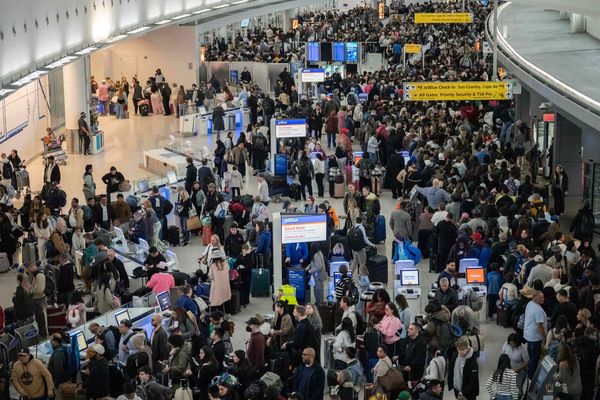





May is over confident and over estimating that immigration would be a winner in her hard brexit stance. I am worried that we'll become an isolated island and the world will move forward while we struggle to keep up in terms of diplomacy, science, economic and culture. What good is it to speak of global trade when shutting the doors at the same time. Why cut ties with the largest market in the world where we export 50%, half of our trade to and to pay for visas to travel only 20 odd miles across the channel. That doesn't make sense. Our NHS will crash and companies and farms relying on migrant workers because we don't want to do those kind of jobs any more will suffer. The pound is tumbling. This is a right old mess