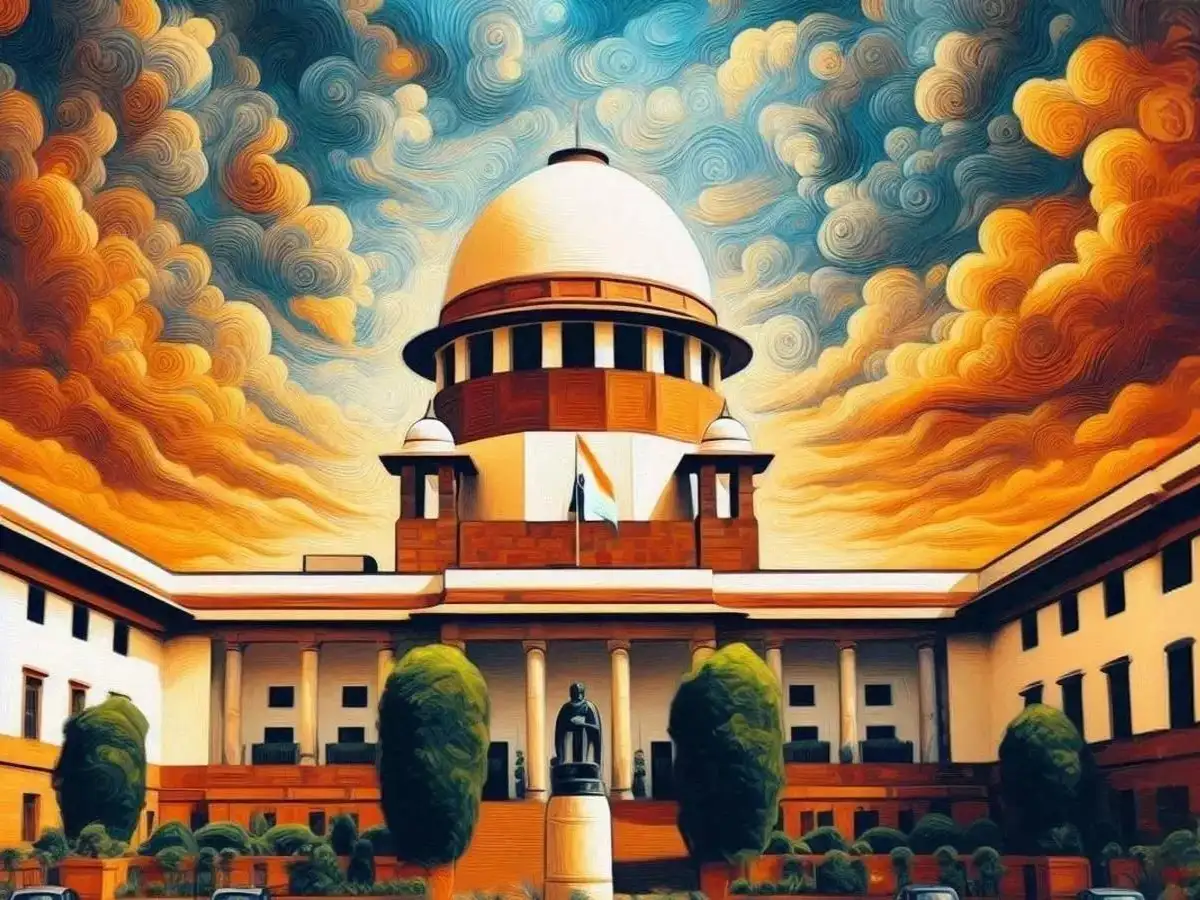
The Centre on Friday raised sharp questions before the Supreme Court of India over whether prolonged delay in trials should automatically entitle accused persons booked under anti-terror laws to bail.
Appearing for the Centre, additional solicitor general S V Raju argued that courts cannot adopt a blanket approach in granting bail under stringent laws such as the Unlawful Activities (Prevention) Act and the Prevention of Money Laundering Act (PMLA).
Raju posed a pointed question before a bench of Justices Aravind Kumar and P B Varale: “In the Ajmal Kasab case, there was a delay as there were a large number of witnesses in the case. Will you grant him bail on the ground of delay? If Hafiz Saeed is brought from Pakistan, will you grant him bail on the ground of delay?”
The remarks came amid an ongoing legal debate within different Supreme Court benches over whether long incarceration and delayed trials can override strict bail conditions under special laws.
Bench hearing Delhi riots cases
The bench hearing the matter had earlier denied bail to Delhi riots accused Umar Khalid and Sharjeel Imam, while granting relief to five other accused in the same conspiracy case.
According to the Centre, bail decisions in such matters cannot be reduced to a “mathematical formula” based purely on the length of custody. Instead, courts must examine the seriousness of the allegations, the role played by the accused and the reasons behind delays in trial proceedings.
Advocate Rajat Nair, appearing alongside the Centre, also argued that the nature of the offence must remain a central consideration while deciding bail pleas in terror-related cases.
Centre cites earlier Supreme Court view on anti-terror laws
Referring to an earlier Supreme Court ruling upholding stringent bail conditions under the now-repealed Terrorist and Disruptive Activities (Prevention) Act (TADA), the Centre argued that Parliament had consciously imposed tougher standards in cases involving national security.
According to the submission, the law intentionally balances individual liberty against the need to protect society and the nation from terrorist and disruptive activities.
“The proper course is to identify from the nature of the role played by each accused person the real hardcore terrorists or criminals from others who do not belong to that category,” the ASG argued.
He further stated that strict bail provisions should apply rigorously to serious offenders, while a more liberal approach may be adopted in cases involving individuals with a lesser role.
Debate over prolonged incarceration continues
The issue of prolonged incarceration without completion of trial has increasingly come under judicial scrutiny in recent years, particularly in cases involving special laws such as UAPA and PMLA, where securing bail is considerably more difficult than under ordinary criminal law.
While some Supreme Court benches have previously granted relief citing constitutional rights and delays in trial, the Centre maintains that such relief cannot become automatic in cases involving allegations linked to terrorism or national security.
Inputs from TOI