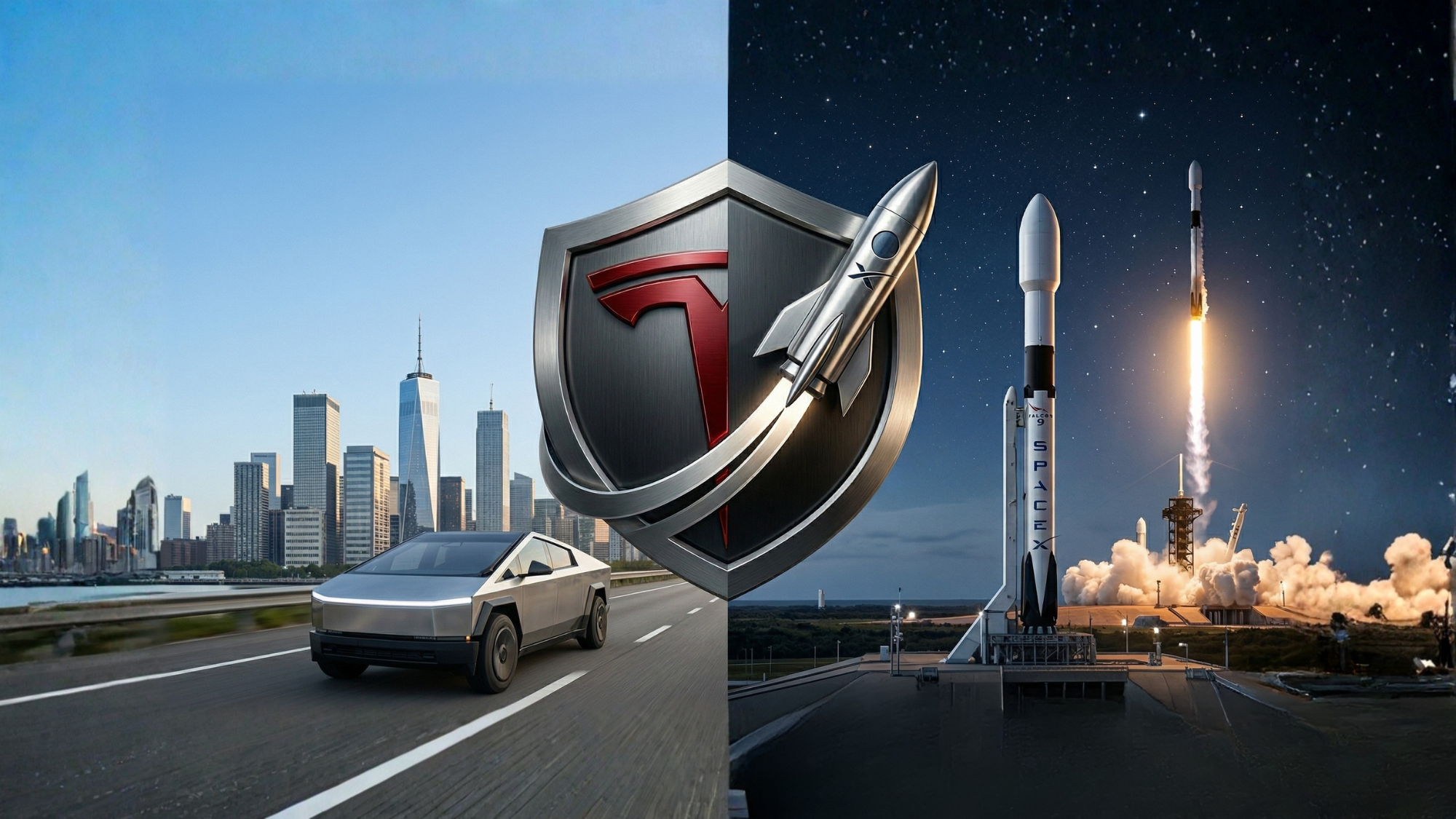
With shares of Tesla Inc (NASDAQ: TSLA) continuing to trade on the back foot, investors are right to be wondering if the company’s best days are behind it.
Despite making a lot of noise about his vision to transform Tesla into the world’s leading robotics and autonomy company, CEO Elon Musk has so far failed to convince investors that this will happen anytime soon. At the same time, the company is continuing to underwhelm with its core business of selling electric cars (EVs), with reports from earlier this week showing Tesla had missed its Q1 delivery targets.
With signs of its traditional business continuing to slow down, and its future business showing little sign of gaining momentum, it’s perhaps not all that surprising that the company may be looking at other ways to stay relevant. The past few weeks have seen certain rumors gain traction, which, if true, would most certainly do that.
These rumors concern speculation that Musk is looking to consolidate parts of his broader ecosystem, potentially including some form of Tesla–SpaceX combination.
SpaceX is reportedly on track for what would be a record-breaking IPO later this year, and if Tesla could ride the hype, the stock could reverse this downtrend.
It all sounds very exciting, but the real question is what’s driving the chatter, and what the practical upside and downside could look like if the idea ever moved from rumor to reality.
Why the SpaceX Merger Narrative Is Gaining Credibility
The possibility of a Tesla-SpaceX merger shouldn't come as a surprise, given Musk has already shown a clear willingness to consolidate his companies where it makes strategic sense.
When SpaceX announced on Feb. 2 that xAI—Musk’s AI company behind the Grok chatbot—had joined SpaceX, it became clear that there is growing overlap across the computer infrastructures, autonomy visions, and artificial intelligence (AI) capabilities used by these pairs and Tesla itself.
That makes the idea of Tesla eventually becoming part of that structure far more credible than it would have seemed even a year ago. At least from a strategic perspective, the upside case is easy to understand. A combined Tesla and SpaceX entity would bring together the best of both, each a trailblazer in its respective categories, into a single platform. Tesla would bring its work in robotics, full self-driving, and energy storage, while SpaceX would have its global satellite infrastructure and unmatched launch capabilities.
This is ultimately a narrative expansion. Tesla is already valued as more than an EV company, and a merger would reinforce the idea that it is building a broader technology platform. If investors buy into that, it supports the case for higher multiples over time.
The Execution Risk Would Be Real
The challenge is that so far this year, investors haven’t quite been buying Tesla’s pivot narrative. The financial rationale for a potential merger is also less clear than the strategic narrative. Tesla’s valuation is still primarily driven by its progress in autonomy, AI, robotics, and energy, all of which could be boosted by a merger but none of which depend on it.
At the same time, with what’s slated to be the biggest IPO in history, it can’t be said that SpaceX needs Tesla’s balance sheet to continue scaling. In fact, if anything, having to merge teams and systems from what would still be two separate companies might actually slow SpaceX down right when it needs to go faster.
And all that is before you even get to the question execution. Tesla is already navigating a complex transition, balancing margin pressure in its EV business while investing heavily in AI and autonomy. Adding another large, capital-intensive business into the mix risks stretching management focus at a time when execution needs to be tighter than ever.
What Comes Next—and What Investors Should Focus On
The thing is, even if Wedbush analyst Dan Ives believes that Musk plans to create a unified "long-term AI juggernaut," a full merger remains unlikely in the near term.
A more realistic path is continued collaboration across Musk’s companies, with shared investments in AI, infrastructure, and potentially even hardware.
This allows Tesla to benefit from the broader ecosystem without taking on the full complexity of a merger. It also sets both companies up for a better chance of success down the line, should they decide to go through with it.
From a stock perspective, that would mean the key drivers for Tesla remain unchanged. Its ability to move back toward recent analyst targets, such as Canaccord Genuity’s $420 or Wedbush’s $600, will depend on verifiable progress and follow-through.
The stock’s recent pullback has helped ease expectations, creating room for upside if execution improves in the coming quarters. That remains the core investment case today, more so than a potential merger that may or may not happen in the coming years.
Where Should You Invest $1,000 Right Now?
Before you make your next trade, you'll want to hear this.
MarketBeat keeps track of Wall Street's top-rated and best performing research analysts and the stocks they recommend to their clients on a daily basis.
Our team has identified the five stocks that top analysts are quietly whispering to their clients to buy now before the broader market catches on... and none of the big name stocks were on the list.
They believe these five stocks are the five best companies for investors to buy now...
The article "Would a Tesla–SpaceX Merger Be the Ultimate Musk Move...or a Red Flag?" first appeared on MarketBeat.