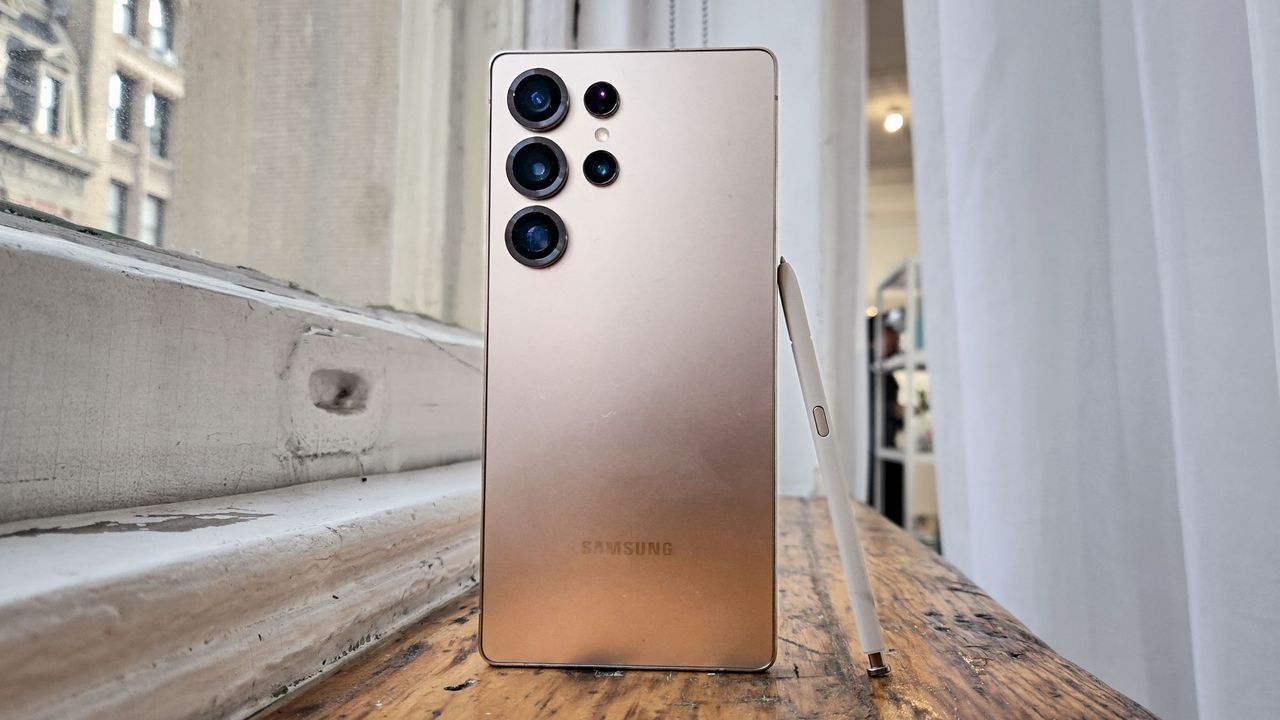
Up to this point, the ongoing RAM crisis has been limited to purchasable consumer memory, but it was inevitable that RAMageddon would eventually impact more technology. A new analyst report from TrendForce, the market intelligence and consulting firm, claims that the memory price surge will affect smartphone and laptop manufacturers heading into 2026.
Consequently, according to the report, smartphone companies like Apple and Samsung will likely raise prices while reducing RAM capacity. It could also lead to a reduction in the number of devices actually produced by these companies.
Smartphones downgrades

Apple is slightly more independent than most Android smartphone companies due to its huge presence in the global market. But TrendForce predicts that even Apple may have to revise prices due to the memory shortage. This includes not discounting older iPhones when the iPhone 18 lineup launches next September, for example.
As for Android, we’ll likely see price increases across the board or modifications to the lifecycle of phones that are already for sale. “Rising memory costs will compel [Samsung] to raise the launch prices of new models in 2026,” TrendForce notes.
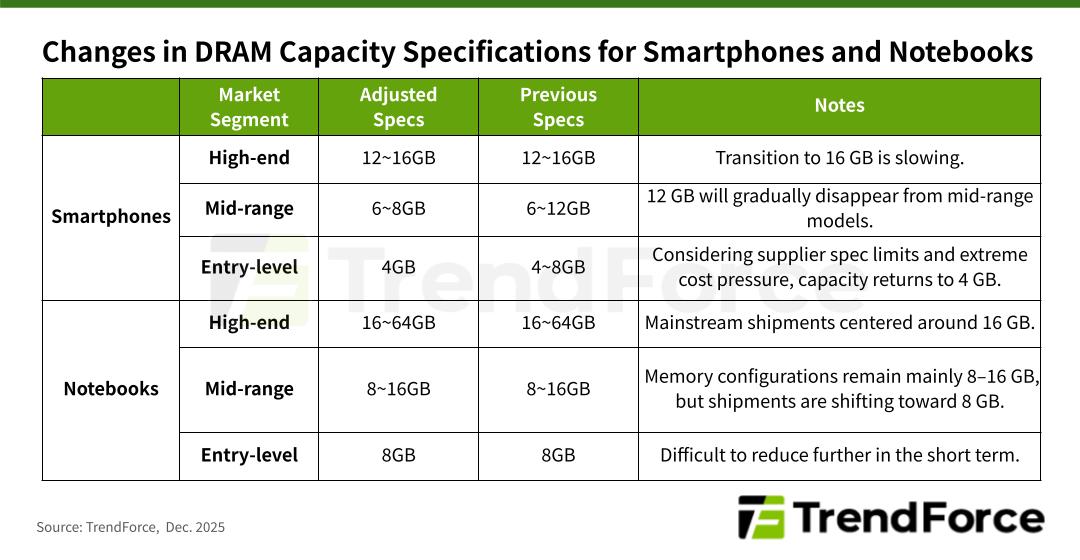
High-end phones likely won’t see as big an impact specs-wise, though prices may increase because of the demand. Where you’ll see the change is in mid-range and budget options. As an example, mid-range devices likely won’t see 12GB options and instead stick between 6GB and 8GB. Meanwhile, budget devices will only get 4GB going forward, according to TrendForce.
Already, we’ve seen Chinese companies like Xiaomi and Redmi bracing for hikes, telling customers to expect increases between 20% and 30% in 2026.
Laptop problems
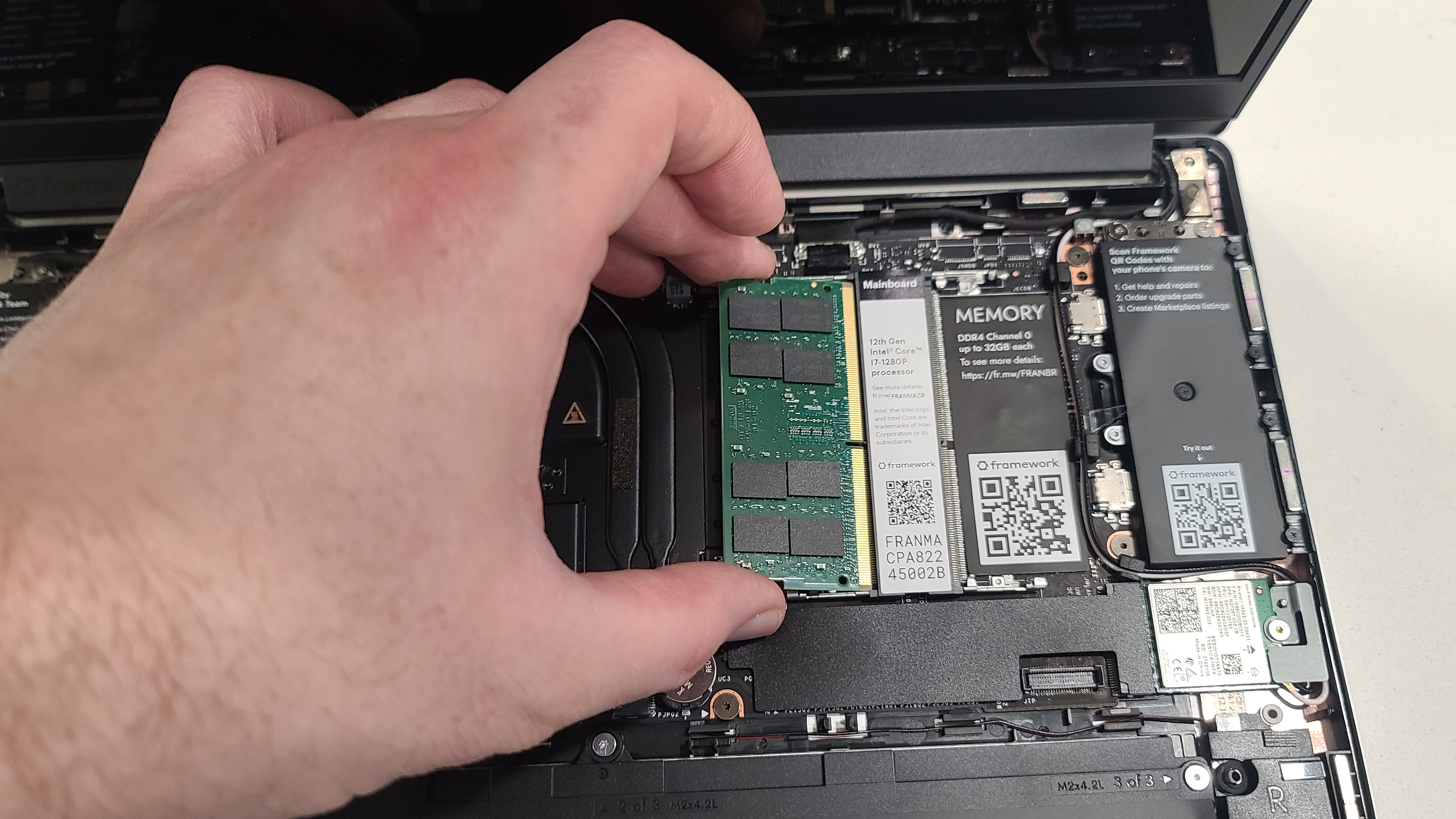
Despite companies like Micron shuttering consumer memory brands like Crucial, we likely won’t see as widespread an impact on laptop memory until mid-2026 or later. This is due to companies like Lenovo and HP hoarding memory in response to the RAM crisis. But price hikes are coming.
It has been suggested that Dell will raise prices before the end of December. Lenovo has allegedly told its retail and enterprise clients that “all current quotations and prices” will expire on January 1, 2026. Before Thanksgiving, CyberPowerPC announced that it would raise prices in early December.
Some companies, like Framework, are already trying to set a marketing narrative with Framework asserting it “won’t gouge customers like Dell.”
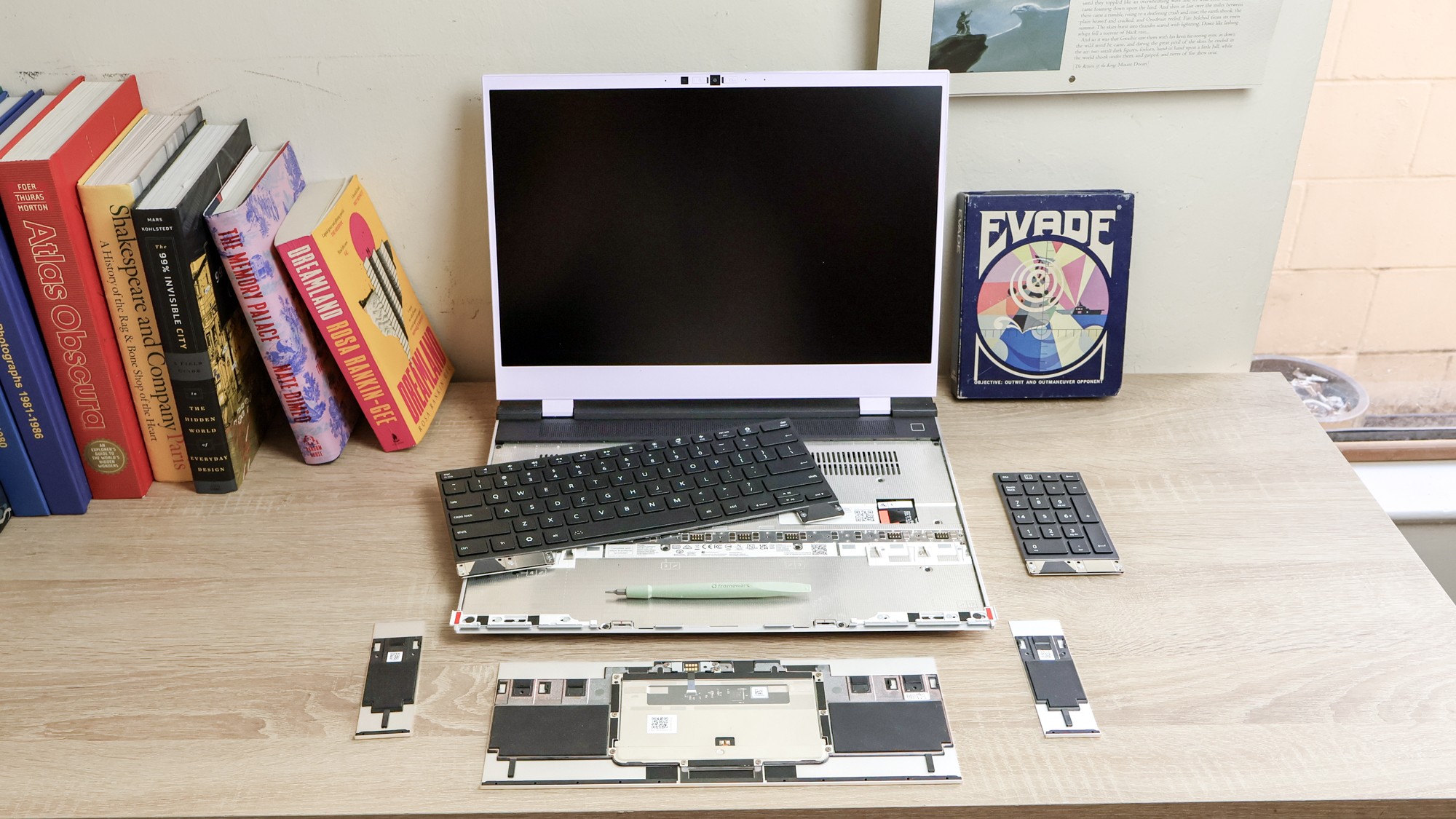
Still, TrendForce expects laptop manufacturers will put the bare minimum amount of RAM they can get away with in new notebooks. That means 16GB of RAM in high-end models, with mid-range and budget PCs sitting around 8GB.
Despite the reduction in memory, the firm forecasts “significant price fluctuations in the PC market by the second quarter of 2026.”
There are no signs of the RAM crisis abating any time soon. As RAM prices explode, we might not see relief until 2028 at the earliest. The downstream effect is that all of our tech is about to get more expensive, and an industry that already operates on a slim margin might become even more aggressive, price-wise.

Follow Tom's Guide on Google News and add us as a preferred source to get our up-to-date news, analysis, and reviews in your feeds.