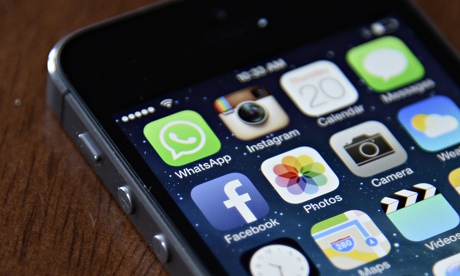
Thanks to Facebook’s $19bn acquisition of WhatsApp in October, messaging apps are one of Silicon Valley’s hottest sectors – or biggest bubbles, if you’re a sceptic.
A recent $62m funding round for Yik Yak, an app for chatting anonymously to people nearby that only launched in November 2013, can be seen as proof of either of those beliefs.
Investors’ desire to get in as early as possible to the “next WhatsApp” will fuel plenty of innovation around messaging next year, but also plenty of hot air.
In terms of product development, though, the main disruption in the industry is likely to focus on security and privacy. The revelations about intelligence agencies’ surveillance prompted by NSA whistleblower Edward Snowden have already spawned a flurry of startups launching “secure” messaging apps that use encryption technology to keep chats private, including ChatSecure, Cryptocat, RetroShare, Signal, Silent Text, Telegram, TextSecure, Threema and Wickr.
The common thread: they are used by people who know about encryption and security to talk to other people who know about encryption and security, but in a market where mainstream smartphone owners choose messaging apps based on what their friends use, all of the apps listed above are niche.
A recent “secure messaging scorecard” published by the Electronic Frontier Foundation rating apps across seven criteria made the difference clear: lots of green ticks for the security apps, and lots of red circles for the mainstream apps.
That may change in 2015. WhatsApp has already made its move, working with the creators of secure messaging app TextSecure to add “end-to-end” encryption – so the key to unscramble messages is only stored on users’ phones – to its Android app, with iOS to come.
“We believe this already represents the largest deployment of end-to-end encrypted communication in history,” said TextSecure in a blog post. It may also put pressure on other mainstream messaging apps to follow suit, or explain why they are not.

“As messaging apps become an essential part of our daily lives, I think users are becoming more and more concerned about security issues and about how their data is being used by corporations,” says Talmon Marco, chief executive of Viber, which was criticised in April after being found transmitting images and video without encryption, before fixing the problem. “It’s only natural that security issues will be a key consideration for consumers when considering which apps to adopt so we have to make it a priority.”
Other apps see it the same way. Telegram, for example, was founded by Nikolai and Pavel Durov, who were also behind Russian social network vKontakte. The pair are currently running a contest challenging hackers to break Telegram’s encryption, with a $300,000 reward.
Swiss-based Threema has also argued that even with end-to-end encryption, WhatsApp still isn’t as secure as it could be. “End-to-End encryption is just one element of secure communication. Secure messaging should also address privacy matters, which are even more important,” the company told users in November. “Unambiguous conclusions about the identity of a user are still possible with WhatsApp, since every account is linked to a phone number. Data continues to be collected.”
This is why initiatives like the Electronic Frontier Foundation’s scorecard will be valuable in 2015: messaging users who aren’t online security experts will need help in understanding how one app’s encryption differs from another’s, and what they should be looking for.