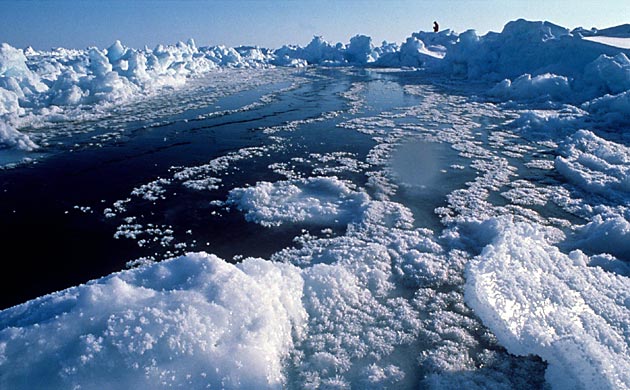
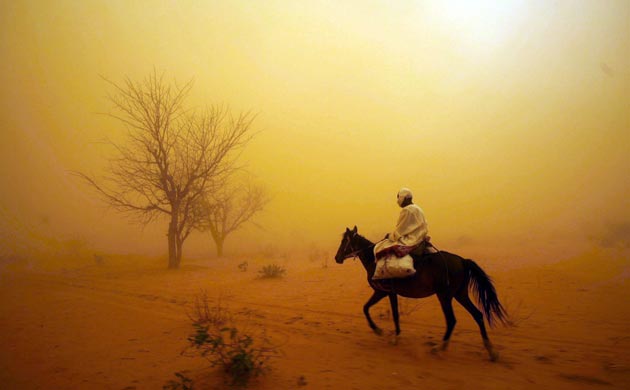
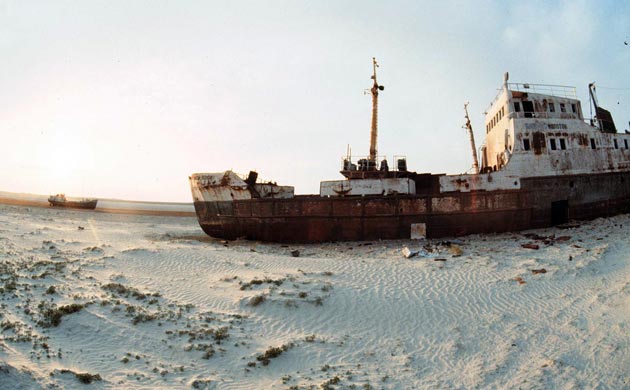
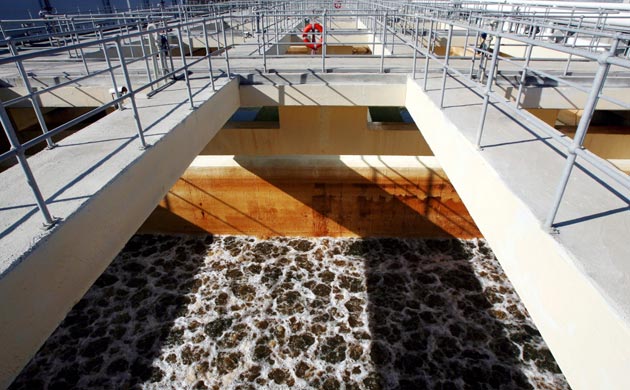
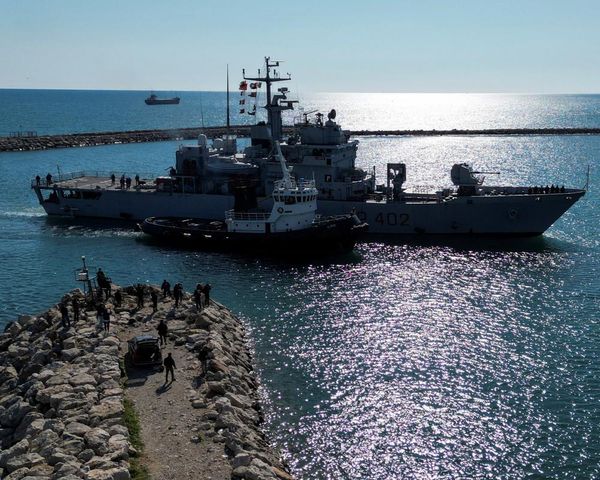
The Arctic: The speed of polar ice cap melting will have a large geostrategic impact, with conflicts likely over the vast new mineral resources that will become accessible, as well as the opening of new sea routes for international trade. Rival claims to the mineral wealth and shipping routes will challenge Europe’s ability to secure its interests in the regionPhotograph: Sipa Press/Rex FeaturesDarfur: Africa is particularly vulnerable because of its low ability to cope with climate change, which is already a factor contributing to the Darfur catastrophe and conflict in the Horn of Africa. Three-quarters of arable rain-fed land in north Africa and the Sahel could be lost. Some 5 million people in the Nile delta could be affected by land losses due to rising sea levels and salinisation by 2050Photograph: Stephen Morrison/EPAAralsk, Kazakhstan: The authoritarian regimes of Central Asia will become increasingly important because of mineral wealth. But climate change means water shortages are already being felt. Kyrgyzstan has lost 1,000 glaciers over the past 40 years, while Tajikistan’s glaciers have shrunk by one third. Farming and power generation are already being hit by water shortagesPhotograph: Victor Vasenin/EPA
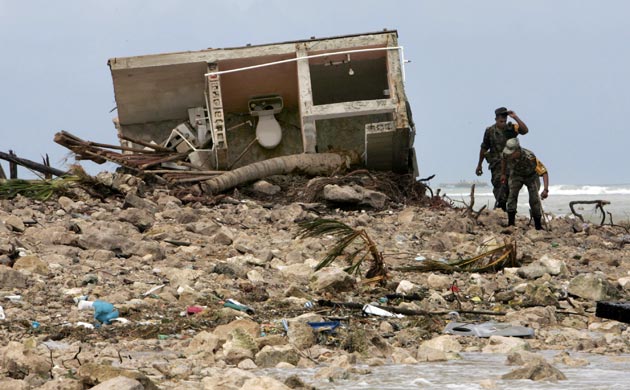
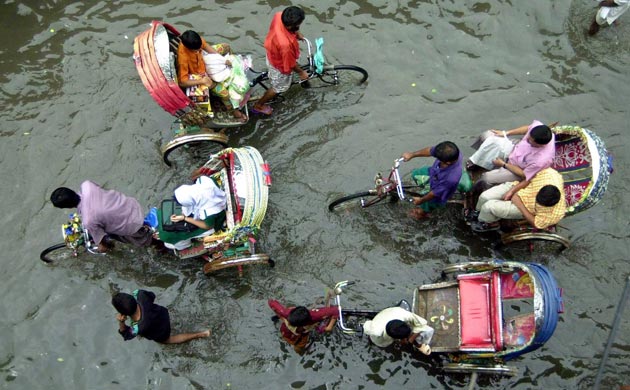
Majahual, Mexico: The Caribbean and central America are already badly affected by major hurricanes and extreme weather linked with El Niño. This will get worse, while weak governments will struggle to cope with social and political tension fuelled by climate changePhotograph: Eduardo Verdugo/APPalmahim, Israel: Water systems in the Middle East are already under intense stress, with around two-thirds of the Arab world dependent on water sources beyond their borders. Water supply might fall by 60% this century in Israel. Significant decreases expected to hit Turkey, Iraq, Syria and Saudi Arabia, further destabilising the 'vitally strategic region'Photograph: Jim Hollander/EPADhaka, Bangladesh: Almost 2 billion Asians live within 35 miles of a coast, and many of them are likely to be threatened by rising sea levels. Damage to farming in South Asia will make it difficult to feed rapidly swelling populations. Another billion people will be affected by a drop in meltwater from the Himalayas. These vulnerable populations will also be exposed to an increase in infectious diseasesPhotograph: Pavel Rahman/AP
Sign up to read this article
Read news from 100’s of titles, curated specifically for you.