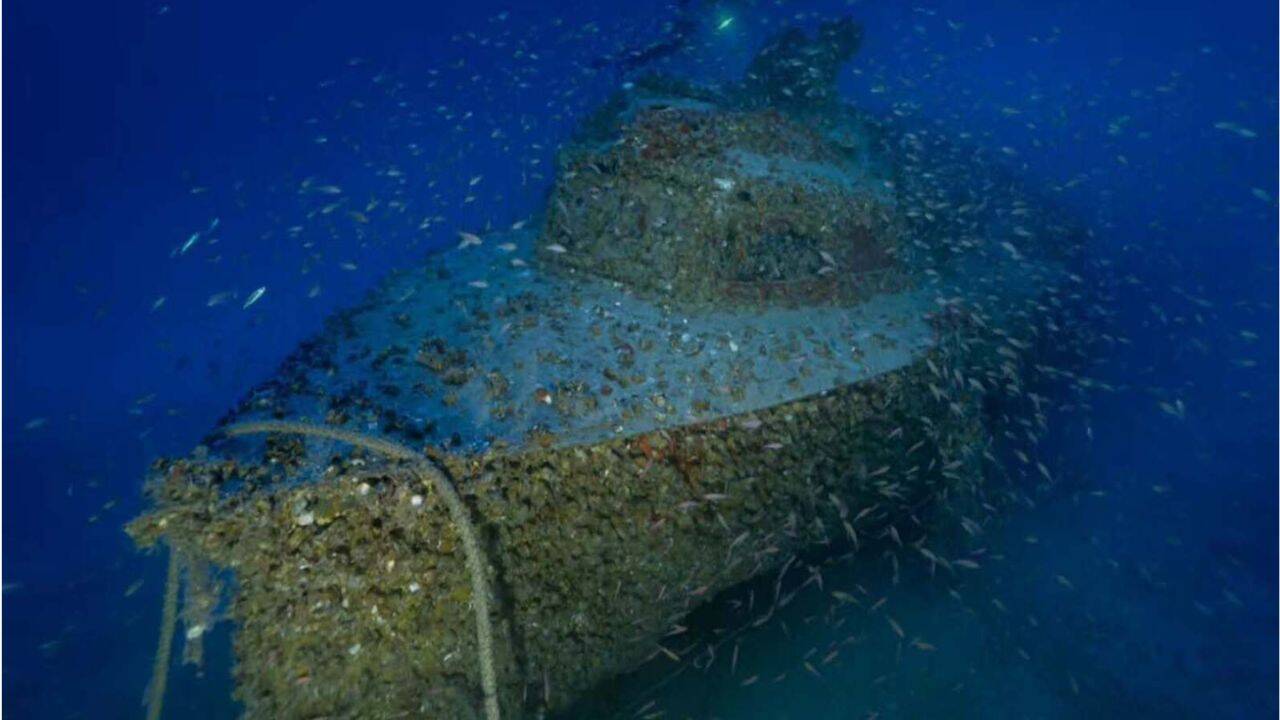
The discovery of the German World War II torpedo boat LS 6 at the coast of Preveza, Greece, highlights a significant moment in maritime archaeology. Situated on the sandy seabed at a depth of 96 metres, this vessel was founded after a thorough 13 years of search that combined detective work based on the archives and advanced technical diving.
Get breaking news anytime, anywhere. Download the TOI app now!
According to reports from ‘Tovima’, researchers believe that this is the only surviving example of a ‘Leichte Schnellboot,’ in the world. Found relatively intact after 83 years, the boat's silhouette came out from deep within the Ionian Sea, which offers a physical link to the naval conflicts of 1943. This find is not just a piece of metal, it is a time capsule of German engineering and a unique record depicting the final journey during the peak of the war.
13 years of hunting led to the discovery of a German S-boat
The journey to find LS 6 did not begin in the water, but instead it was started with a single piece of paper. As reported by Arkeonews, the search was sparked in 2013 when a German naval historian named ‘Peter Schenk’ sent a message to a diver and filmmaker about a small craft lost between the islands of Lefkada and Preveza. The message didn’t contain a precise location, but it provided the important clue that the boat had sunk when it was being towed by German forces. This became the reason to launch a decade-long investigation led by historian Giorgos Karelas and the AegeanTec technical diving team.
For years, the team analysed numerous German wartime records, nautical charts, and historical references to narrow down the search area. The technical challenge of the dive was huge, because reaching a depth of 96 metres required special equipment with very little time on the bottom. When divers Marinos Giourgas and Vasilis Spyropoulos finally reached the target, they did not find an area filled with scattered debris, but a nearly intact water machine. The Tovima report highlights that the team’s persistence changed a ‘hunt for hidden wrecks’ into a successful identification of a beautiful piece of naval history.
What makes the construction of this German S-boat so unique and intact
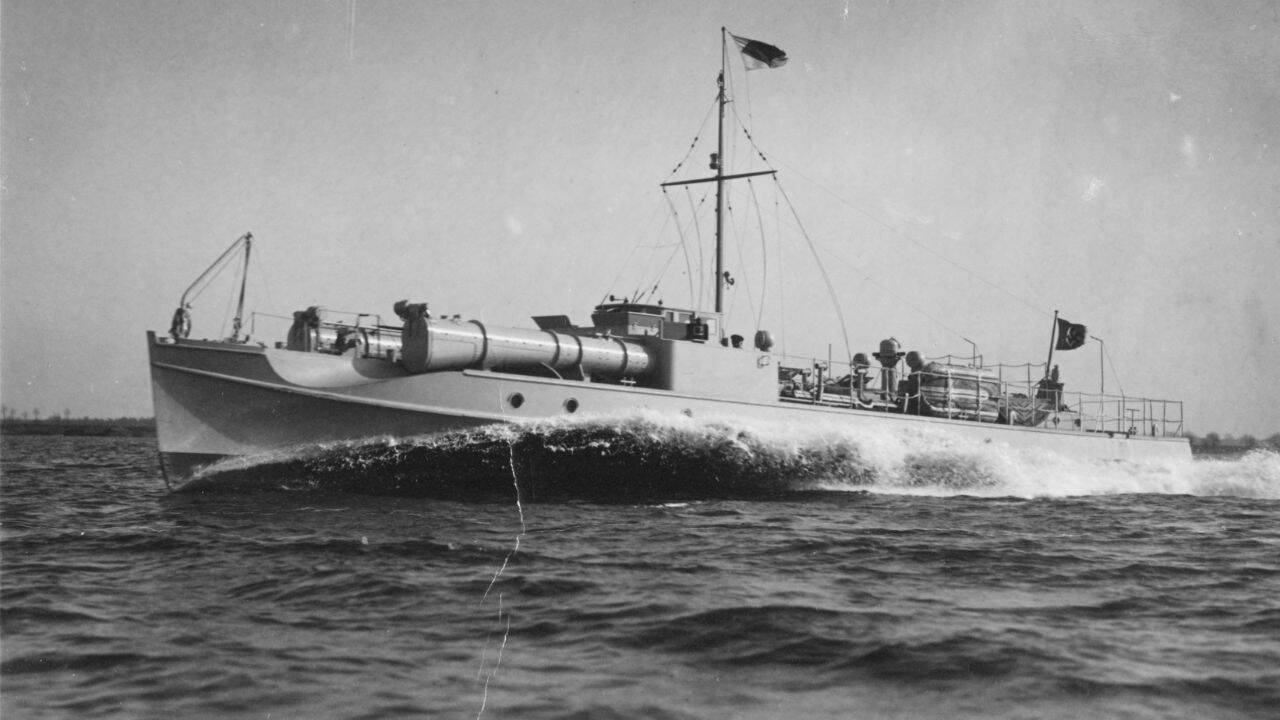
The LS 6 belongs to a class of vessels that were very different from the standard torpedo boats of that time. According to the book ‘ German S-Boats in Action by Hans Frank ,’ the British called these German fast craft as ‘E-boats,’ but the Germans used the term ‘Schnellboot.’ The larger S-boats were over 30 metres long, but the LS 6 was a light version(only 12.5 metres). Its small size was a deliberate design choice, which allowed it to be transported easily on land by rail or road platforms, which was necessary because the Allies controlled the Strait of Gibraltar.
One of the most striking features is the aluminium hull of the boat. Arkeonews reports that the British and American fast attack boats were usually made of wood, but the LS boats were built by the Dornier company which used lightweight aluminium alloys and aircraft-production techniques. This material is a primary reason that the wreck has survived so well, that the overall profile is easily recognisable despite the harsh marine environment. Furthermore, the boat contained a unique torpedo firing system. Because of its short length, firing a torpedo from the bow would have driven the nose underwater. So instead, engineers mounted the tubes at the stern(back of the ship), which allowed the torpedoes to be released tail-first as the boat sped away.
How did the S-boat ended up in the Ionian Sea
According to the historical reconstruction provided by Arkeonews, the boat was attacked on 24 September 1943, when it was moving towards the island of Corfu. The attack was probably carried out by six Italian fighter-bombers, whose nearby explosions were the reason for severe damage to the hull and machinery of the boat. The vessel did not sink immediately, but it was disabled and required extensive repairs.
In an attempt to save the boat, the German navy tried to tow it from Corfu to Piraeus. However, the pressure of being pulled through the water proved too much for the damaged aluminium hull. As the tow progressed, cracks in the metal grew wider, and the boat began to take on water. The tow cable is still attached to the bow of the wreck today, acting as an evidence of that final attempt to bring the boat to safety.
Why is this discovery so important for military history
Finding a shipwreck in such a good situation is a rare incident. The LS 6 represents an experimental chapter of the Kriegsmarine. As noted in German S-Boats in Action, the S-boat arm was frequently forced to perform the roles like anti-submarine duties or escorting transports, which it was not intended for. The Arkeonews reports that LS 6 was adapted for anti-submarine work, like carrying depth charges instead of the stern torpedoes, but its planned sonar system was never fully operational.
This discovery is significant for archaeological research because it offers deep insights into a rare class of warship. By recording the distinctive Junkers Jumo diesel engines and the 20mm cannon still mounted on the bow, the team has preserved the story of a technological ‘underdog’ that operated in the shadow of a large and popular naval fleet of the Second World War.