
Tokyo-based semiconductor startup Premo (a Latin word meaning "to be near") has unveiled what it claims is the world's first CPU prototype with wireless inter-chip connections.
This new chip uses Premo's proprietary technology, Dualibus, which was developed in collaboration with the Irie and Kadomoto Laboratory at the Graduate School of Information Science and Technology, University of Tokyo.
Conventional semiconductor chips require physical boards and wiring to relay signals between chips, but Premo's Dualibus technology harnesses the principles of magnetic field coupling to allow the chips to communicate wirelessly.
Physical connection for power
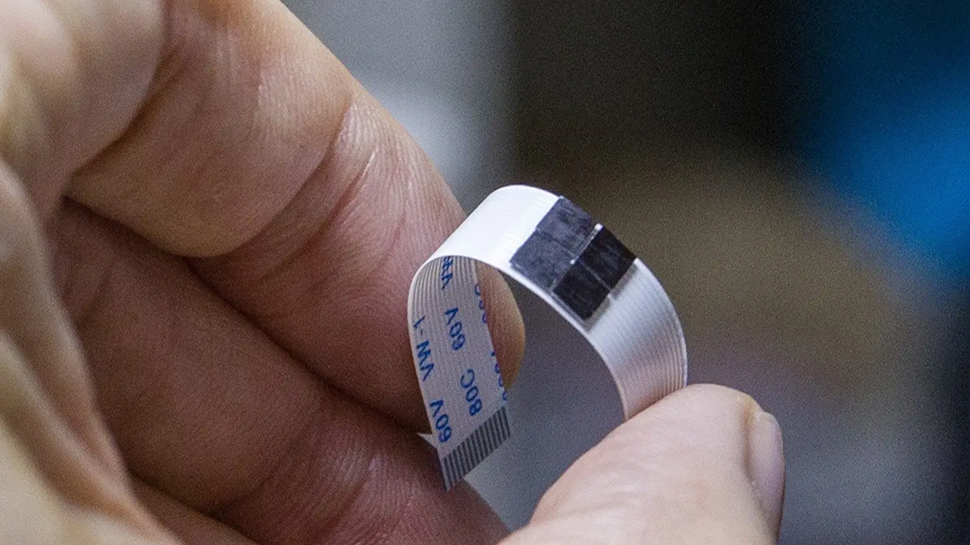
Premo says its chip integrates a CPU, sensor, power supply, and communication module and uses chip-to-chip wireless connection technology and the company’s own CPU design to deliver a miniaturized device that reduces the need for printed circuit boards and wiring.
The company, which was established in February 2020, envisions the chip's application in a number of industries, such as infrastructure, vehicles, consumer goods, animal husbandry, and IoT. It could even be installed in locations which aren't suitable for traditional, more bulky processors.
Dualibus-equipped chips could reduce pads on silicon wafers, making more efficient use of the semiconductor area, and resulting in smaller, flexible device shapes. Premo suggests, “By taking advantage of the close proximity and wireless connection between the transmitting coil in the thumb and the receiving coil in the knuckle, it can be used as a new user interface in AR/VR environments.”
Premo's breakthrough could potentially pave the way for more cost-effective chips that use fewer raw materials. The company is currently looking into creating post-packaged chiplets by arranging millimeter-sized chips.