Get all your news in one place.
100’s of premium titles.
One app.
Start reading

World's biggest flooded cave found in Mexico, explorers say

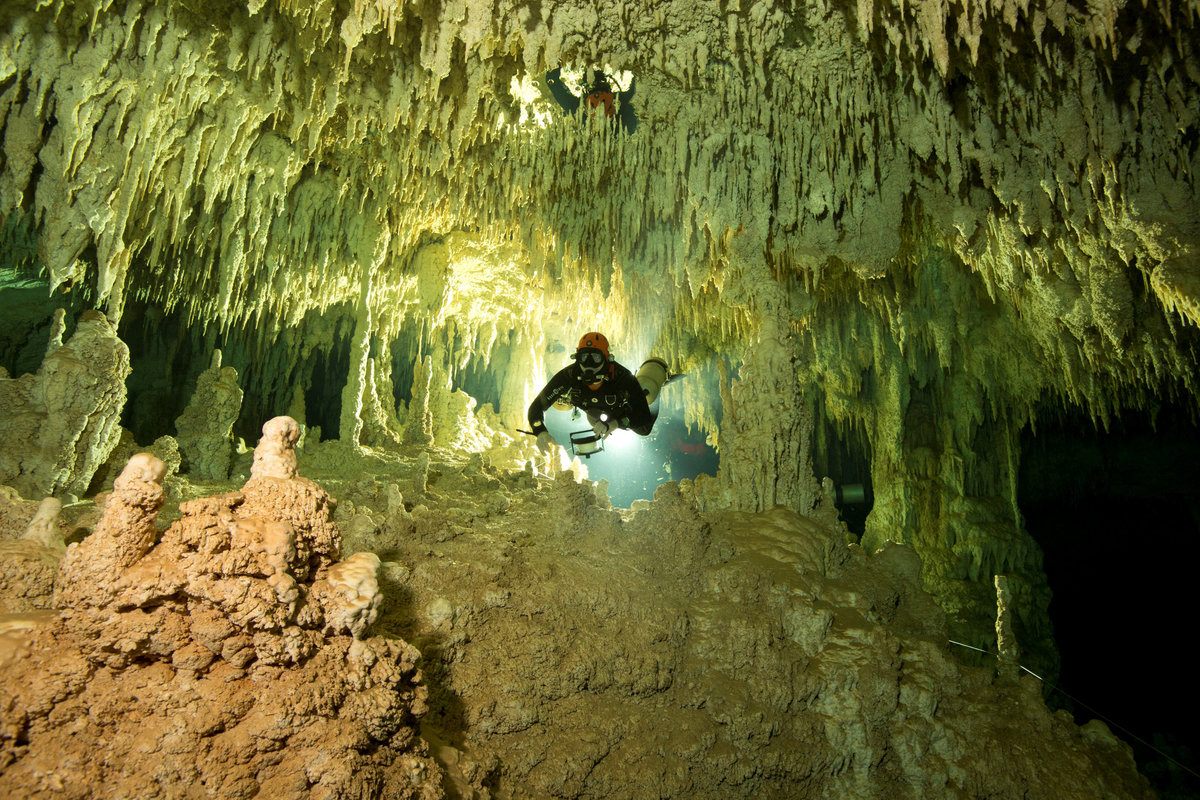
Scuba divers tour an authorized area of Sac Aktun underwater cave system as part of the Gran Acuifero Maya Project near Tulum, in Quintana Roo state, Mexico January 24, 2014. Herbert Mayrl/Courtesy Gran Acuifero Maya Project (GAM)/Handout via REUTERS

MEXICO CITY (Reuters) - A group of divers has connected two underwater caverns in eastern Mexico to reveal what is believed to be the biggest flooded cave on the planet, a discovery that could help shed new light on the ancient Maya civilization.

The Gran Acuifero Maya (GAM), a project dedicated to the study and preservation of the subterranean waters of the Yucatan peninsula, said the 347-km (216-mile) cave was identified after months of exploring a maze of underwater channels.

Near the beach resort of Tulum, the group found that the cave system known as Sac Actun, once measured at 263 km, communicated with the 83-km Dos Ojos system, the GAM said in a statement. For that reason, Sac Actun now absorbs Dos Ojos.
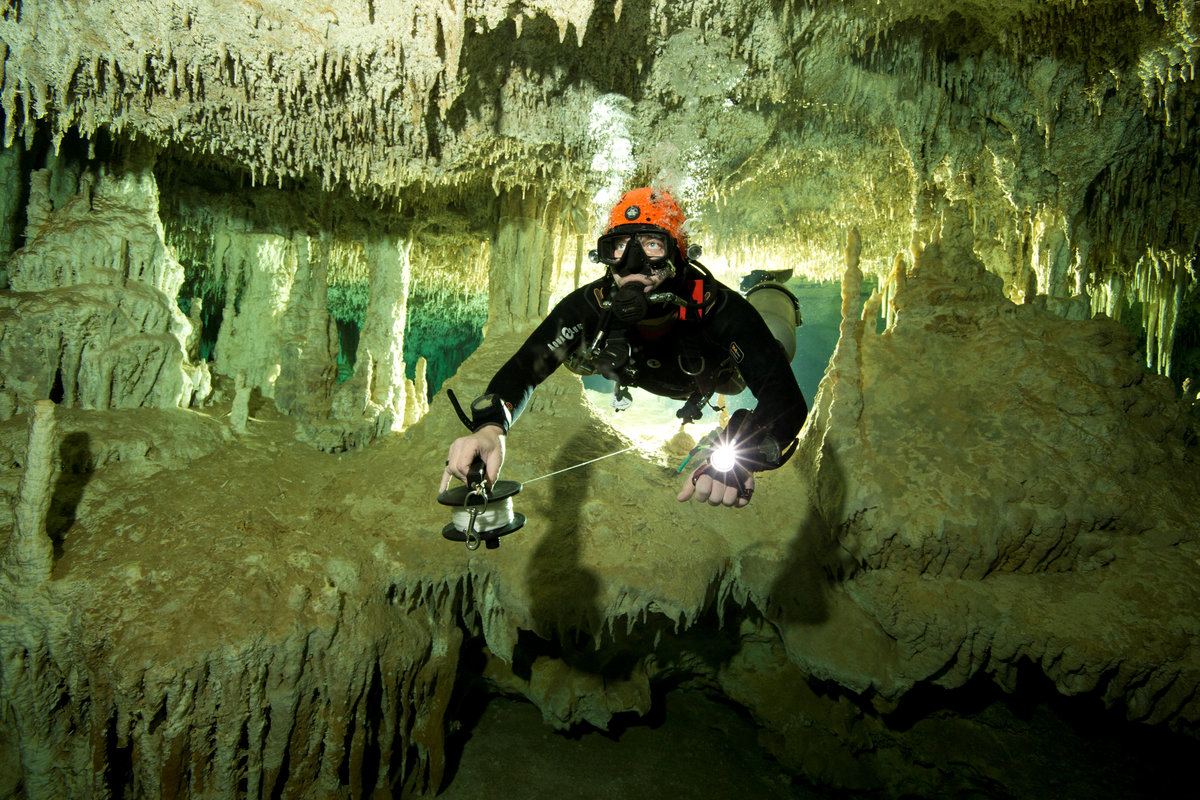
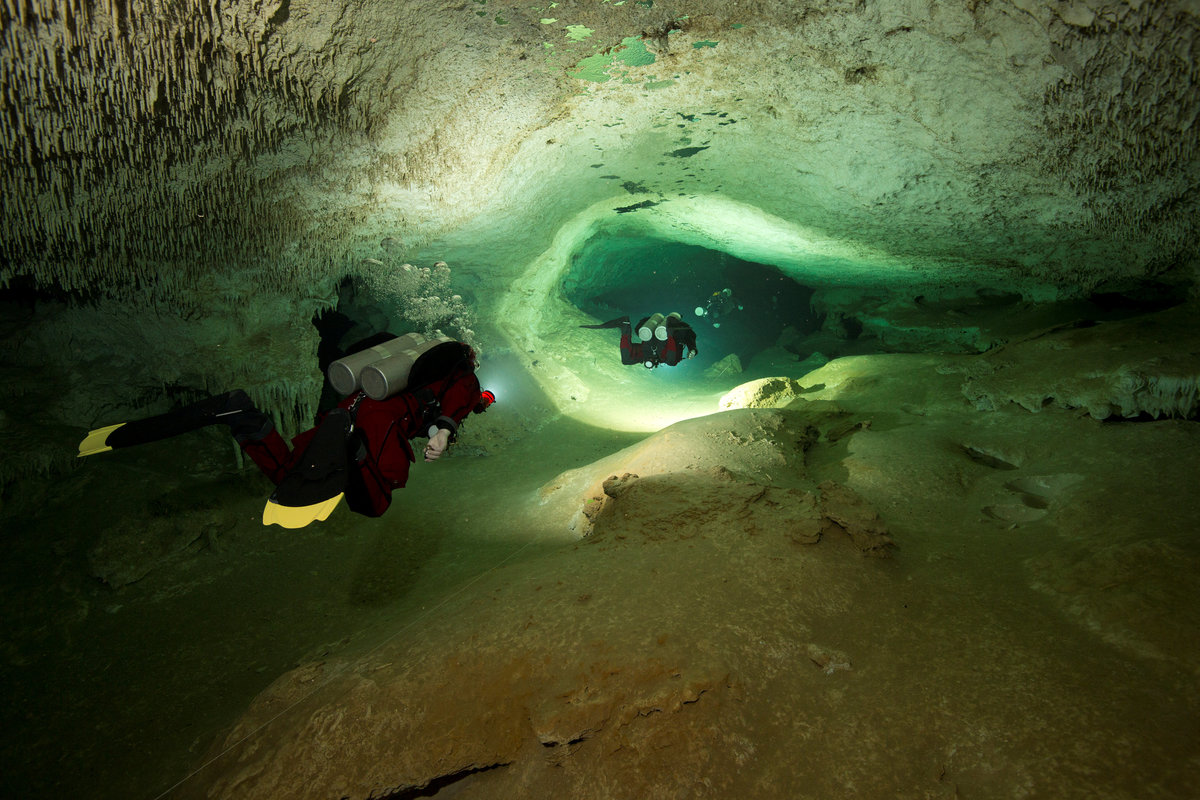
A scuba diver measures the length of Sac Aktun underwater cave system as part of the Gran Acuifero Maya Project near Tulum, in Quintana Roo state, Mexico January 24, 2014. Picture taken January 24, 2014. Herbert Mayrl/Courtesy Gran Acuifero Maya Project (GAM)/Handout via REUTERS

GAM director and underwater archaeologist Guillermo de Anda said the "amazing" find would help to understand the development of the rich culture of the region, which was dominated by the Maya civilization before the Spanish conquest.

"It allows us to appreciate much more clearly how the rituals, the pilgrimage sites and ultimately the great pre-Hispanic settlements that we know emerged," he told Reuters.

The Yucatan peninsula is studded with monumental relics of the Maya people, whose cities drew upon an extensive network of sinkholes linked to subterranean waters known as cenotes.
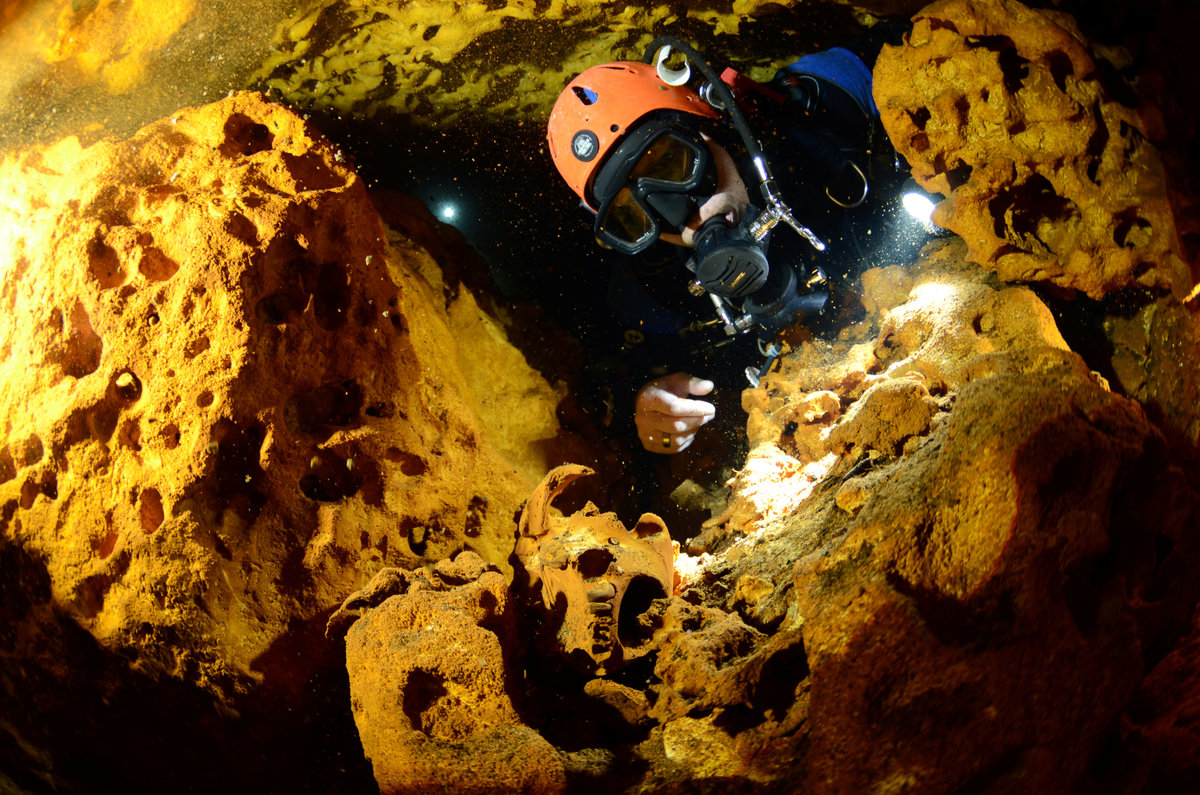
A scuba diver looks at an animal skull at Sac Aktun underwater cave system during exploration as part of the Gran Acuifero Maya Project near Tulum, in Quintana Roo state, Mexico February 12, 2014. Picture taken February 12, 2014. Jan Arild Aaserud/Courtesy Gran Acuifero Maya Project (GAM)/Handout via REUTERS

Some cenotes acquired particular religious significance to the Maya, whose descendents continue to inhabit the region.

(Reporting by Rodolfo Penaroja; Editing by Paul Tait)
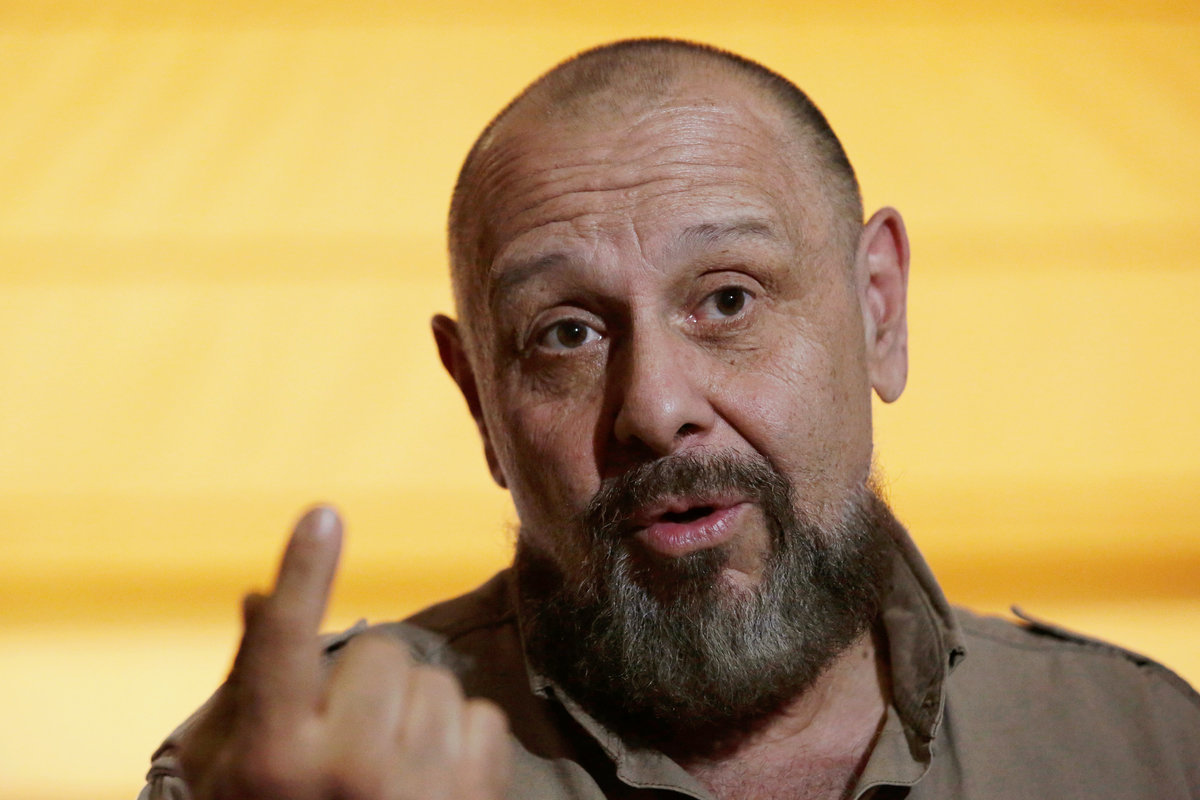
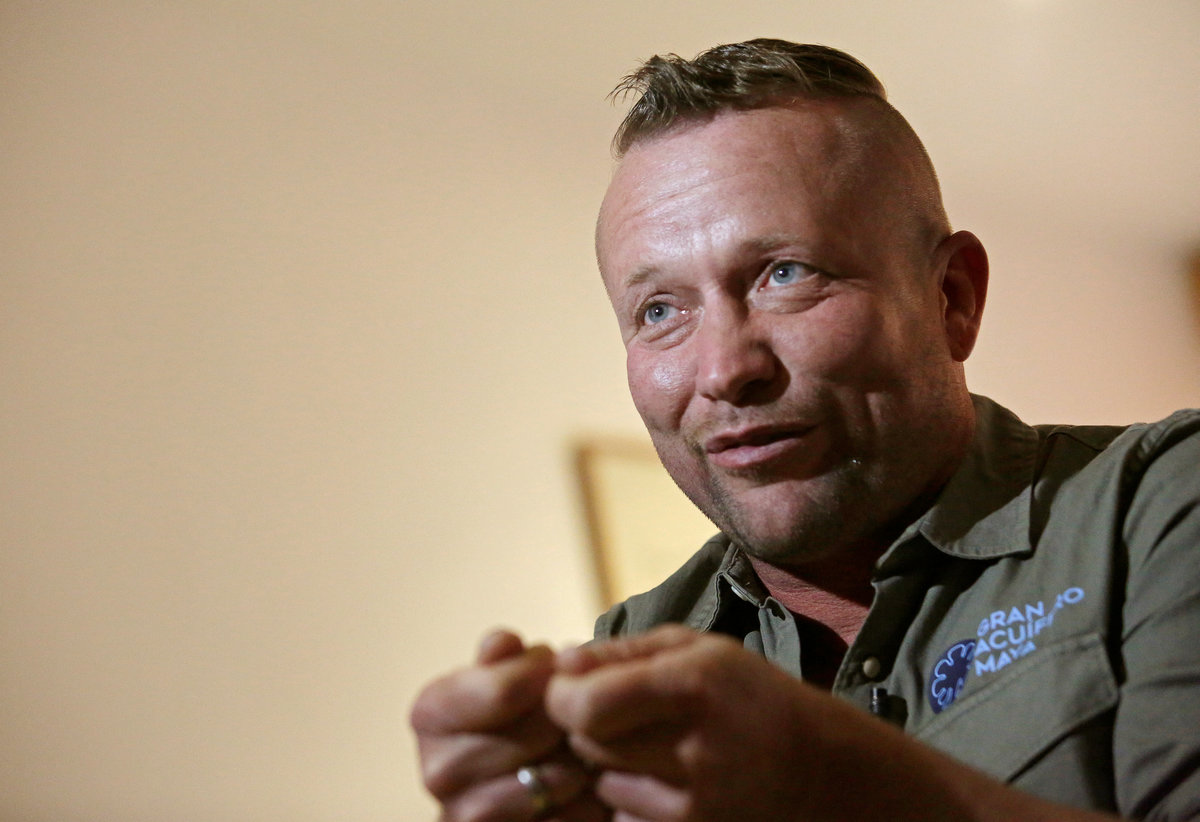
Guillermo de Anda, director of the Gran Acuifero Maya project, gestures during an interview with Reuters in Mexico City, Mexico January 16, 2018. REUTERS/Daniel Becerril
A scuba diver measures the length of Sac Aktun underwater cave system as part of the Gran Acuifero Maya Project near Tulum, in Quintana Roo state, Mexico January 24, 2014. Picture taken January 24, 2014. Herbert Mayrl/Courtesy Gran Acuifero Maya Project (GAM)/Handout via REUTERS
German explorer Robert Schmittner of the Gran Acuifero Maya project gestures during an interview with Reuters in Mexico City, Mexico January 16, 2018. REUTERS/Daniel Becerril
Sign up to read this article
Read news from 100’s of titles, curated specifically for you.
Already a member? Sign in here
Related Stories
Top stories on inkl right now
One subscription that gives you access to news from hundreds of sites
Already a member? Sign in here
Our Picks
Fourteen days free
Download the app
One app. One membership.
100+ trusted global sources.