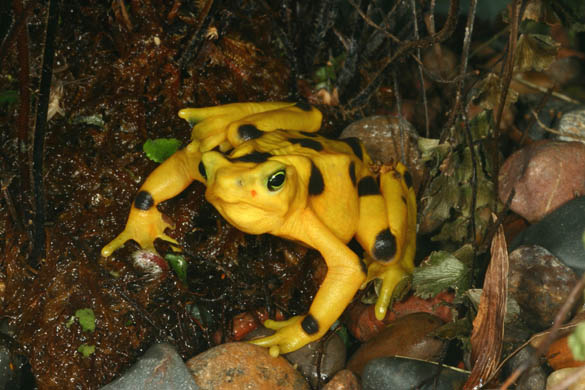
Considered as a national icon and good luck charm, the Panamanian golden frog is now likely extinct in the wild because of chytrid fungus, a deadly disease that scientists say may be exacerbated by climate change. Currently unstoppable and untreatable in the wild, the fungus affects the skin of amphibians through which many drink and breathe. It can kill 80% of native amphibians within months Photograph: Gerry Marantelli/PR

This toad was a common sight on the Laramie plains of Albany county, Wyoming, until the 1970s, when its population crashed due to a combination of factors such as the spraying of insecticides to control mosquitoes, changes in agricultural practices, an increase in predators and climatic changes. It now exists only in captivity and within Mortenson Lake national wildlife refuge in Wyoming, and is classified as being extinct in the wild Photograph: R Andrew Odum/Toledo Zoological Society
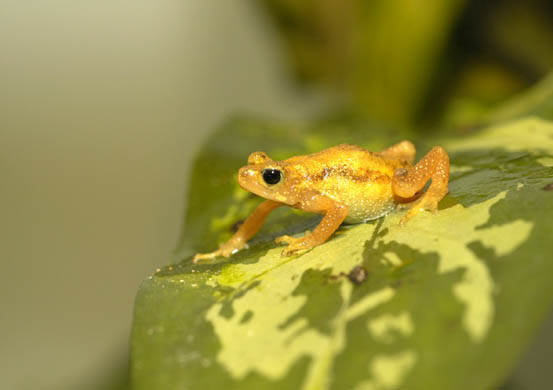
The Kihansi spray toad, a dwarf toad, lives only in the fine mist created by the cascading waters of the Kihansi Falls in the southern Udzungwa Mountains of Tanzania. It is threatened with extinction by the diversion of water for a hydroelectric plant, and in spite of attempts to install artificial spray systems to preserve its habitat, a captive breeding programme in US zoos may be the toad’s only hope for survival Photograph: Julie Larsen Maher/Wildlife Conservation Society
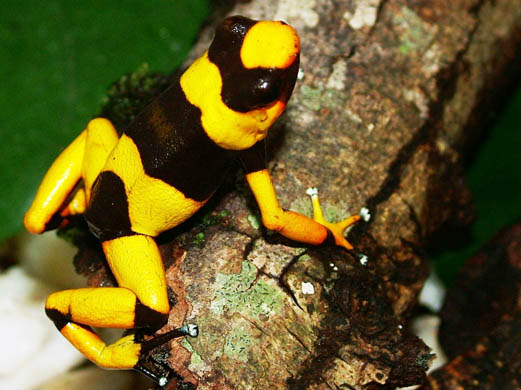
This brightly coloured frog – which comes with red, orange or yellow stripes - is critically endangered. Conservationists say that it lives within a tiny range of less than 10 km sq in two areas of rainforest in Colombia. The major threats to this species’ survival are habitat loss and degradation as a result of agricultural development, illegal crops, logging, human settlement and pollution Photograph: Francisco José López/PR
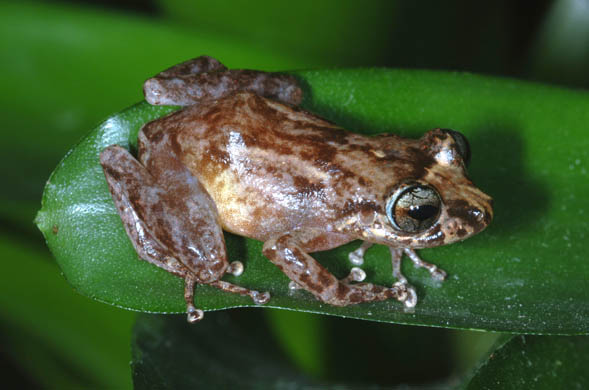
Found in the interior uplands of eastern Puerto Rico, this frog is critically endangered. It has suffered a population decline of more than 80% due to introduced predators and amphibian chytrid disease. Scientists think that amphibian chytrid may be exacerbated by climate change – warmer temperatures dry moist habitats, causing stress that may lead to greater susceptibility to the disease Photograph: R L Joglar/Projecto Coqui
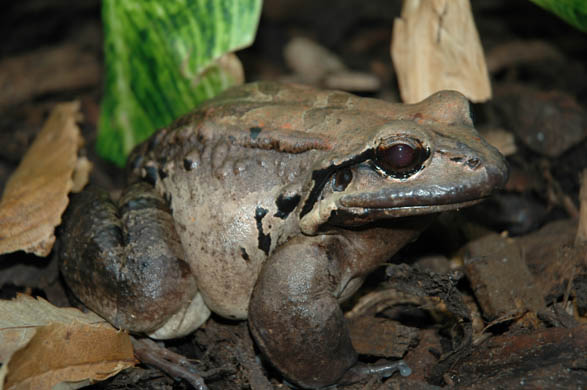
This frog, known both as the giant ditch frog and the mountain chicken, is critically endangered, with a population decline of around 80% in the last 10 years. The threat to this species in Montserrat comes from the catastrophic loss of habitat after volcanic eruptions during the 1990s and subsequent predation by feral pigs and rats, and in Dominica, chytrid fungus has devastated the population in the past five years Photograph: Richard Gibson/PR
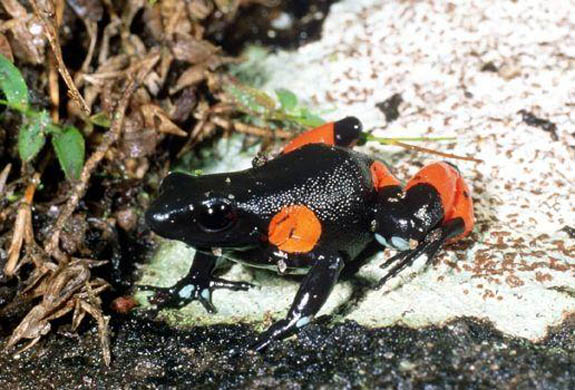
Also called the harlequin mantella, this small, toxic frog which lives in the high plateaus of Madagascar, is critically endangered. Its striking appearance means it has been massively over-exploited for the international pet trade. Deforestation for agriculture and human settlement has also caused population decline and fragmented its habitat. The Malagasy government has banned the exportation of this species Photograph: Franco Andreone/PR
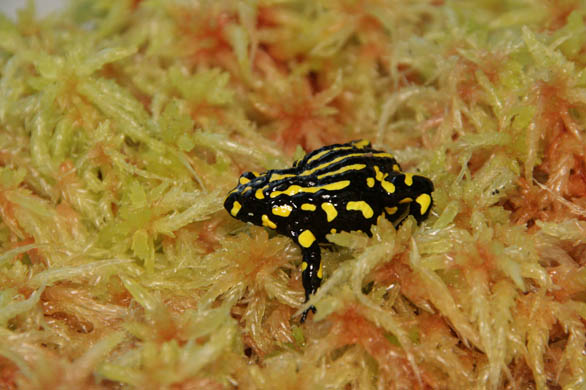
The Corroboree frog is a spectacular but critically endangered frog that has declined dramatically in distribution and abundance in Australia. It is now restricted to a few fragmented populations in sub-alpine and mountain areas of New South Wales, where fewer than 250 mature individuals are thought to survive in the wild Photograph: Kevin Johnson/PR
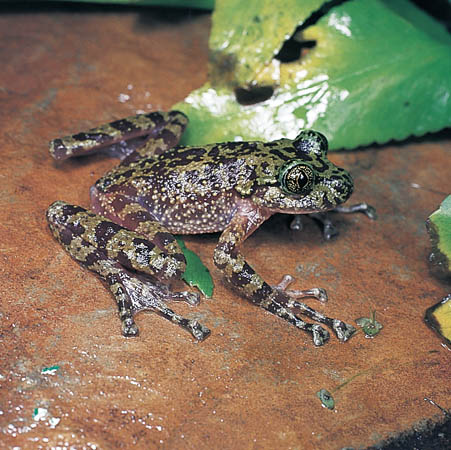
Also known as Rose’s ghost frog, this rare species is only found on Table Mountain in Cape Town, where it lives in streams and moist, forested gorges. It is under threat from new plants in the national park that covers that area, visitors, and a high number of fires. Holding areas for some of the mountain’s streams have also been built, which is taking away water from the streams where the frogs' eggs and tadpoles develop Photograph: Vincent Carruthers/Vincent Carruthers
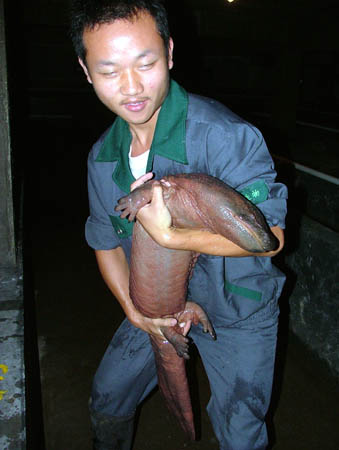
The world's largest amphibian, the Chinese giant salamander, can reach lengths of up to 1.8m. Their flesh is considered a delicacy in Asia, and their large size makes them easy and lucrative prey. Critically endangered, illegal hunting is their biggest threat, but the species also suffers from habitat alteration and loss. The building of dams in China has also changed the natural river flow in some areas where they are found Photograph: International Cooperation Network for Giant Salamander Conservation