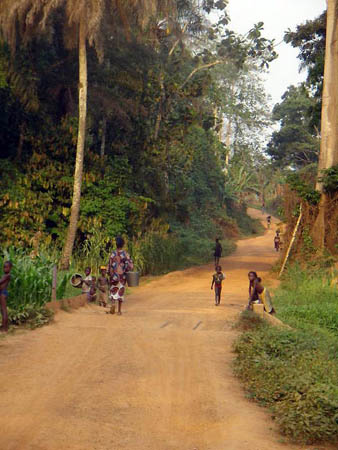
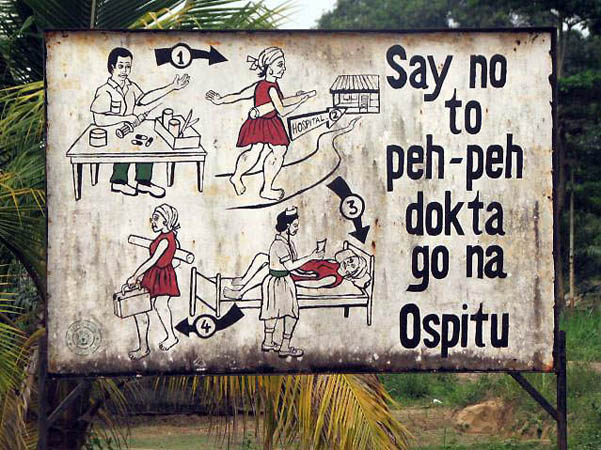
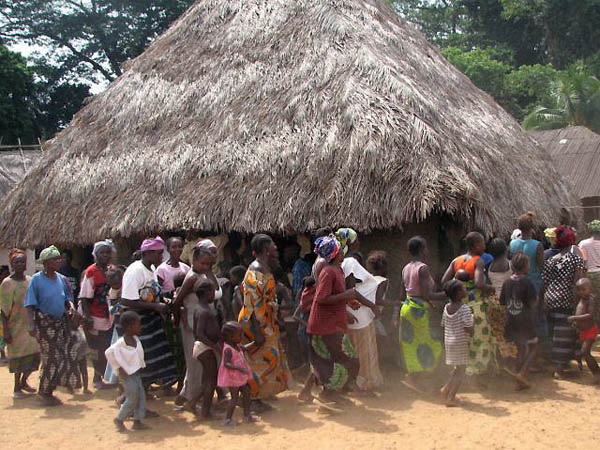
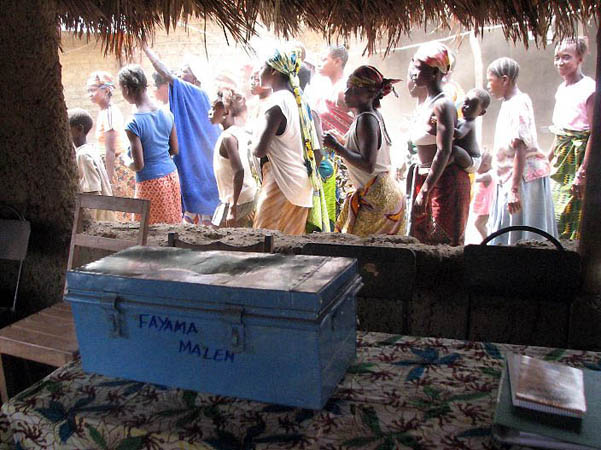
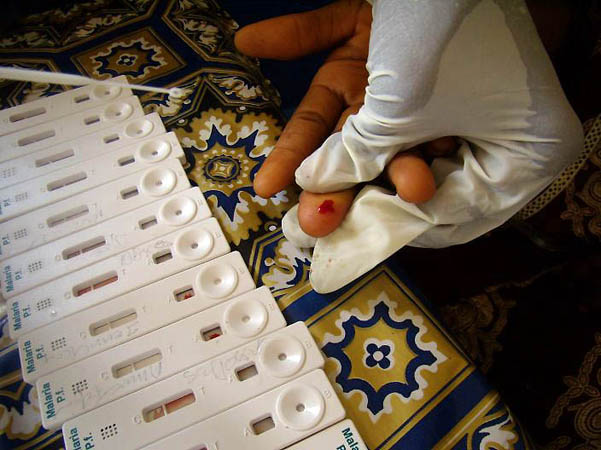
The geographical barrier when seeking medical treatment: people in rural areas have to walk for miles to reach their nearest health postPhotograph: MSFMinistry of Health billboard "say no to peh-peh doctor, got to the hospital" to encourage people to seek medical attention from clinics rather than unregulated drug pedlarsPhotograph: MSFWhen the people of Fayama Malen village get sick, they have to walk 4 miles to reach the nearest health post. Here they celebrate on the day that their community health volunteers, recently trained by Médecins Sans Frontières, receive the health kit box containing malaria diagonisis tools and treatmentPhotograph: MSF
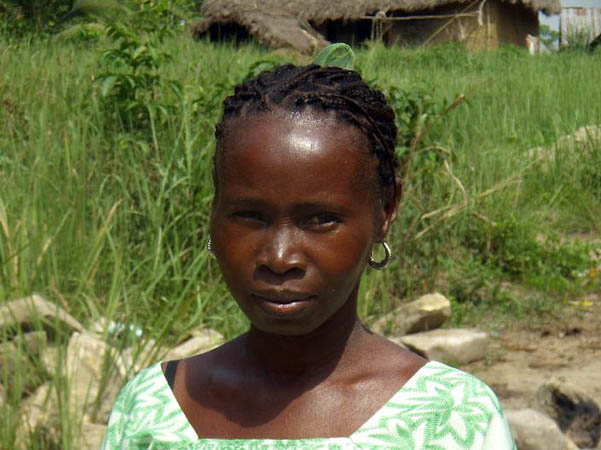
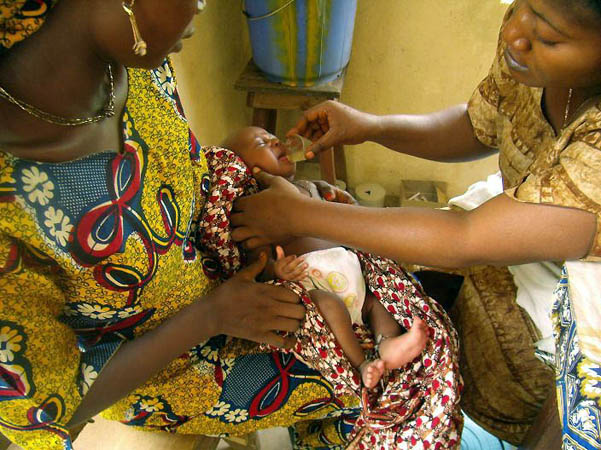
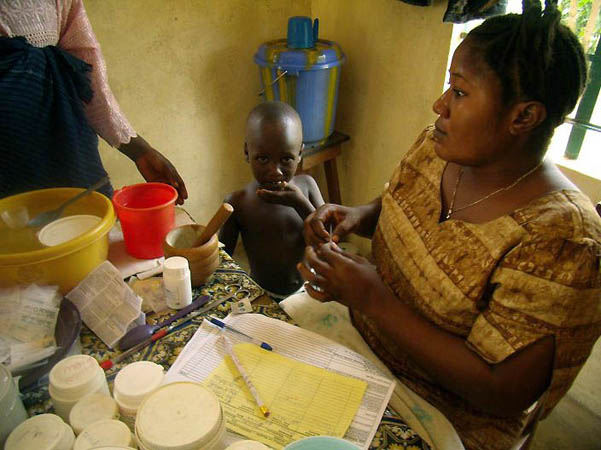
The people of Fayama Malen village celebrate during the ceremony where MSF hands over the health kit to the community health volunteersPhotograph: MSFRapid diagnosis tests are simple to use: a drop of the patient's blood is placed on a test stick, a buffer agent is added and the test gives a reading within 15 minutes. Two vertical lines indicate that the patient is malaria positivePhotograph: MSFJeneth Cole, a 32-year-old farmer from Mondorkor village, was chosen by her community to be their community health volunteer. She treated 20 malaria cases in her village in the first monthPhotograph: MSFFor small children, the ACT tablets are crushed and mixed with water. The full treatment is 3 days and the first dose is given at the clinicPhotograph: MSFAbduraman Aruna, 5, taking his first dose of ACT treatment at Gondama clinic. He has malaria and has been ill for three days with fever and convulsionsPhotograph: MSF
Sign up to read this article
Read news from 100’s of titles, curated specifically for you.