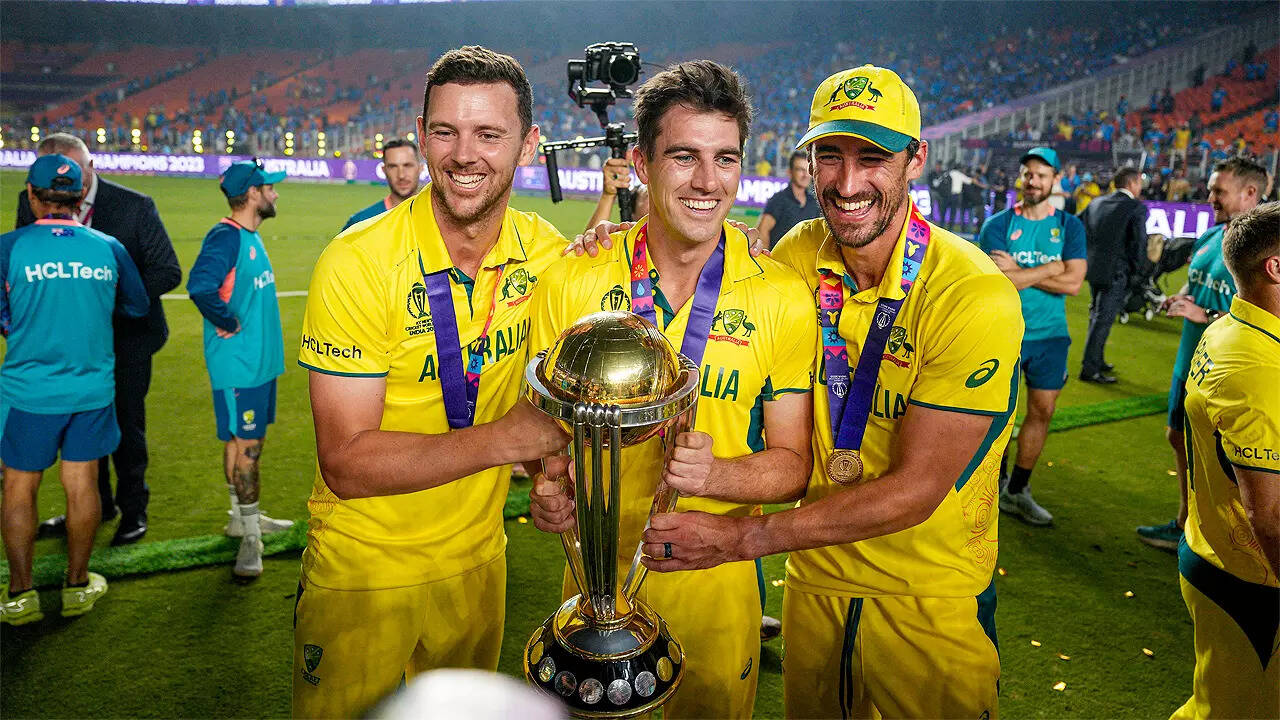
In the last decade, the pace-bowling trio of Mitchell Starc, Josh Hazlewood and Pat Cummins has helped Australia win world tournaments across formats and conditions
World cricket has seen enviable fast bowling groups across generations. West Indies with Wes Hall, Charlie Griffith and Roy Gilchrist during the 60s, followed by the famed quartet of Michael Holding, Andy Roberts, Malcolm Marshall and Joel Garner in the 70s and 80s. Pakistan had Imran Khan, Sarfaraz Nawaz and Sikandar Bakht, who were followed by Wasim Akram, Waqar Younis and Aaqib Javed - Shoaib Akhtar replacing Javed after a while.
Australia have been fortunate in that context. They've managed to maintain a legacy. In the 70s and 80s, they had the fearsome troika of Dennis Lillee, Jeff Thomson and Len Pascoe at their disposal. The late 90s and early 2000s saw Glenn McGrath, Jason Gillespie and Brett Lee dominate the scene.
McGrath, Gillespie and Lee were instrumental in Australia winning back-to-back ODI World Cups in 1999 and 2003. Along with the irrepressible Shane Warne, they oversaw Australia's spectacular dominance of world cricket across formats for nearly a decade.
The present trio of Mitchell Starc, Josh Hazlewood and Pat Cummins may not be revered like McGrath, Gillespie and Lee, but their efficacy, longevity and sheer performance is there for everyone to see. In the last eight years, they have helped Australia win the ODI World Cup twice, T20 World Cup once and the World Test Championship with skills and nous that have cut across formats, conditions and team dynamics.
And since the time they got together, they have also made sure the Ashes is retained by Australia (since 2017-18).
"These three will potentially go down as a trio that can surpass any era," Brett Lee said in a podcast. "When you talk about fast bowlers, they hunt in a pack. You think about the great West Indian bowlers, there were about four of them but normally there are two that work together. Here we've got three, and we've got three amazing bowlers who are all doing a great job. They will go down in the history books."
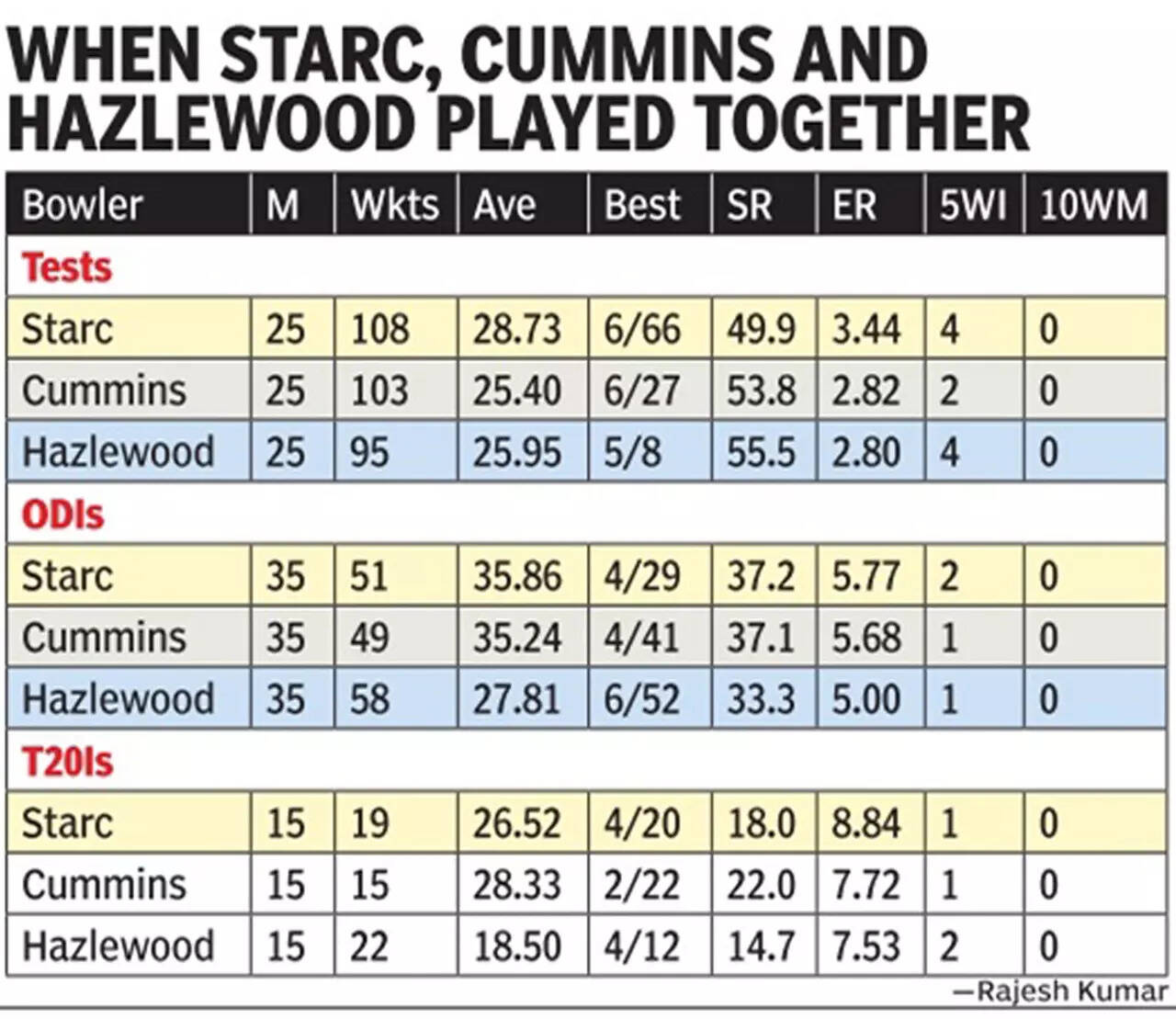
Across formats, the trio has scalped 520 wickets in 75 games that they've played together. Whether it's the fast and bouncy conditions of Australia, swinging and seaming wickets in England, the flat, batting wickets in Dubai or now the slow Indian pitches, the three Aussies have always come out on top.
Starc, Hazlewood and Cummins are not only a testament to elite-level performance but also elite-level longevity, considering they play all three formats and bowl at speeds northwards of 140kmph.
At the World Cup, however, the trio showed incredible intellectual faculties on pitches that didn't require them to light up the speed gun. They restrained their egos, nipped the brazen pride that one associates with an A-list speedster.
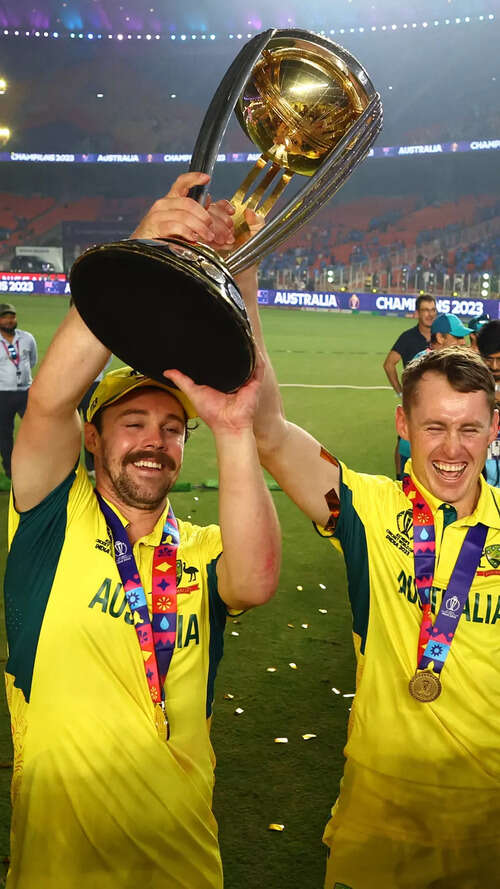
1/10:Head breaks India hearts as Australia win sixth World Cup title
Reuters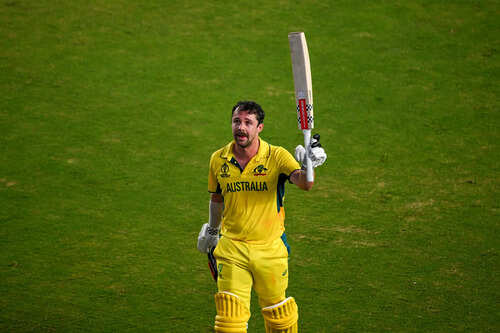
2/10:Travis Head's heroic Century
Travis Head's sparkling knock of 137 led Australia to victory in the World Cup final.AFP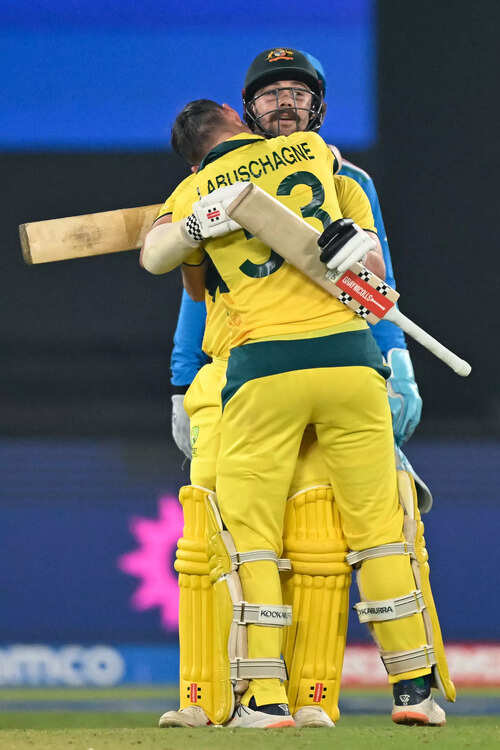
3/10:Head & Labuschagne's partnership
Travis Head's marathon stand of 192 with Marnus Labuschagne secured the win for Australia in the final.AFP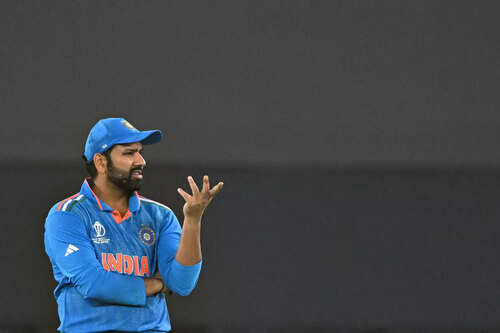
4/10:End of India's unbeaten streak
Travis Head's century ended India's dominant run of 10 unbeaten matches at the World Cup.AFP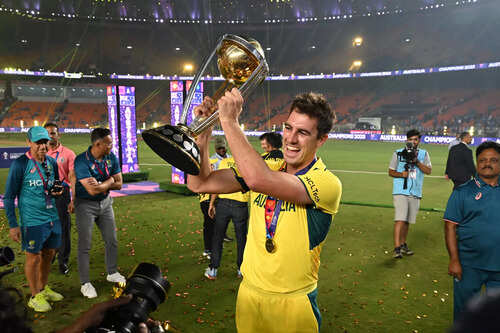
5/10:'Pinnacle of Cricket'
Captain Pat Cummins describes winning the World Cup as the pinnacle of cricket.AFP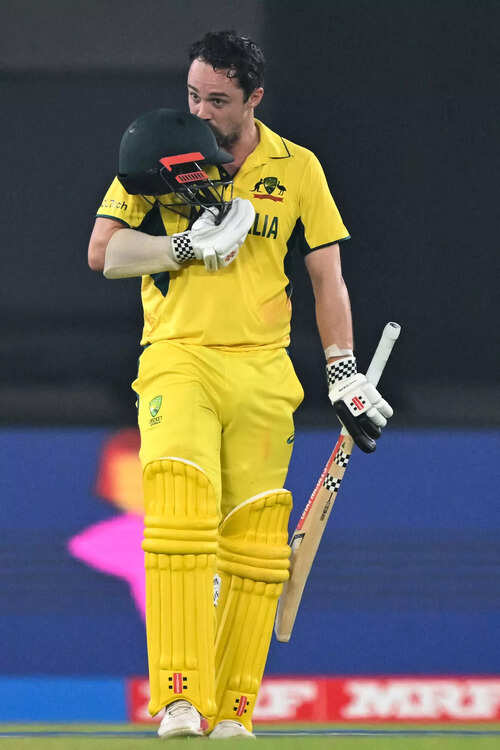
6/10:Head's impact despite injury
Travis Head's match-winning century proved his resilience after recovering from a hand injury.AFP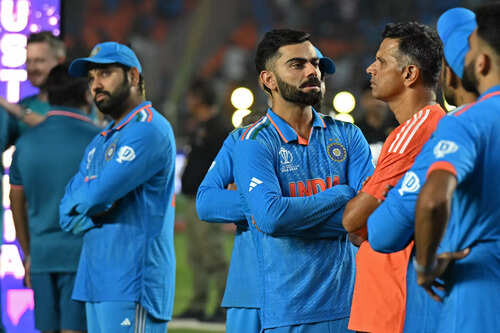
7/10:India's trophy drought continues
India's hopes of ending their trophy drought since 2013 were dashed by Australia's dominant performance.AFP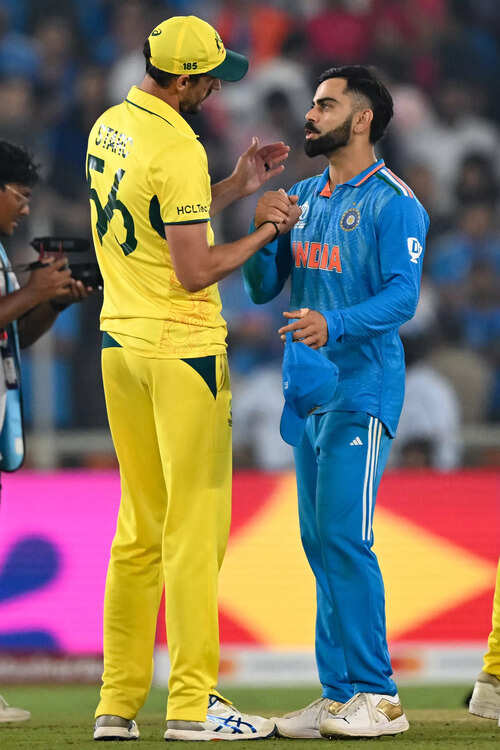
8/10:Bowlers set up victory
Australia's bowlers, led by Mitchell Starc and Pat Cummins, played a crucial role in the team's victory.AFP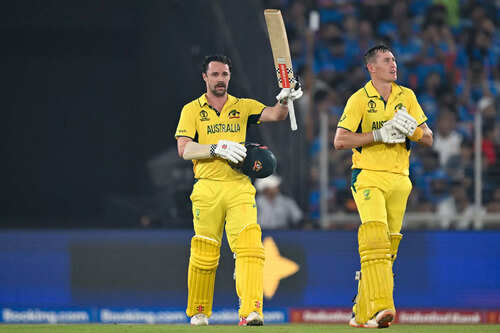
9/10:Head's century in World Cup final
Travis Head's century became the seventh in a World Cup final and the third by an Australian player.AFP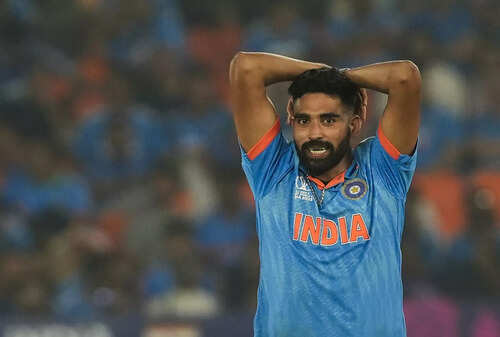
10/10:India's bowlers struggle
India's bowlers failed to break the partnership between Head and Labuschagne, allowing Australia to take control of the game.PTISample this: Cummins bowled 37 off-cutters during his 10-over spell in the final against India. It resulted in him returning with figures of 2/34 which derailed India's innings. "That was his (Cummins') best spell in the whole tournament. One has to be brave to bowl like that. Great players stand up when it's time to deliver and he truly did that," David Warner said of Cummins' bowling in the final.
Besides their fitness, tactical astuteness, commitment, and remarkable skill set, what works for the trio is an organic way of complementing each other. Starc swings the new ball, bowls it full and fast and homes in on the stumps. He is also deadly when the ball is old and there is reverse swing on offer. Hazlewood bowls just back of a length, 9 out of 10 times hitting the top of the off bail and has sublime control over both the new and old ball. He hardly gives any loose delivery.
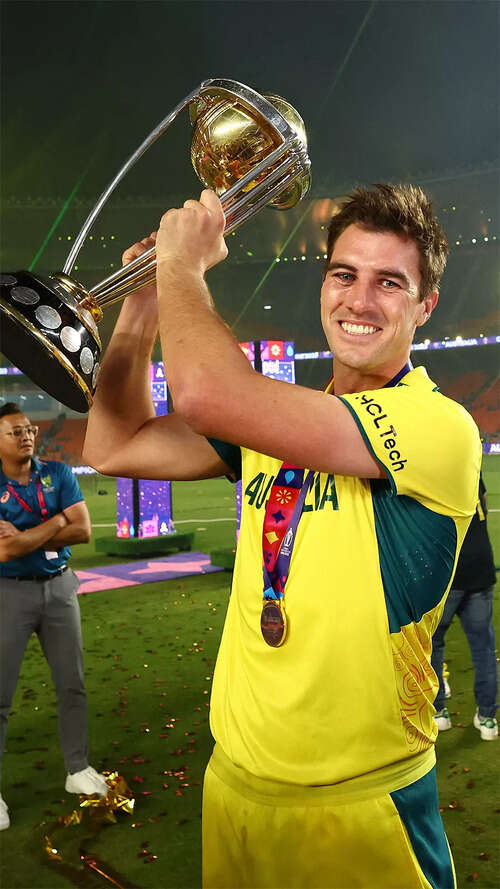
1/10:World Cup Final: India vs Australia statistical highlights
Reuters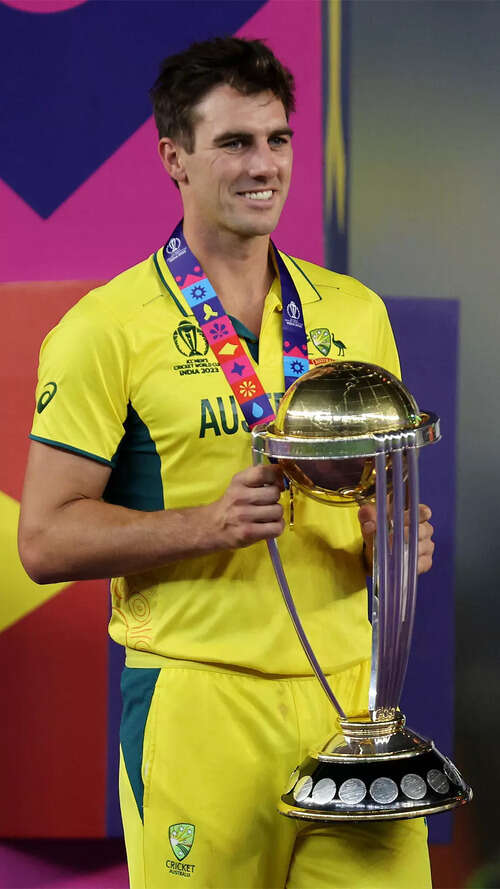
2/10:Australia
<p>Australia recorded their sixth World Cup win by beating India in the final of the 2023 edition. They have title wins in 1987, 1999, 2003, 2007 and 2015. </p>Reuters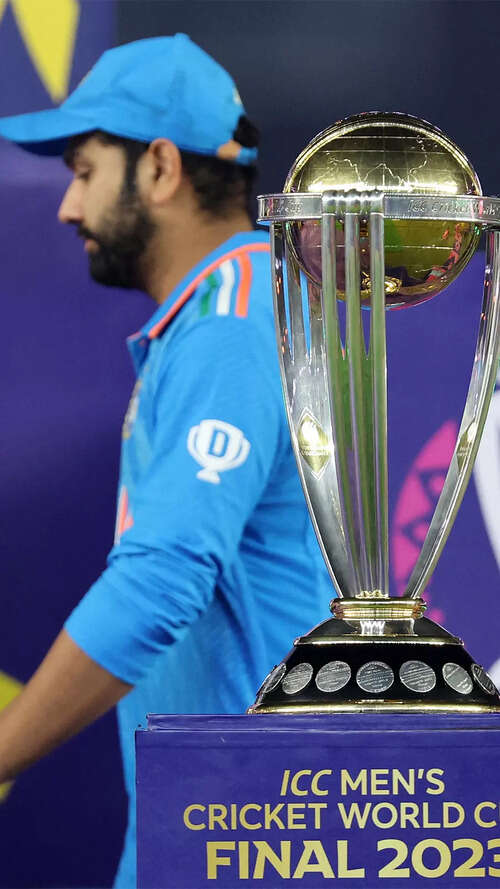
3/10:India
<p>India became the third team whose only defeat in a World Cup edition coming in the final (10 wins) after New Zealand in 2015 (8 wins) and England in 1979 (4 wins). </p>Reuters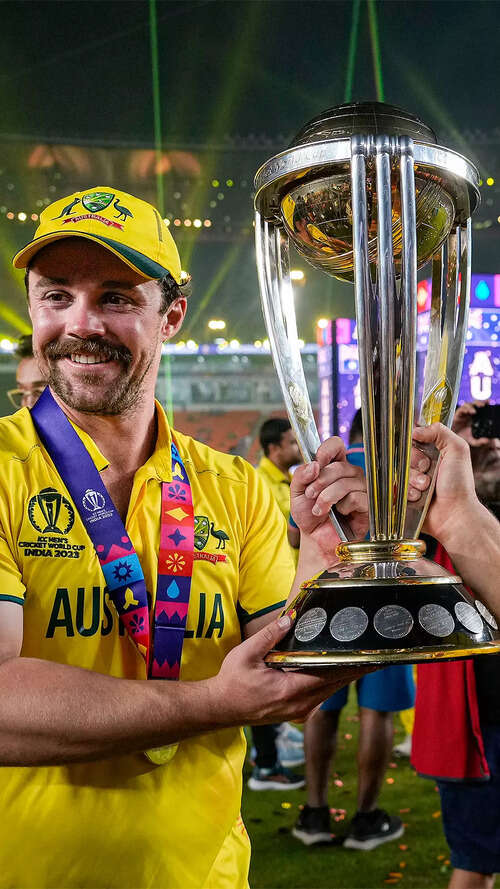
4/10:Travis Head
<p>Australia's Travis Head became the seventh batsman to score a hundred in a World Cup final and the second player to do so in a run-chase after Aravinda de Silva in 1996. </p>PTI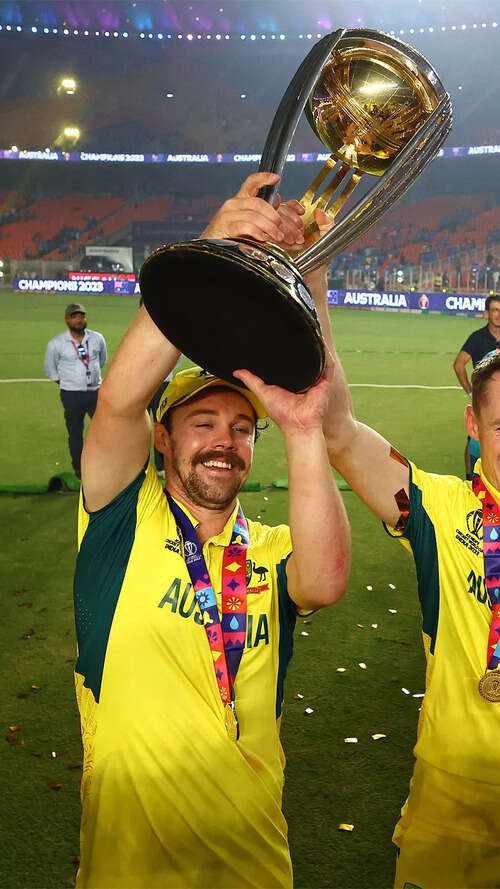
5/10:Man of the Match
<p>Travis Head became the fourth cricketer to be awarded Player of the Match in semifinal and final of a World Cup after Mohinder Amarnath in 1983, Aravinda de Silva in 1996 and Shane Warne in 1999. </p>Reuters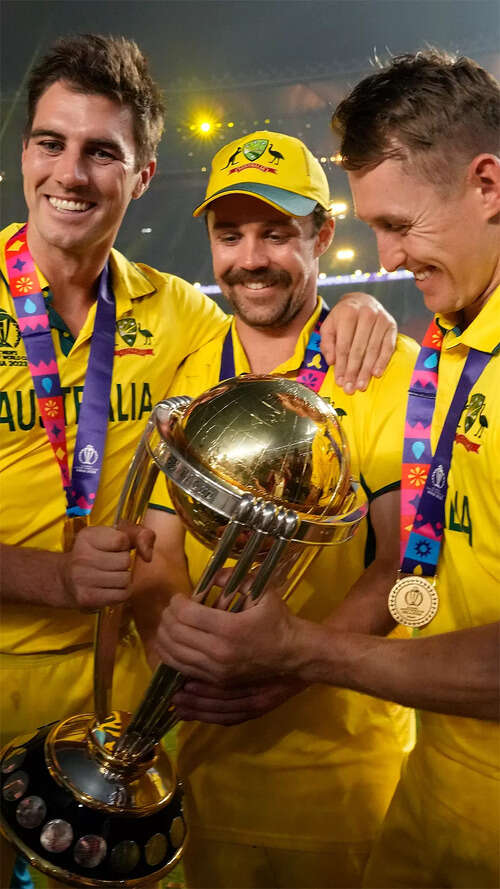
6/10:Elite club
<p>Travis Head's hundred was also the third by an Australian in a World Cup final after 140 not out by Ricky Ponting in 2003 and Adam Gilchrist's 149 four years later. </p>AP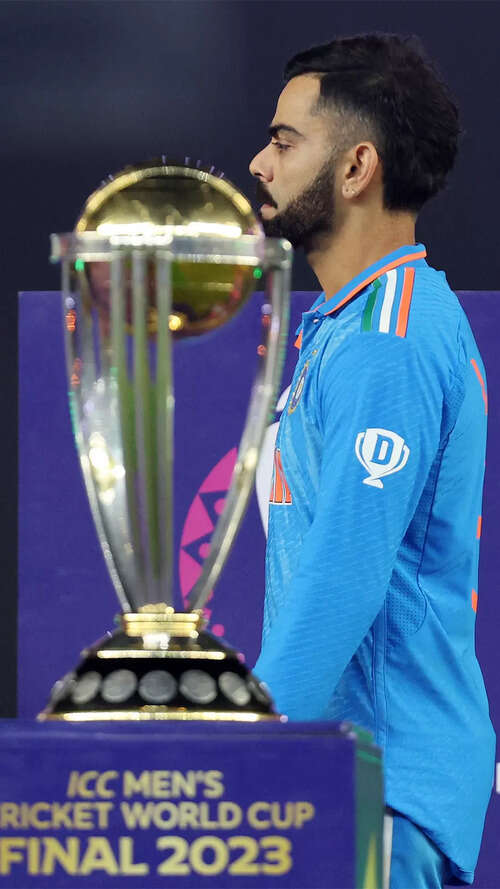
7/10:Virat Kohli
<p>Virat Kohli's 765 runs is the most for any batter in the history of the World Cup. Kohli scored his runs at a stunning average of 95.62 and strike rate of 90.31 to hit three centuries and two fifties. </p>Reuters
8/10:Mohammed Shami
<p>With 24 wickets, Mohammed Shami finished as the highest wicket-taker in only seven matches despite missing the first four games of the league stage. </p>PTI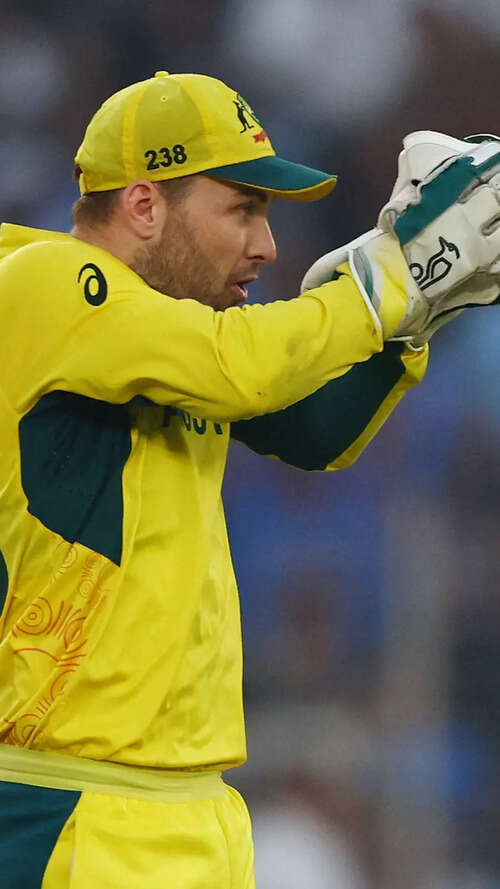
9/10:Josh Inglis
<p>Five dismissals by Josh Inglis is the most by a wicketkeeper in a World Cup final. </p>Reuters
10/10:Adam Zampa
<p>Adam Zampa became the second spinner to take 23 wickets in a World Cup edition after M Muralitharan in 2007. </p>Getty ImagesThen there is Cummins, who is perhaps the more complete fast bowler out of the three. He can even extract movement from a pitch that's dead or gone to sleep. He can swing the ball, he can seam the ball, he can bowl fast and accurate bouncers, and knows to crank it up when the situation arises.
"We complement each other. We stick to our strengths. I know what I bring to the group. I would rather not attempt to imitate Josh or Pat as that would not complement the group," Starc had said just before the World Cup.
With their performance getting richer and richer over time, it is about time the greatness of this fast-bowling group is recognised. It is quite complex to compare eras, but Starc, Hazlewood and Cummins combined are no less than the previous Aussie generations.