The economic development group World Business Chicago announced a renewed focus Wednesday on growth across the seven counties of northeast Illinois, not just the city itself, and assembled political and civic leaders to pledge their cooperation.
Michael Fassnacht, the organization’s president and CEO, said the effort responds to the issues business executives raise in discussions about opening or expanding facilities in the area. “Business leaders don’t think in terms of city or county limits,” Fassnacht said. “They want to know about the region” and factors such as workforce development and quality of life, he said.
He said the campaign will have a goal of recording 150 “pro-Chicagoland decisions” by private companies over the next three years. Fassnacht said an advisory board including city and suburban officials will oversee the campaign, promising it will be “an efficient structure without incremental overhead or bureaucratic hurdles.”
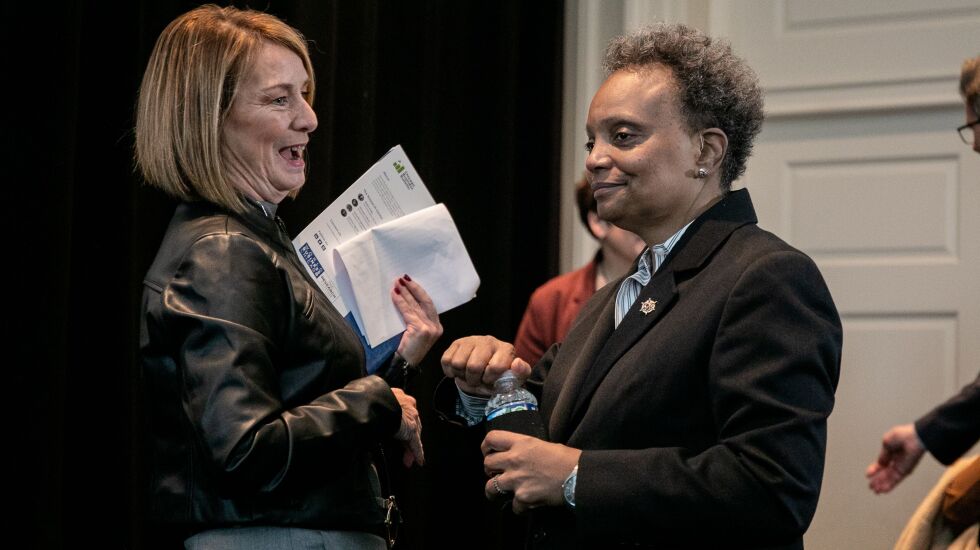
The group’s announcement of the Greater Chicagoland Economic Partnership at the Chicago History Museum included remarks by Mayor Lori Lightfoot, Cook County Board President Toni Preckwinkle and DuPage County Board Chair Deborah Conroy.
Lightfoot said the makeup of the group bodes well for the campaign’s success. “Women get s--- done,” she said to applause from a crowd that included representatives of the other suburban counties.
“This is a big and momentous occasion for all of us,” Lightfoot said, noting that suburban development interests have been asking for a greater regional partnership. “There were previous attempts to get this done, and I’m proud to be leading an administration that finally embraces regionalism whole-heartedly and, importantly, delivers this promise.”
World Business Chicago was founded in 1999, originally with a regional focus. But insiders said it became more city-oriented over the years, especially during the tenure of former Mayor Rahm Emanuel.
Fassnacht said the new arrangement will bring WBC about $1 million a year in new funding from the counties to scale services. He said most of the group’s more than $8 million budget comes from corporate donations and less than 20% comes from City Hall.
He said an increase in the size of WBC’s board brought in additional corporate support.
Others involved in the initiative include the Chicago Metropolitan Agency for Planning, which examines growth-related issues and collects data about the area, and the Chicago Community Trust.